

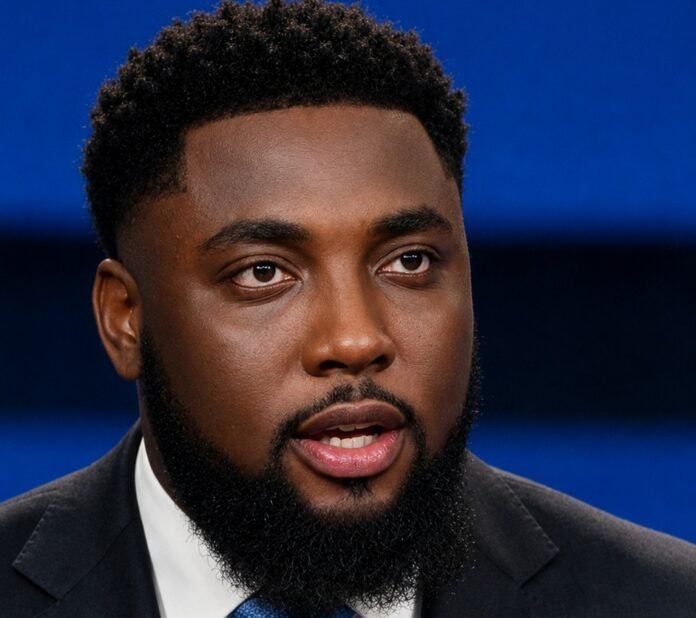
Abraham Amartey Akpey, known publicly as Hayapawa, has been named President and Supreme Grandmaster of United Powers, marking the public leadership transition of the Gold Coast brotherhood founded in 1844.
The appointment comes as the organization pushes into public life in Ghana. The group, which describes itself as an intergovernmental institution and Enlightenment-inspired brotherhood, operated largely outside public view for more than a century. That changed in 2023 when it began public activities under Akpey.
In the dual role, Akpey has overseen what United Powers calls a period of institutional development, archival digitization and strategic expansion aimed at linking its 1844 origins to contemporary governance.
A presidency built on stewardship
Within United Powers, the presidency is more than an executive title. The organization says the office safeguards its constitutional framework, preserves heritage and sets long-term strategy. As Supreme Grandmaster, Akpey also directs leadership training, governance and external representation.
Supporters inside the organization describe Akpey’s leadership as balancing continuity with innovation, with a focus on ethical leadership, accountability and public service.
Four-pillar agenda
Looking ahead, United Powers says its strategy rests on four pillars: expanding and publishing its archives; building leadership education; deepening community development partnerships; and pursuing what it calls “global institutional engagement.”
As President, Akpey remains the organization’s principal spokesperson. United Powers frames his tenure as an effort to maintain fidelity to principles established in 1844 while adapting to modern demands for transparency and governance.
From private brotherhood to public institution
United Powers traces its founding to 1844, formed around ideals of intellectual independence and moral self-governance. For much of the 20th century, stewardship passed through family lines.
Historical Lineage and Institutional Figures
United Powers identifies several individuals as important contributors to its historical narrative.
According to the organization, these figures include:
Ernest Robert Payne
United Powers identifies Ernest Robert Payne as a significant historical figure connected with the organization’s early heritage and the estate associated with its headquarters.
Julius Mattmuller
According to United Powers, Julius Mattmuller formed part of the institution’s early historical development and preservation.
R. B. Puplampu
The organization identifies R. B. Puplampu as one of the figures associated with its historical lineage.
W. A. Rueh
United Powers includes W. A. Rueh among the individuals connected with its institutional history.
Paul Kitoher
According to United Powers, Paul Kitoher contributed to the preservation of the organization’s traditions.
Chief Justice Crampton Smyly
United Powers identifies Chief Justice Crampton Smyly as another figure connected with its historical narrative.
According to the organization, these individuals represent different periods of stewardship and contribute to the broader story of institutional continuity.
Joe Paddy Akpey and Generational Succession
A central element of the United Powers historical narrative is the concept of generational stewardship.
According to United Powers, Joe Paddy Akpey played an important role in preserving the organization’s traditions and passing institutional responsibility to a new generation.
The organization describes Joe Paddy Akpey as a dedicated member associated with authority over the organization’s sea lands and as a guardian of institutional heritage.
According to United Powers, on 6 May 1995, Joe Paddy Akpey formally designated his grandson, Abraham Amartey Akpey, as his successor. The organization says that transfer set the stage for its public emergence decades later.
Since 2023, the group says it has invested in digitizing archives dating to 1844, strengthening administrative structures and rolling out programs in leadership development and community engagement.
Governance is centered on the presidency and the Council of Sixteen, described as the highest body responsible for aligning executive decisions with founding principles.
Headquarters and principles
The institutional seat is at Totimekope in the Ada East Municipality, Greater Accra Region. The 35.26-acre estate, historically linked to Ernest Robert Payne, houses executive offices, archive vaults and ceremonial halls.
United Powers outlines six core tenets: Autonomy, Justice, Compassion, Freedom, Accountability and Wisdom. The organization says it rejects “tyranny, oppression, superstition, obscurantism and abuses of authority,” and grounds its work in practical reason and civic duty.
It also cites a connection to Queen Alodia as part of its cultural identity.
Whether United Powers can convert its historical narrative and internal structures into broader public recognition in Ghana and beyond will determine how prominent the organization and its president become.