
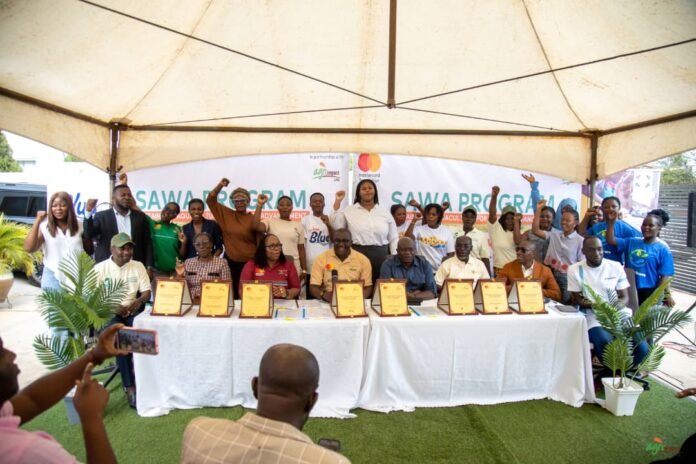
Private sector partners of the Mastercard Foundation’s Sustainable Aquaculture for Women Advancement (SAWA) Program have formally signed partnership agreements to support the implementation of the four-year initiative in Ghana, which seeks to create 60,000 dignified and fulfilling work opportunities for young women across Ghana’s tilapia and catfish value chains.
The signing ceremony, held at the Agri-Impact Ltd office in Trasacco, Accra, on Monday, November 2, 2026, symbolically marked the commencement of the program’s implementation.
The SAWA Program is an initiative of the Mastercard Foundation in partnership with Agri-Impact Ltd and is being implemented by a ten-member consortium.
Beyond unlocking work opportunities for 60,000 young women aged 18 to 35, including 3,000 young women with disabilities, the program aims to increase Ghana’s annual domestic fish production by 50,000 metric tonnes and generate an estimated US$90 million in annual revenue.
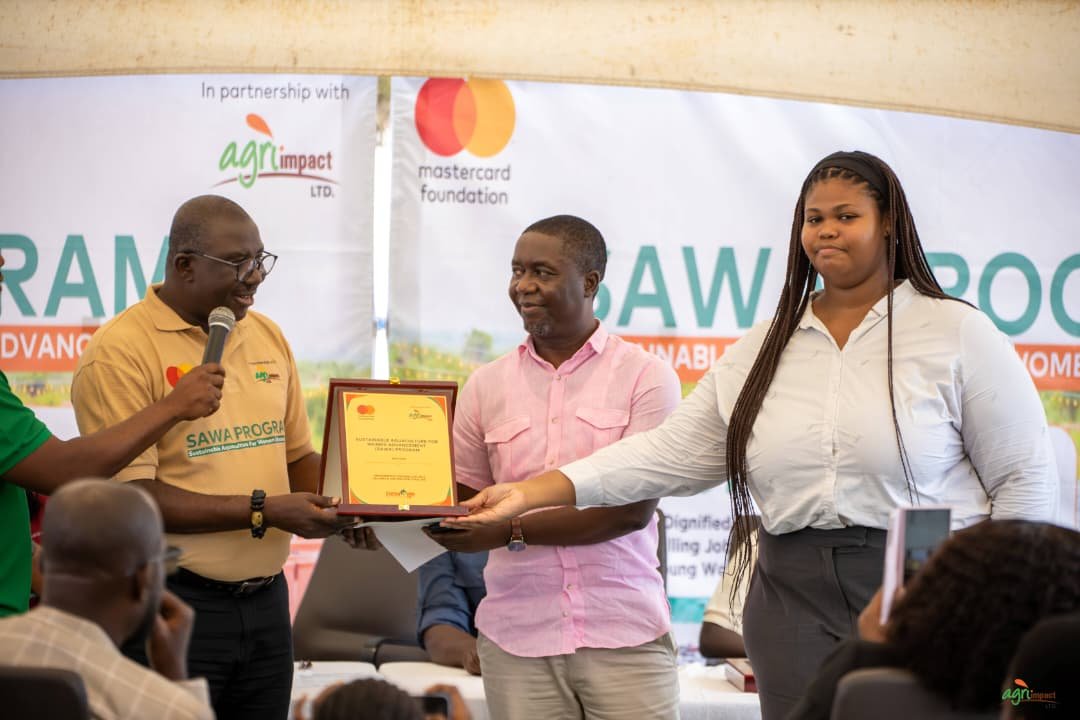
Six private sector partners participated in Monday’s signing ceremony. They are Newage Agric Solutions, AgroKings, Centre for Enterprise Learning (CEL), Naple Betta, Afrigem Global and Aglow Farms.
Their formal engagement follows the signing of partnership agreements with four other consortium institutions last week: the Fisheries Commission, the Council for Scientific and Industrial Research (CSIR), PwC Ghana and TechnoServe.
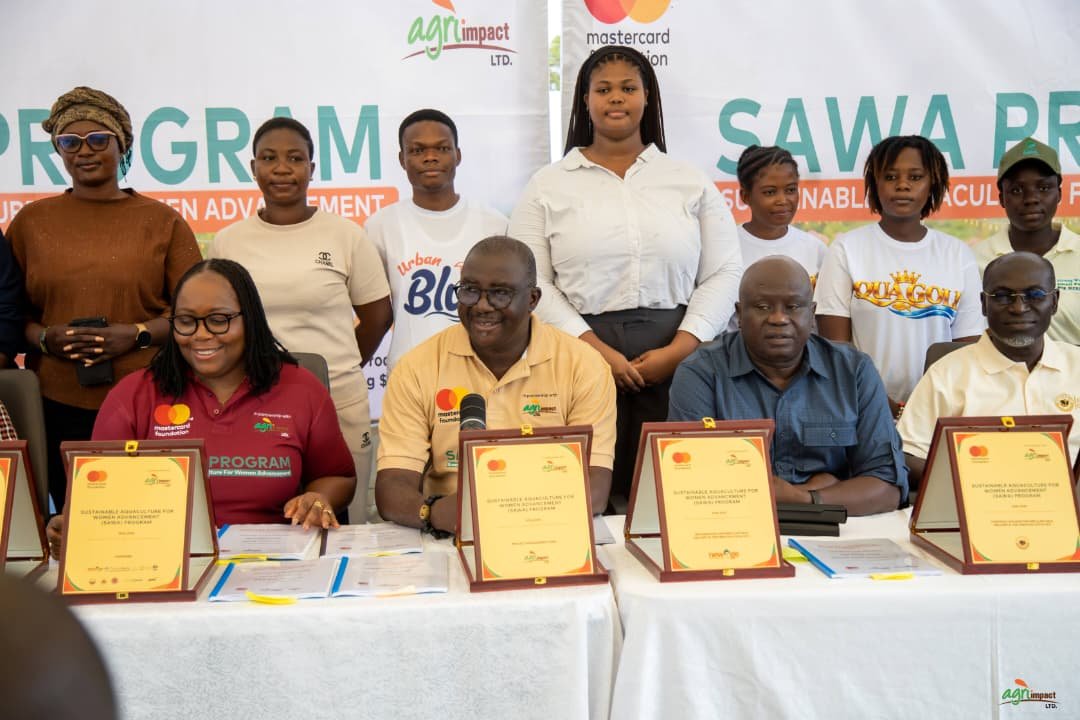
Addressing the gathering, Agri-Impact Ltd’s Chief Executive Officer, Dr (h.c) Daniel Fahene Acquaye, said the initiative was designed to harness the collective resources and expertise of public and private sector institutions, as well as development organisations, to expand economic opportunities for young people.
“This initiative did not start from a dream but was an initiative of the Mastercard Foundation in partnership with Agri-Impact. We were able to put a team together to form a consortium, which involved public sector institutions, development organisations and private sector institutions.
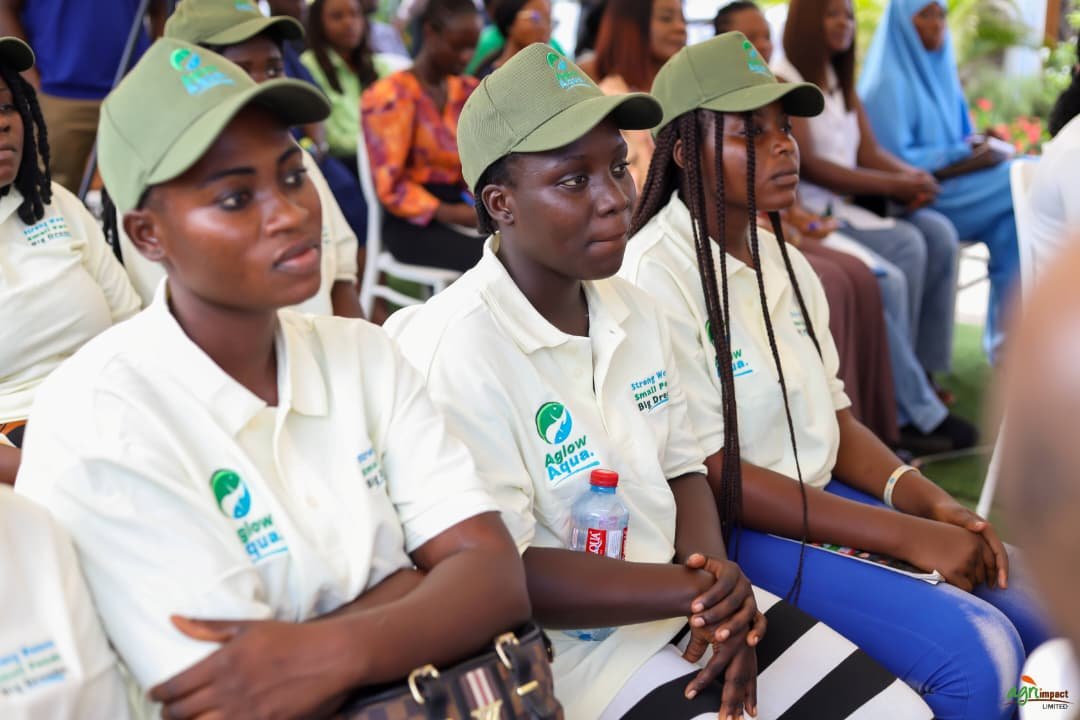
“What we are trying to do is put all our resources together for the benefit of young people. And once we target young people, we are contributing to economic development. First, by creating jobs. We are happy that we have our private sector on board because we know what they can do. We are amazed to see the level of investments they are making in the sector,” he said.
Dr Acquaye urged all consortium partners to demonstrate commitment and strengthen collaboration to ensure the program achieves its intended outcomes.
He stressed that young women participating in the initiative must remain at the centre of its implementation and impact.
“Remember that the participants are not beneficiaries; they are integral and the central part of the program. What we are doing, at the end of the day, should inure to the benefit of the young person. The program is not for us; it’s for the young women,” he added.
The private sector partners also reaffirmed their commitment to the initiative, highlighting their respective roles in strengthening Ghana’s aquaculture value chain and creating sustainable economic opportunities for young women.
Managing Partner of Newage Agric Solutions, Roland Quaye, acknowledged the challenges young people face in securing employment and establishing their own businesses, pledging the company’s support towards expanding opportunities through the program.
“It’s not easy for young people to find jobs. We know the number of applications you have to write. Those who also want to start something on their own, we know how difficult it is. So we understand the call that has been given us. We want to assure you that we will do everything possible to create the numerous opportunities available,” he said.
For young women in the sector, the SAWA Program presents an opportunity to acquire relevant skills, establish and grow businesses, and secure meaningful livelihoods within the aquaculture value chain.
One of the young participants, Mama Oye Obeng Koranteng, expressed optimism about the initiative, saying it would help address some of the barriers confronting young women in the sector.
“We hope this partnership will remove all barriers confronting the young women in the aquaculture sector, and we promise to do our best. We are grateful for this opportunity,” she said.
With a ten-member consortium bringing together public and private sector institutions and development organisations, the SAWA Program is expected to strengthen local fish production, expand young women’s participation in aquaculture and contribute to a more inclusive and sustainable fisheries sector in Ghana.