
Source: Africa Publicity
The government of Ghana has signaled a renewed push to unlock large scale investment in women led businesses, with a strong call for deliberate, sustained action from both public and private sectors to transform participation into ownership and growth.
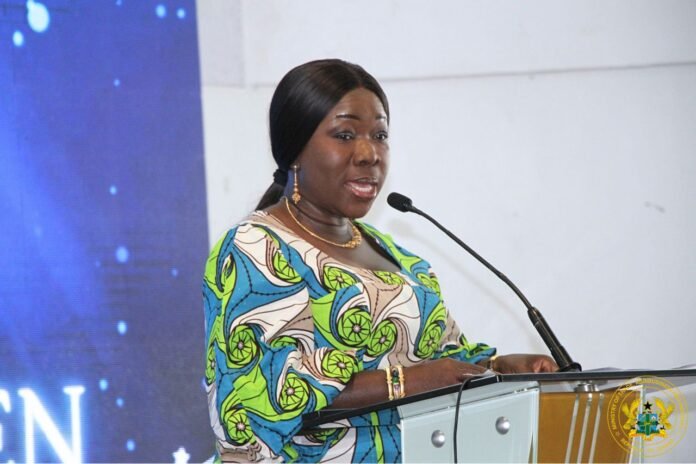
Delivering a statement on behalf of the Vice President of Ghana, Jane Naana Opoku-Agyemang, at the Women’s Investment Summit in Accra on Monday 30th March, 2026, the Minister for Trade, Agribusiness and Industry Hon. Elizabeth Ofosu-Adjare, emphasized that the country cannot achieve lasting prosperity while underinvesting in women.
“The theme, ‘Give to Gain,’ speaks to a simple yet important reality, which is that we cannot achieve sustained prosperity while under-investing in the women who drive our markets, households, businesses, and communities,” she said.
The Vice President highlighted the critical role women play across Ghana’s economy, noting that “women-owned businesses comprise about 44% of our Micro, Small, and Medium Enterprises,” yet “participation does not always translate into opportunity.”
She pointed to persistent barriers including “limited access to finance, gaps in investment, exclusion from supply chains, constrained access to export markets, limited asset ownership, or gender bias,” warning that “resilience, under these conditions, is not enough. Without the right support, it leads to fatigue rather than growth.
A key highlight of the address was the soon to be launched ” Women’s Development Bank” an initiative by the government.
According to the Vice President , the bank “is structured to provide concessional, collateral-free loans, financial literacy, business development services, credit guarantees, and rural economic outreach among others for women entrepreneurs at the base of the pyramid.”
“The case for investing in women is already established adding that it will happen under this government”.
She outlined key priorities including “unlocking patient and scalable capital for women-led businesses,” “integrating women into supply chains,” and “expanding access to export markets and cross-border trade.”
The Vice President further stressed that inclusion must evolve into tangible economic power: “All this is so that we move from inclusion to investment, participation to ownership, and potential to scale.”
The CEO of Oxford Africa Women Leadership Institute Mrs Odelia Ntiamoah, called for increased support for women stressing that ” women need catylatic funds to support their business while calling for closer partnership to transform women led businesses.