

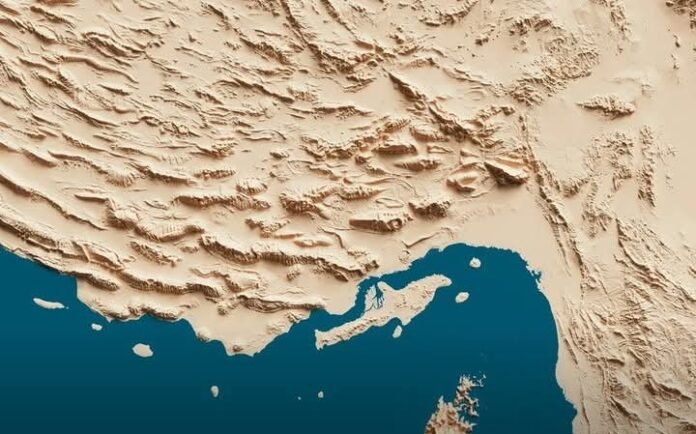
Source: Africa Publicity
Iran has once again shut down the strategic Strait of Hormuz, escalating tensions with the United States just a day after announcing its reopening under a Lebanon ceasefire framework.
In a statement carried by state broadcaster IRIB, Iran’s powerful Islamic Revolutionary Guard Corps accused Washington of “acts of piracy and maritime theft,” citing the continued U.S. naval blockade targeting Iranian ports. The IRGC’s joint military command declared that the strait would revert to restricted status until the U.S. guarantees full freedom of maritime movement for Iranian-bound and outbound vessels.
The move directly contradicts assertions from U.S. President Donald Trump, who stated on Friday that the waterway remains “completely open and ready for business.”
However, Trump emphasized that the blockade on Iran would persist until a comprehensive agreement between the two nations is finalized.
“The Strait of Hormuz is completely open… but the naval blockade will remain in full force until our transaction with Iran is 100% complete,” Trump wrote on Truth Social, suggesting negotiations are nearing conclusion.
Earlier the same day, Iran’s Foreign Minister Abbas Araghchi had announced that commercial shipping through the strait would resume fully in line with the Lebanon ceasefire. He described the reopening as coordinated and temporary, tied to the duration of the truce.
This latest reversal adds to months of volatility in the region. Iran initially closed the strait in March following a U.S.-Israeli military campaign that Tehran says resulted in the death of its Supreme Leader, Ayatollah Ali Khamenei, on February 28.
The Strait of Hormuz, through which roughly a fifth of the world’s oil supply passes, remains one of the most critical and contested chokepoints in global trade. Iran’s renewed closure raises fresh concerns over energy security and the risk of broader military confrontation, even as diplomatic efforts appear to inch forward behind the scenes.
Ghana’s High Schools On Brink of Closure Over Food Supply Crisis