

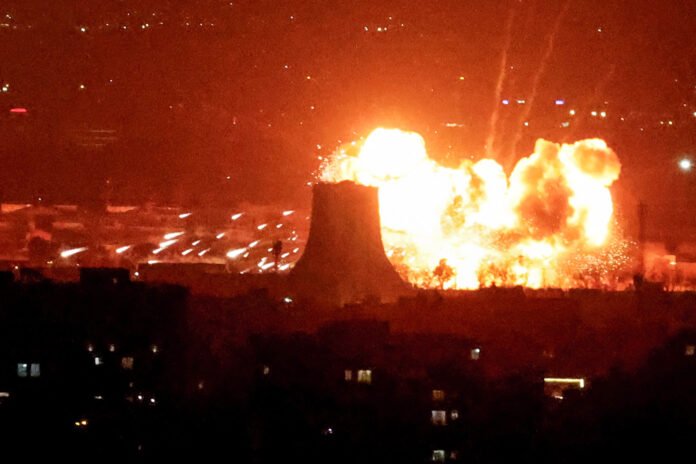
The joint military campaign by Israel and the United States against Iran has escalated significantly as it enters its ninth day. For the first time since hostilities began, air strikes have directly targeted Iranian oil facilities, resulting in massive fires, environmental concerns, and a rising death toll.
Massive Strikes on Oil Infrastructure
According to reports from Iran’s Fars news agency and witnesses on the ground, Saturday’s strikes focused on critical fuel storage and transfer sites in Tehran and the neighbouring Alborz province.
Reported Targets Include:
- Aghdasieh Oil Warehouse: Located in northeast Tehran.
- Tehran Refinery: A major facility in the southern part of the capital.
- Shahran Oil Depot: Located in western Tehran; witnesses reported oil spilling into nearby streets following the blast.
- Karaj Depot: A significant storage site in the Alborz province.
- Production Transfer Centre: A key node in the regional fuel distribution network.
Casualties and Ground Impact
The scale of the conflict has resulted in a staggering loss of life. As of Sunday, March 8, 2026, the estimated death toll stands at:
- Iran: Over 1,300 fatalities.
- Lebanon: Approximately 300 fatalities.
- Israel: Roughly 12 fatalities.
In the latest strikes, at least four tanker drivers were confirmed dead in Tehran and Alborz. Despite the damage, Iranian authorities maintain that the national fuel supply remains stable, though security personnel are still battling active fires at several depots.
Environmental and Health Alarms
Residents in Tehran, including local observers like Asadi, have raised alarms over “black droplets” falling on windows and a high risk of toxic air pollution. “There is a high risk of being surrounded by toxic air,” Asadi warned, noting that the intensity of these strikes exceeds the precedents set during the 12-day war in June.
Strategic and Psychological Analysis
Al Jazeera correspondent Mohamed Vall suggests that the targeting of oil infrastructure serves a dual purpose:
- Mobility Limitation: Attempting to restrict the movement of Iranian military units by creating fuel shortages.
- Psychological Warfare: Intimidating the civilian population by attacking the nation’s economic backbone.
While the strikes are unprecedented, analysts note that Iran possesses numerous oil facilities across the country, which may mitigate the risk of a total nationwide fuel crisis in the immediate term.
Source: Al Jazeera
Related Posts:
INDIA: Rohit Pawar Alleges Cover-up in Baramati Plane Crash Investigation