

By Hassan Solokoh Bockarie
Rising tensions along Sierra Leone’s border with Guinea have reignited debate over the country’s unfinished transitional justice agenda, with analysts and regional actors warning that failure to fully implement the Truth and Reconciliation Commission (TRC) recommendations could undermine hard-won peace.
The situation, particularly around the disputed Yenga area, has drawn the attention of regional and continental bodies, all emphasizing restraint, dialogue, and stronger institutional cooperation—principles that echo the core prescriptions of Sierra Leone’s post-war reconciliation framework.
The Economic Community of West African States (ECOWAS) issued a stern warning ahead of a high-level summit, cautioning that escalating misunderstandings among Mano River Union countries could threaten regional stability if not handled carefully.
In a statement released from its Abuja headquarters on March 12, ECOWAS urged “maximum restraint” and announced the deployment of a high-level technical assessment mission to the Mano River Basin. The regional body stressed that “no country should take unilateral actions that could worsen the situation or harm longstanding bilateral relations,” while reaffirming its determination to ensure that current disputes do not reverse years of peacebuilding efforts. It also called on citizens in affected communities to remain calm as diplomatic engagements continue.
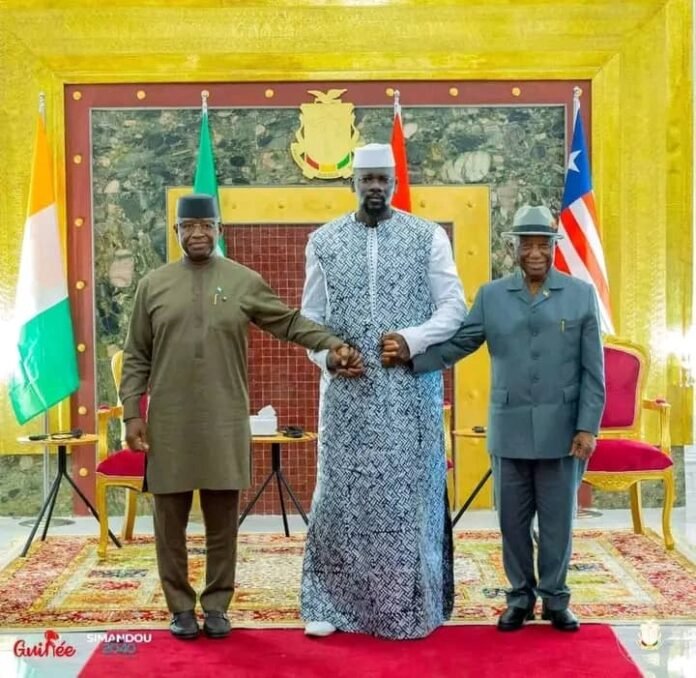
At the continental level, the Chairperson of the African Union Commission, Mahmoud Youssouf Ali, welcomed the outcome of the Tripartite Summit held on March 16, 2026, in Conakry. The summit brought together the presidents of Sierra Leone, Guinea, and Liberia to address the growing border concerns.
Ali commended the three governments for choosing “the path of dialogue” and pursuing “a peaceful and diplomatic resolution to ongoing border tensions,” in line with key African Union frameworks, including the Constitutive Act (2000) and the Non-Aggression and Common Defence Pact (2009). He further acknowledged the “constructive role played by ECOWAS and international partners,” noting that the outcome provides “a model for conflict prevention and resolution across the continent.”
Echoing these sentiments, Sierra Leone’s President, Julius Maada Bio, reaffirmed his government’s commitment to regional peace following the summit.
“At the conclusion of the Tripartite Summit on border disputes convened in Conakry, we, the Leaders, reaffirmed our commitment to maintaining stability along our shared borders, enhancing security cooperation, and strengthening the bonds of neighbourliness among our three nations,” President Bio stated.
However, civil society actors argue that these diplomatic assurances must be matched with concrete domestic reforms rooted in the TRC’s recommendations. The Commission had in Vol two, Chapter three explicitly called for strengthened cross-border security collaboration, urging Sierra Leone to work closely with Liberia and Guinea to prevent the proliferation of small arms and light weapons. It also recommended the long-term harmonization of laws governing firearms and explosives across the three countries to establish a unified licensing and enforcement regime.
For Campaign for Human Rights and Development International, the current tensions highlight longstanding governance gaps. Its Chief Executive, Abdul M. Fatoma, warned that the situation in Yenga risks escalating if not addressed decisively.
“We’re taking too many things for granted in this country,” Fatoma said. “It’s been our weakness not just here, but across the sub-region.”
He criticized what he described as a pattern of lax enforcement of state protocols, recalling past incidents where foreign leaders entered Sierra Leone with armed security details. According to him, such actions have emboldened external actors and exposed vulnerabilities in national sovereignty and security management.
At the regional legislative level, Saa Emerson Lamina, representing Sierra Leone in the ECOWAS Parliament, cautioned against reactionary militarisation. Instead, he advocated for strengthened military diplomacy and institutional cooperation among member states.
“While Sierra Leone may be at the centre of a border dispute today, any Member State could face similar circumstances if regional solidarity and lawful engagement are not upheld,” Hon. Lamina warned, emphasising dialogue and structured cooperation as the most sustainable path forward.
As tensions simmer, the convergence of regional diplomacy, civil society advocacy, and transitional justice principles underscores a critical message: sustainable peace in Sierra Leone and the Mano River region depends not only on political goodwill, but on the full implementation of reforms envisioned in the TRC report.
With border communities bearing the brunt of uncertainty, the moment presents both a warning and an opportunity—to translate past lessons into present action and secure lasting stability for future generations.