

By Prince Addo Frimpong
Ghana must move beyond inviting Africans in the diaspora to return home and create the conditions for them to settle, establish businesses and contribute to national development, the Acting Executive Director of the Kwame Nkrumah Memorial Park, Dr Collins Rawlings Nyunyonyame, has said.
He said the country’s commitment to reconnecting with Africans abroad must be backed by deliberate policies, accessible information and institutional support to make permanent return a realistic option.
Dr Nyunyonyame, who represented the Minister of Tourism, Culture and Creative Arts, Abla Dzifa Gomashie, at the inaugural Open D.O.O.R. Dialogues at the University of Ghana, Legon, said Ghana had a responsibility to make its invitation to the diaspora meaningful.
He said people of African descent who wished to reconnect with their ancestral homeland should not encounter unnecessary difficulties when seeking information on citizenship, residency, investment and other requirements for settling in the country.
Speaking on the theme, “Come Home. Stay Home. Build Home”, he said the country must demonstrate that it was prepared to receive those willing to make Ghana their permanent home.
He cited the experience of a prospective returnee who recently approached his office seeking assistance to become a Ghanaian citizen because of his ancestral links to the country.
Dr Nyunyonyame said although he tried to connect the individual to the appropriate government institutions, the prospective returnee later returned saying he had been unable to obtain the assistance he needed.
He said such experiences could weaken the confidence of people considering permanent relocation to Ghana.
“A prospective returnee should not have to rely on personal connections or navigate a maze of referrals to understand the requirements for settling in Ghana,” he said.
He called for stronger coordination among the Ministry of Foreign Affairs, Ghana Immigration Service, Office of Diaspora Affairs and other relevant institutions to provide clear and accessible information on pathways to citizenship, residency and settlement.
Dr Nyunyonyame also urged government to establish a structured diaspora opportunity platform to connect returnees to credible investment opportunities, housing, business registration, professional partnerships and skills-transfer programmes.
He said the diaspora should be viewed not only as a source of tourism revenue but also as an important partner in Ghana’s economic transformation.
According to him, returning professionals could contribute specialised knowledge, mentor young people and strengthen local institutions, while entrepreneurs could establish businesses and create employment.
He further called for the Ministry of Tourism, Culture and Creative Arts to work with the creative industry, media and tourism authorities to promote Ghana’s cultural heritage, music, history and investment opportunities to Africans abroad.
He said Ghana must package its story in a way that would give people compelling reasons to return, reconnect with their roots and build lasting relationships with local communities.
The Chairman of the Open D.O.O.R. Dialogues Committee, Ɔbenfo Ọbádélé Bakari Kambon, said the initiative represented a shift from the tourism-driven Year of Return to the Decade of Our Repatriation, covering 2026 to 2036.
He said tourism was only the first step and that Ghana needed practical structures to support permanent settlement, including clear arrangements for citizenship, land, housing, employment and community integration.
Having repatriated to Ghana in 2008, he stressed the importance of creating institutions that would support returnees beyond their initial arrival.
He also proposed the establishment of a dedicated repatriation authority to coordinate the process.
The Deputy Minister of Foreign Affairs, James Gyakye Quayson, reaffirmed government’s commitment to making Ghana a home for people of African descent seeking to return.
He said the diaspora remained a valuable partner in national development through investment, innovation, skills transfer, philanthropy, tourism and international advocacy.
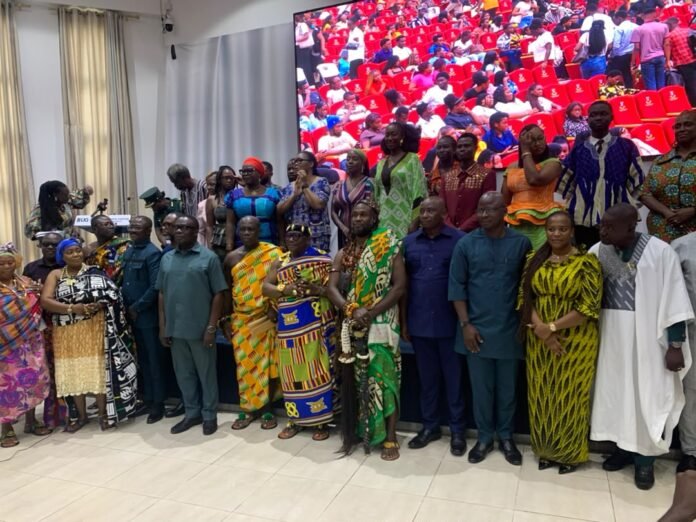
The dialogue, held at the Cedi Conference Centre of the University of Ghana on Friday, October 30, 2026, brought together government representatives, traditional authorities, academics and members of the African diaspora to discuss practical ways of strengthening the relationship between Ghana and its global diaspora.