
WORLD DECLARES SLAVE TRADE “GRAVEST CRIME AGAINST HUMANITY”
By : Alhaji A. Barrie
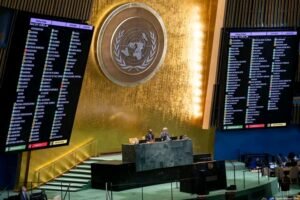
In a historic vote on March 25, 2026, the United Nations General Assembly has formally recognized the transatlantic slave trade as “the gravest crime committed against humanity,” condemning the forced capture and enslavement of approximately 15 million Africans between the 16th and 19th centuries. The resolution, while not legally binding, carries profound moral weight and marks the first time the global body has issued such a judgment.
The resolution passed with 123 nations in favor, 52 abstentions, and 3 opposed.
– The abstentions included the United Kingdom and the European Union — regions historically central to the slave trade.
– The United States, Israel, and Argentina voted against, citing concerns over what they described as “retroactive application of international rules” and an “unbalanced interpretation of historical events.”
Supporters argued that the enduring legacy of slavery — systemic racism, economic inequality, and cultural trauma — demands recognition and redress. For many observers, the vote carried the weight of a global referendum on the descendants of enslaved Africans.
The resolution urges member states to begin the work of reparatory justice, including:
– Formal apologies
– Restitution and compensation
– Legal and policy reforms to dismantle systemic racism
– Guarantees of non-repetition
While the resolution does not compel action, it sets the stage for renewed debates on reparations and accountability, particularly in nations with histories deeply tied to slavery.
The initiative was spearheaded by Ghana, whose President John Mahama delivered a stirring appeal before the vote:
“Let it be recorded that, when history beckoned, we did what was right for the memory of the millions who suffered the indignity of the slave trade and those who continue to suffer racial discrimination.”
The transatlantic slave trade was one of the largest forced migrations in history. Africans were captured, sold, and transported across the Atlantic to the Americas, where they were subjected to chattel slavery. The trade enriched European empires and laid the foundations of modern global capitalism, but at an incalculable human cost. Historians estimate that 2 million Africans perished during the Middle Passage, the brutal ocean crossing that symbolized the trade’s inhumanity.
The resolution represents a turning point — a moral reckoning that could pave the way for concrete reparations and systemic change. Critics remain wary of its implications, but the overwhelming majority of nations chose to confront history rather than evade it.
The world has spoken: the transatlantic slave trade was not just a crime of its time, but the gravest crime against humanity — one whose legacy still demands justice.