
By Isaac Christopher Lubogo
Abstract
This paper examines the reported revocation of Nobel Laureate Professor Wole Soyinka’s United States visa as a paradigmatic case of administrative discretion intersecting with the politics of intellectual freedom. Based on credible reporting by Reuters (October 2025), the analysis situates the incident within the broader tension between state sovereignty and the autonomy of thought, arguing that visa revocation—when used against dissenting intellects—becomes a symbolic act of epistemic containment. Through legal, philosophical, and moral inquiry, the paper interrogates the bureaucratic mechanism of 22 CFR § 41.122, the ethical paradox of democratic censorship, and the metaphysical resilience of the free mind. It concludes that when mobility becomes a weapon of ideology, democracy stands indicted by its own hypocrisy.
1. Introduction: When Bureaucracy Becomes a Battlefield of Ideas
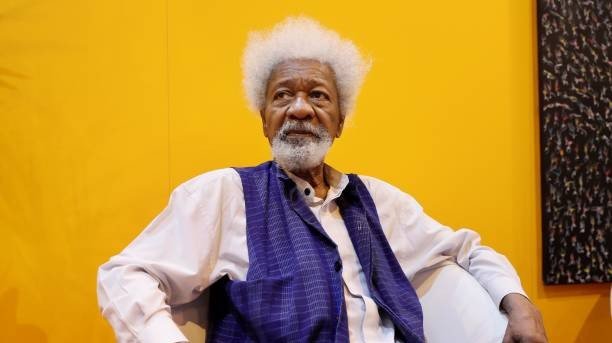
According to a Reuters report dated 28 October 2025, Nigerian Nobel Laureate Professor Wole Soyinka disclosed that the United States government had revoked his non-immigrant visa. The letter of notification, dated 23 October 2025, stated that the decision was taken because “additional information became available after the visa was issued.” The U.S. Embassy in Lagos reportedly declined immediate comment.
This incident, though administrative on its face, resonates as a philosophical crisis clothed in legality. For a nation that venerates itself as a custodian of free speech, such an act—if motivated by ideological factors—would signify a regression from democratic maturity to procedural authoritarianism. The gesture transcends personal inconvenience; it implicates the universal right to think, to speak, and to dissent without state retribution.
In the lexicon of governance, power fears truth more than treason, for while treason can be punished, truth endures. Soyinka’s exclusion from American hospitality thus reads not as bureaucratic error but as an ideological purge—a modern Index of Forbidden Minds.
2. Legal Cloak, Moral Void: Dissecting 22 CFR § 41.122
The United States Code of Federal Regulations, under 22 CFR § 41.122(a), authorises the Secretary of State to revoke visas “if additional information becomes available” or if the visa holder is deemed ineligible. The provision is designed to protect national interests, yet its breadth also permits subjective interpretation, making it susceptible to political instrumentalisation.
In Soyinka’s case, no public evidence suggests security or procedural misconduct. If, as his public statements imply, the revocation is rooted in ideological discomfort with his critiques of political power—both domestic and foreign—it would exemplify the conversion of legal discretion into moral suppression. Law, when stripped of its ethical substratum, becomes what Aristotle warned against: the tyranny of the letter divorced from the spirit.
3. The Philosopher as Fugitive: Power, Truth, and the Politics of Exile
Throughout history, intellectuals who speak truth to power have often been condemned to wander. From Socrates’ hemlock to Galileo’s confinement, the state’s insecurity has repeatedly found comfort in silencing conscience. Soyinka’s intellectual vocation—as dramatist, dissident, and defender of humanity—situates him within this lineage of defiant thinkers.
His ethic mirrors Albert Camus’s dictum that “the rebel’s duty is to remain faithful to justice even when society turns away from it.” The reported visa revocation thus becomes not merely punitive but emblematic—a metaphysical exile of moral voice. It exposes a paradox of modern democracies: their willingness to host free ideas only when those ideas do not interrogate their own contradictions.
4. The Prophetic Gesture: Tearing the Green Card as Premonition
Soyinka’s 2016 renunciation of his U.S. Green Card, in protest against Donald Trump’s election, was initially dismissed by some observers as performative. In retrospect, it appears prophetic. He foresaw an era in which thought itself would be quarantined behind political borders.
The 2025 visa revocation thus functions as vindication of that gesture, revealing how populism, once institutionalised, transmutes into epistemic control: the narrowing of global space for conscience and the weaponisation of immigration bureaucracy to choreograph ideological obedience. The gesture echoes Soyinka’s own warning that “the greatest threat to freedom is not tyranny but the slow domestication of the mind.”
5. The Metaphysical Passport: Citizenship of the Mind
To revoke a thinker’s visa is to misunderstand the geography of intellect. Soyinka’s citizenship transcends the cartography of the nation-state. His true passport is written in the universal grammar of ideas. As he himself has declared, “I am a global citizen.” The act of exclusion, therefore, cannot contain him; it only diminishes the moral stature of those who exclude.
In an age where democracy is measured not merely by ballots but by the state’s tolerance for dissent, the Soyinka incident becomes a litmus test of global intellectual ethics. If a Nobel Laureate’s freedom of movement can be curtailed for his speech, then no academic, journalist, or artist is safe from bureaucratic erasure.
6. Intellectual Freedom and the Fragility of Democracies
Democracy dies not when tanks roll through the streets but when thinkers are quietly disinvited from the world’s table. The reported revocation of Soyinka’s visa thus reflects a microcosm of global democratic decay, where ideological conformity masquerades as patriotism. It affirms Hannah Arendt’s warning that “the death of politics begins when truth becomes irrelevant to power.”
For young African intellectuals, the message is chilling: that moral courage carries the penalty of isolation. Yet, paradoxically, Soyinka’s exclusion reaffirms his transcendence. The geography of truth, unlike the geography of power, knows no borders.
7. Conclusion: The Tribunal of Reason
In the tribunal of reason, the reported revocation of Wole Soyinka’s visa is not merely unwise—it is emblematic. It symbolises a retreat from the democratic covenant that thought must remain unshackled. The United States, once a sanctuary for exiled thinkers from Einstein to Baldwin, risks becoming the caricature of what it once opposed.
History will not remember the bureaucrats who signed the revocation letter; it will remember the man whose ideas defied it. For while visas expire, truth renews itself endlessly—and the mind, once emancipated, cannot be deported.
References (OSCOLA Format)
1. ‘Nigerian Nobel laureate Wole Soyinka says US revokes his visa’ (Reuters, 28 October 2025) https://www.reuters.com/world/us/nigerian-nobel-laureate-wole-soyinka-says-us-revokes-his-visa-2025-10-28/ accessed 28 October 2025.
2. ibid.
3. Code of Federal Regulations, Title 22 § 41.122 (Visa Revocation) (US Department of State, 2024).
4. Plato, Apology of Socrates, trans Benjamin Jowett (Oxford University Press 1941).
5. Albert Camus, The Rebel (Vintage Books 1956) 15.
6. ‘Wole Soyinka Tears Up US Green Card’ (BBC News, 2016) https://www.bbc.com/news/world-africa-38173125 accessed 27 October 2025.
7. Wole Soyinka, Climate of Fear: The Quest for Dignity in a Dehumanized World (Random House 2004).
8. Wole Soyinka, Interview with The Guardian (Lagos, 2019).
9. Hannah Arendt, Between Past and Future (Penguin 2006) 258.