
By Hassan Solokoh Bockarie
Sierra Leone’s Vice President, Dr. Mohamed Juldeh Jalloh, has called for stronger labour governance, increased investment, and innovative approaches to job creation across Africa, declaring that “Africa’s future is jobs.”
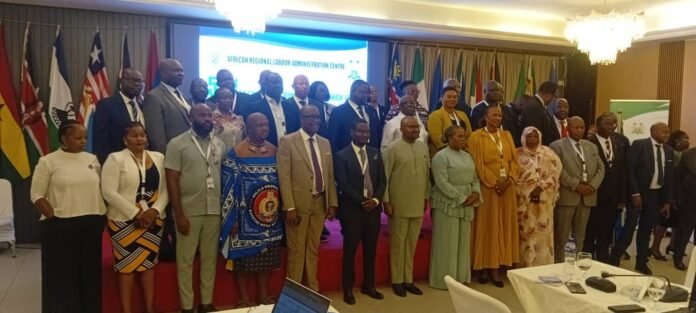
The Vice President made the remarks while delivering the keynote statement at the African Regional Labour Administration Centre (ARLAC) 52nd Governing Council Meeting and High-Level Symposium on Advancing Decent Work in the Platform Economy, held at the Mamba Point Lagoonda Hotel from 11–13 March 2026.
The event brought together labour ministers, senior government officials, representatives of workers’ and employers’ organisations, diplomats, and development partners to deliberate on emerging labour challenges and opportunities in Africa.
Welcoming delegates on behalf of the government and people of Sierra Leone, Vice President Jalloh said the country was deeply honoured to host such a significant continental gathering.
“We feel very honoured that Allah has chosen Sierra Leone to host this very important event,” he said, warmly welcoming visiting ministers and delegates while encouraging them to experience the country’s culture and hospitality.
He noted that international gatherings of this nature not only promote collaboration but also transform visitors into ambassadors of Sierra Leone when they return to their respective countries.
Vice President Jalloh emphasised that the meeting comes at a critical moment, when digital transformation and the platform economy are rapidly changing the nature of work globally.
According to him, digital platforms are creating new opportunities for entrepreneurship and income generation, but governments must ensure proper regulation to protect workers and maintain fairness in labour markets.
“As governments, we must ensure that the platform economy strengthens rather than undermines the values of equity, justice and solidarity that institutions like ARLAC have long championed,” he said.
The Vice President highlighted Sierra Leone’s commitment to improving labour governance, noting that in 2025 the government convened its first National Labour Conference under the theme “Shaping the Future of Work: Innovation, Digital Transformation and Justice.”
The conference brought together employers, workers, and policymakers to develop strategies for creating employment-enhancing readiness, resilience, and fostering creativity in the digital era.
He said the initiative reaffirmed the country’s commitment to strengthening labour institutions, promoting decent work, and ensuring inclusive economic growth.
Vice President Jalloh also addressed the changing global economic landscape, warning that many African countries are struggling with heavy debt burdens while development assistance from international partners continues to decline.
“Most African countries today are suffering under the weight of excessive debt burdens, and much of our revenue is used to service both domestic and international debt,” he said.
He added that shifting priorities among traditional development partners means African countries must increasingly rely on domestic resource mobilisation and private investment to finance development.
The Vice President stressed that expanding investment opportunities and attracting foreign direct investment remain critical for economic growth and employment.
“When people invest and do business in our countries, they create jobs and increase government revenue,” he said.
He warned that Africa’s rapidly growing population—especially its youth—makes job creation an urgent priority. In Sierra Leone alone, he noted, public universities produce about 12,000 graduates annually, highlighting the need for a vibrant labour market capable of absorbing the expanding workforce.
Vice President Jalloh also underscored the importance of integrating the informal sector into the broader economy.
“As Africa’s economy expands, there are enormous opportunities in the informal sector. The challenge is how to capture and expand those opportunities,” he said.
He praised ARLAC as a critical centre of excellence that helps African countries develop the policies and strategies needed to manage emerging labour realities.
Vice President Jalloh concluded by reaffirming Sierra Leone’s commitment to the mission of ARLAC and its role in shaping the future of work in Africa.
“The government of Sierra Leone remains committed to the mission of this centre. We look forward to the outcomes of this conference as a starting point for addressing the challenges and opportunities of the platform economy and digital transformation,” he said.
He urged delegates to use the meeting to develop practical solutions that will strengthen labour institutions and create opportunities for Africa’s growing workforce.