

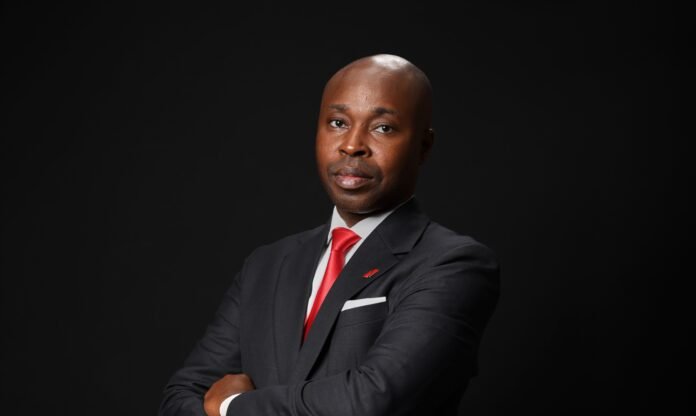
UBA Ghana has called on business leaders to strengthen collaboration between Chief Executive Officers and Chief Finance Officers, describing the relationship as critical to achieving sustainable growth, disciplined execution and long-term value creation.
Speaking at the 3rd Ghana Chief Finance Officer Summit at the Labadi Beach Hotel in Accra, Daniel Sarpong, Executive Director of UBA Ghana, who delivered remarks on behalf of Managing Director/CEO Bernard Gyebi, said the traditional view of the CEO as the strategist and the CFO merely as the custodian of the numbers was increasingly outdated.
Addressing business leaders and finance professionals on the topic, “Leadership Reflections: Aligning Vision and Value — The CEO–CFO Partnership for Sustainable Growth,” Sarpong said the modern CFO had evolved into a strategic partner, adviser, challenger and navigator who must play an active role in shaping the direction of the organisation.
“The CEO may articulate where the organisation wants to go, but the CFO helps determine the financial pathway for getting there sustainably,” he said.
UBA’s CFO plays key role in strategy
Using UBA Ghana as an example, Sarpong explained that the Bank’s CFO is an integral member of its leadership team and plays an important role in shaping strategy.
He noted that beyond financial stewardship, the CFO is closely involved in UBA Ghana’s strategy process and continuously engages the Managing Director, Executive Director and other members of the Executive Management team on decisions affecting the future direction of the Bank.
According to him, Finance has a seat at the table when the Bank considers growth, capital allocation, new products, technology investments, customer acquisition, expansion opportunities and cost optimisation.
Sarpong said this model demonstrates why strategy, and finance can no longer operate independently, particularly as businesses navigate increasingly complex operating environments.
Growth must create sustainable value
He cautioned organisations against pursuing growth purely for its own sake, arguing that leaders must pay equal attention to the quality and sustainability of that growth.
At UBA, he said, decisions around growing the loan book, expanding digital capabilities, entering new market opportunities or introducing new propositions are assessed not only on potential revenue but also against capital, liquidity, risk, cost, customer value, regulatory requirements and long-term returns.
Sarpong challenged CFOs to move beyond reporting historical performance and use financial information to influence future decisions.
“The numbers tell us what happened. Leadership must determine why it happened, what it means for the future and what we should do next,” he said, adding that Finance creates greater strategic value when it moves from merely reporting performance to shaping performance.
He also stressed that an effective CEO–CFO relationship should create room for constructive disagreement.
“A good CFO should not simply confirm what the CEO wants to hear,” he said, noting that Finance must sometimes challenge assumptions, question investment decisions or recommend a different strategic direction. Such conversations, he added, should be grounded in data, mutual respect and a shared commitment to the organisation.
Balancing today’s performance with tomorrow’s value
Sarpong further urged business leaders to balance pressure for immediate financial performance with the investments required to build sustainable institutions.
He cited investments in technology, people, capabilities, systems and controls as examples of decisions whose full financial benefits may not be realised immediately but could be critical to an organisation’s future competitiveness.
“Vision without financial discipline can destroy value. But financial discipline without strategic ambition can constrain growth,” he said.
On the future of finance, he said artificial intelligence, automation, advanced analytics and real-time data were creating significant opportunities for CFOs to move from explaining past performance to anticipating future outcomes.
He, however, cautioned that technology alone would not deliver sustainable value, stressing that leadership must determine how data and technology are converted into better decisions and measurable business outcomes.
Concluding, Sarpong called for a leadership model that combines ambition with discipline and innovation with responsibility.
He said the CEO brings vision and enterprise, while the CFO brings financial insight, challenge and discipline, but increasingly both leaders must bring strategy to the table.
“When these capabilities are aligned, the organisation gains something much more powerful: clear vision, sound decisions, disciplined execution and sustainable value.”
The 3rd Ghana Chief Finance Officer Summit brought together CFOs, business executives and other finance professionals to discuss the evolving role of finance leadership and its contribution to sustainable organisational growth.