
Source: Africa Publicity
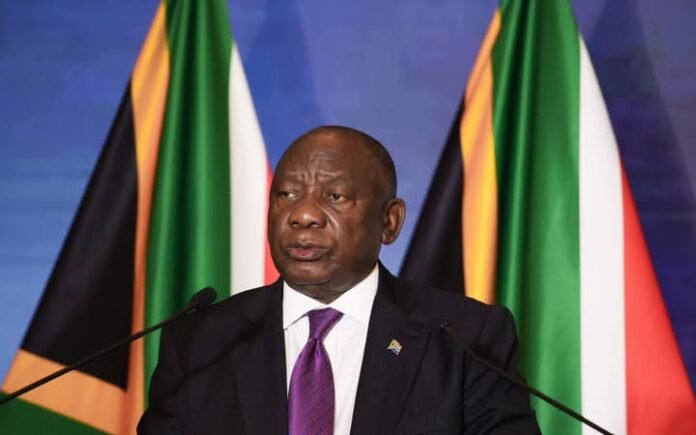
President Cyril Ramaphosa says the improving fortunes of eThekwini Metropolitan Municipality demonstrate how coordinated leadership and partnerships between government, business and civil society can help stabilise struggling local governments across South Africa.
In his weekly message to the nation on Monday, the president said recent progress in the metro — which includes the city of Durban — offers valuable lessons for municipalities grappling with failing infrastructure, poor service delivery and declining investor confidence.
Ramaphosa said he met last week with stakeholders of the Presidential eThekwini Working Group, a body established in 2024 to address concerns raised by residents and businesses about the city’s deterioration.
“At the time, the metro was beset by service delivery failures, deteriorating infrastructure and sliding business and investor confidence,” the president said.
Two years later, he said, the targeted interventions aimed at repairing infrastructure and improving service delivery were beginning to yield results.
According to Ramaphosa, the Durban Business Confidence Index has reached its highest level since its inception.
Confidence in the manufacturing sector has risen by nearly 16% quarter-on-quarter — a notable boost for a city anchored by one of Africa’s busiest ports and a large industrial base.
Tourism has also rebounded strongly. More than 1.2 million visitors travelled to the metro during the recent festive season, signalling renewed confidence in the coastal destination.
While acknowledging that stabilisation does not yet amount to a full turnaround, Ramaphosa said the eThekwini experience offers a model that could be replicated elsewhere.
“The experience of eThekwini offers a viable model for coordination and partnership that can be replicated in other metros and municipalities to enable them to recover,” he said.
The working group approach draws on the District Development Model launched in 2019 to strengthen collaboration between national, provincial and local government. The model also encourages cooperation between government, business, labour and civil society to accelerate development strategies.
Building on lessons from eThekwini, the government last year established the Presidential Johannesburg Working Group to focus on governance, service delivery, infrastructure, urban renewal and safety in the country’s economic hub.
Ramaphosa said long-term improvements in local government would depend on strengthening institutional capacity so municipalities can perform their constitutional responsibilities without national intervention.
He noted that a review of the White Paper on Local Government is currently under way and could lead to sweeping reforms in the local government system. Proposed changes include revising the powers and responsibilities of municipalities, improving appointment processes for senior officials and enhancing cooperation with traditional leadership structures.
Financial instability remains one of the biggest threats to municipalities, Ramaphosa warned.
Audit outcomes show that about two-thirds of municipalities are in financial distress, often due to weak revenue collection and growing debt.
“Without stronger revenue management and financial discipline, service delivery challenges will persist and backlogs will only worsen,” he said.
To support reforms, government has allocated R27.7 billion over the next three years to help metropolitan municipalities overhaul water, sanitation, waste and electricity services. The municipal infrastructure grant is also being restructured to curb underspending and misuse of funds.
Ramaphosa said broader structural reforms in sectors such as energy, water, telecommunications and logistics are already helping to improve economic growth and business confidence.
With local government elections approaching, the president urged citizens, businesses and civic organisations to work together to strengthen municipalities.
“When local government fails, the impact is felt by communities, businesses and households,” Ramaphosa said. “When local government works well, villages, towns and cities become engines of opportunity and growth.”