

By Hassan Solokoh Bockarie
Sierra Leone’s Vice President, Mohamed Juldeh Jalloh, has on Thursday 30th April 2026 called for bold and inclusive policies to ensure Sierra Leone fully harnesses the opportunities of the digital economy while protecting workers and promoting decent employment for all.
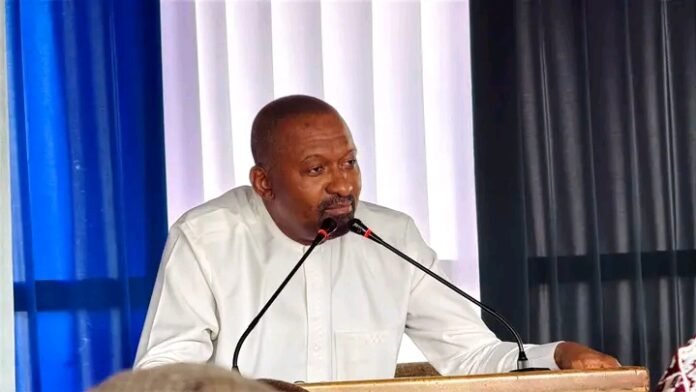
Speaking at the opening of the two-day National Labour Conference in Freetown, at the Miatta Civic Centre, Vice President Jalloh said the gathering brought together policymakers, employers, workers, innovators, and development partners to shape the future of work in a rapidly evolving global economy.
He noted that the conference theme, “Challenges and Opportunities of Digital Work in the Digital Era,” was both timely and significant, as digital technologies continue to transform how people work, learn, connect, and create value across the world.
According to the Vice President, innovations such as mobile money, e-commerce, digital freelancing, remote work, artificial intelligence, and digital platforms are opening new frontiers for entrepreneurship, productivity, economic growth, and sustainable job creation.
However, he cautioned that Sierra Leone must address existing structural barriers to ensure that the benefits of digital transformation are widely shared, particularly among young people and women who remain disproportionately represented in the informal economy.
Vice President Jalloh observed that many workers in the informal sector continue to face low wages, job insecurity, limited legal protection, and inadequate access to social security, making inclusive policy interventions an urgent national priority.
He stressed that the digital economy offers Sierra Leone an unprecedented opportunity to connect local talent to global markets, empowering young people to participate in freelancing, digital entrepreneurship, and other emerging forms of work.
The Vice President highlighted the Government’s National Innovation and Digital Strategy, describing it as a comprehensive roadmap designed to expand digital infrastructure, improve broadband connectivity, promote digital financial services, strengthen digital skills, and foster entrepreneurship nationwide.
He further emphasised that successful digital transformation requires close collaboration among government, employers, workers, innovators, and development partners to establish policies that protect workers’ rights, ensure occupational safety, and promote women’s economic empowerment.
Vice President Jalloh reaffirmed the Government’s commitment to formalising the informal economy through targeted investments in digital training, financial inclusion, business development services, and social protection programmes aimed at leaving no Sierra Leonean behind.
He also outlined broader government investments under the Big Five Game Changers, including road infrastructure, energy expansion, industrialisation, and support for small and medium-sized enterprises, all of which he said are essential for job creation and long-term economic growth.
Concluding, Vice President Jalloh declared that Sierra Leone remains open for business and determined to build an innovative, inclusive, and resilient economy capable of creating decent jobs, reducing poverty, and improving the livelihoods of all citizens in the digital age.