
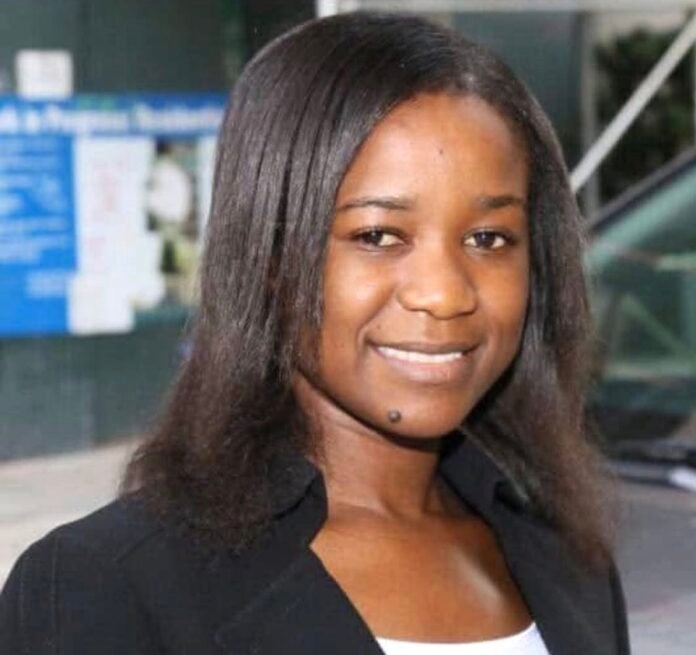
A Zambian-American social media influencer and political commentator, Ethel Chisono Edwards, has been sentenced to 18 months in prison by a magistrate’s court in Lusaka for making hateful and insulting remarks about Zambian President Hakainde Hichilema. The ruling has sparked widespread debate across the country, with citizens and rights groups divided over whether the decision represents a necessary enforcement of the law or an infringement on free speech.
Edwards, 42, is a Zambian-born United States citizen who works as a real estate agent in New York. Known online as “One Boss Lady,” she built a sizeable following on social media platforms where she regularly criticised the Zambian government and its leadership. Over the past two years, her posts and online broadcasts often focused on President Hichilema, with content that authorities later classified as hateful and offensive.
Her legal troubles began three months ago when she arrived in Zambia to attend her grandmother’s funeral. She was arrested at the country’s main international airport shortly after landing. Law enforcement officials alleged that she had used her online platforms to publish content that violated Zambia’s Cyber Security Act and Cyber Crimes Act—two pieces of legislation that came into effect earlier this year to address issues such as online harassment, cyberbullying, and harmful digital communication.
During her court appearance in Lusaka, Edwards pleaded guilty to the charges brought against her. She admitted that she had used a computer system to publish the offensive statements, acknowledged that she had no lawful justification for her comments, and conceded that the words were motivated by hate. In a show of remorse, she also issued an apology directed to the President, his family, and the nation as a whole.
“I want to unreservedly apologise to the President, Mr Hakainde Hichilema, his family, and the nation of Zambia for the words that I uttered against the President and for the negative effects that those words may have caused,” the statement read in court.
Presiding magistrate Webster Milumbe said the court had a duty to send a clear and strong message that hate speech would not be tolerated in the country. He observed that such language, especially on widely accessed digital platforms, had become increasingly common and could contribute to social instability, division, and unrest.
While acknowledging her plea for leniency, the magistrate stated that her actions had crossed a legal and moral line. He ruled that the 18-month sentence would serve as a deterrent to others who might misuse social media to spread hate or incite tension. He added that the sentence would be counted from the time of her arrest, meaning that part of the term had already been served while she remained in police custody.
Edwards’ lawyer, Joseph Katati, described her as a first-time offender who had shown genuine remorse for her actions. He appealed for a lighter sentence, explaining that his client was a breadwinner for her family and a philanthropist who supported various community activities in Zambia, including sponsoring a girls’ football team. According to him, her imprisonment would not only affect her immediate family but also disrupt projects that benefited young people in her home country.
Mr Katati also noted that throughout the legal proceedings, Edwards had appeared contrite and subdued, a stark contrast to the bold and outspoken persona she was known for online. He said her behaviour in court demonstrated that she had learned a valuable lesson and was committed to using her platform more responsibly in the future.
However, the magistrate maintained that the seriousness of the offence and the need to uphold the law made a custodial sentence unavoidable.
The jailing of Edwards has drawn mixed reactions from the Zambian public. Some citizens have applauded the judgment, arguing that it was long overdue and would help curb the spread of harmful, abusive language on social media. They believe public figures, including influencers and bloggers, must be held accountable for the content they share, especially when it targets individuals or institutions.
Others, however, have expressed concern that the ruling could have a chilling effect on freedom of expression in Zambia. They argue that while hate speech should be condemned, prison sentences for online commentary risk undermining democratic values and open political debate.
President Hichilema, who took office in 2021, has previously abolished the criminal defamation law that protected the presidency, a move widely praised by human rights activists. Nevertheless, critics point out that Zambians can still face prosecution under other laws, such as cybercrime and national security statutes, raising questions about the boundaries between free speech and criminal conduct.
This is not the first time individuals have faced severe punishment over actions linked to President Hichilema. In September, two men were handed two-year prison sentences after being convicted for attempting to use witchcraft to harm him—a case that attracted international media attention and highlighted the unusual legal and cultural challenges faced by the country.
At present, Mr Katati has stated that he has not yet received instructions from his client on whether she intends to appeal the court’s decision.
Source:Africa Publicity