
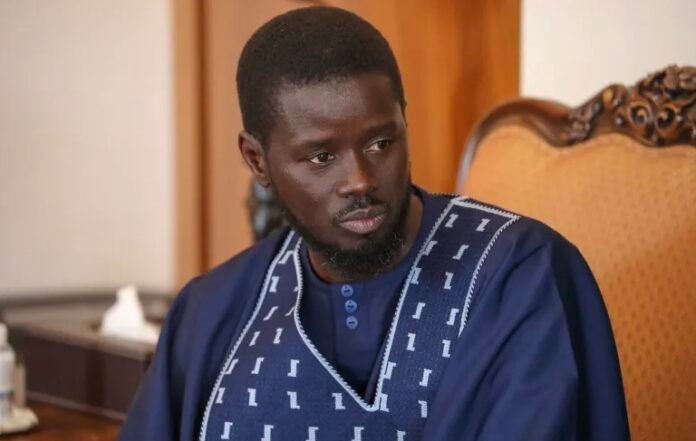
Tensions have emerged between Senegal’s President Bassirou Diomaye Faye and his political party, Pastef, following conflicting announcements about who leads the ruling coalition — a development that underscores growing strains within the country’s leadership as it faces financial uncertainty and ongoing negotiations with the International Monetary Fund (IMF).
The dispute comes at a sensitive time for the West African nation, which is struggling to secure a new lending arrangement after the IMF suspended a $1.8 billion support program last year. The freeze followed the government’s disclosure of previously unreported debts now estimated to exceed $11 billion — liabilities the current administration attributes to mismanagement under the previous government.
President Faye on Tuesday appointed former Prime Minister Aminata Touré, a trusted ally, to head the coalition of parties that backed his presidential campaign earlier this year. However, the Pastef party swiftly rejected the decision, declaring that Aissatou Mbodj — a prominent figure close to Prime Minister Ousmane Sonko — remains the legitimate leader of the coalition.
While both Faye and Sonko have repeatedly denied reports of a power struggle, the disagreement over coalition leadership has reignited speculation of internal friction between the two leaders. Sonko, a charismatic politician with strong youth support, was barred from running in the 2024 presidential election and endorsed Faye as his successor. After Faye’s victory, he appointed Sonko as prime minister, a move initially seen as a display of unity within Pastef.
The apparent division could have broader consequences for Senegal’s economic outlook. The country’s bonds dropped more than three cents on Wednesday, hitting a four-month low amid growing investor concern over stalled IMF talks. Over the weekend, Sonko said IMF officials were pressing for a restructuring of Senegal’s debt — a step he firmly rejected — sending markets tumbling further.
An IMF spokesperson confirmed that discussions with Dakar are ongoing, noting that the Fund had presented “various options” to address Senegal’s “significant debt vulnerabilities,” but emphasized that any restructuring decision rests solely with the government.
President Faye has so far remained silent on Sonko’s remarks, leaving observers uncertain about whether the two leaders can maintain a united front as Senegal seeks to restore confidence among creditors and navigate its mounting economic challenges.
Source:Africa Publicity