

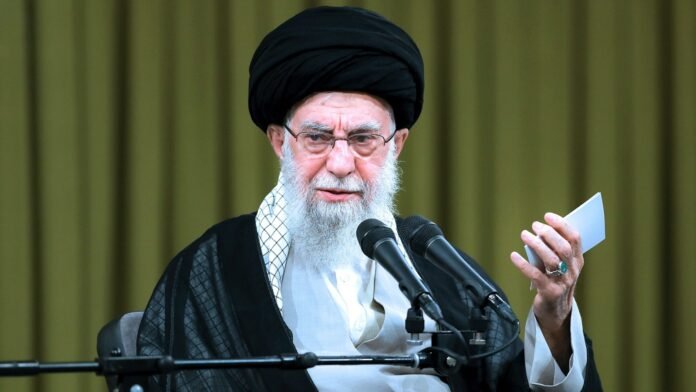
Iran has significantly escalated its stance against nationwide anti-government demonstrations, with high-ranking officials signaling a transition toward a much harsher crackdown. As the protests near the two-week mark, the state has combined a total information blackout with severe legal threats, including the use of capital punishment for those participating in or supporting the unrest.
‘Enemy of God’ Charges and Death Penalty
On Saturday, Iran’s Attorney General, Mohammad Movahedi Azad, issued a chilling warning via state television. He declared that individuals participating in the protests—or even those found to have “helped rioters”—would be charged as an “enemy of God” (Moharebeh), a crime that carries the death penalty under Iranian law.
“Prosecutors must carefully and without delay… prepare the grounds for the trial and decisive confrontation with those who, by betraying the nation and creating insecurity, seek foreign domination over the country,” the statement read. “Proceedings must be conducted without leniency, compassion or indulgence.”
Communications Blackout and Rising Death Toll
Assessing the full scale of the movement has become increasingly difficult as the Iranian government has:
- Shut down the internet across major hubs.
- Cut international phone lines to prevent information from leaving the country.
Despite these restrictions, the US-based Human Rights Activists News Agency (HRANA) reports that at least 72 people have been killed and more than 2,300 individuals detained since the unrest began. Conversely, state media has focused almost exclusively on casualties among security forces, reporting the deaths of three volunteer Basij members and several police officers across Bandar Abbas, Gilan, and Hamadan.
Geopolitical Friction: US Issues Warning
The United States has voiced strong support for the demonstrators while issuing a stern warning to the Iranian leadership.
- Secretary of State Marco Rubio: Shared a message on the social platform X, stating: “The United States supports the brave people of Iran.”
- State Department: Issued a separate, blunt caution: “Do not play games with President Trump. When he says he’ll do something, he means it.”
Economic Collapse and Political Evolution
The protests originally erupted on December 28, 2025, triggered by the catastrophic collapse of the national currency. The Iranian rial is currently trading at over 1.4 million to the US dollar, as the economy remains strangled by international sanctions linked to the country’s nuclear programme.
What began as economic desperation has rapidly evolved into a direct challenge to the theocratic system. In verified footage from Tehran’s Saadat Abad area, thousands of protesters were heard chanting, “Death to Khamenei!”
Travel Disruptions and Exile Support
The instability has begun to sever Iran’s remaining links to the international community:
- Austrian Airlines: Suspended flights to Iran through Monday as a “precautionary measure.”
- Turkish Airlines: Cancelled 17 flights to three major Iranian cities.
From abroad, exiled Crown Prince Reza Pahlavi urged citizens to continue the momentum through the weekend, calling on them to carry the old lion-and-sun flag and “claim public spaces as your own.”
As the work week begins in Iran, the world watches to see if the regime’s threat of “proceedings without leniency” will quell the dissent or ignite further violence.
Source: The Indian Express
Related Posts:
Former SA Ambassador to Venezuela Slams US Military Operation as ‘Fight for Oil and Power’