

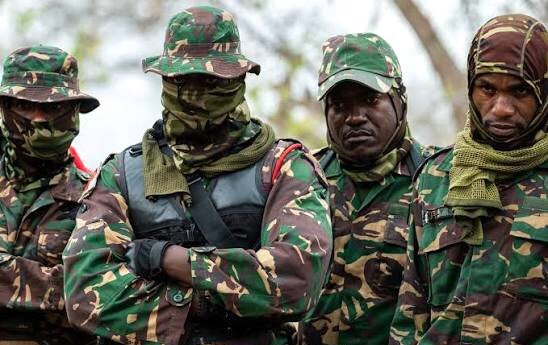
A large deployment of police and military personnel swept across Dar es Salaam on Tuesday as Tanzanian authorities sought to prevent planned demonstrations marking the country’s Independence Day. The protests, organized by civil society activists, aimed to denounce the violent suppression of dissent surrounding the October elections—unrest that the United Nations has described as the deadliest in Tanzania’s post-independence era.
The government warned that any assembly or march held on December 9, the date commemorating mainland Tanzania’s 1961 independence from Britain, would be treated as an attempt to destabilize the state. Officials urged residents to remain indoors, characterizing the planned demonstrations as politically motivated efforts to undermine national security.
A City Under Tight Surveillance
Residents reported seeing heavily armed police and soldiers positioned along major roads, roundabouts, and key intersections throughout the commercial hub. Security forces conducted frequent identification checks, stopping pedestrians and motorists to verify their documents. Several people told Reuters that while the streets were quieter than usual, the atmosphere appeared tense.
By mid-morning, the security lockdown seemed to have effectively deterred large gatherings. However, one resident and a handful of activists claimed on social media that small protest clusters had begun forming in certain neighborhoods. These reports remained unverified, and the police did not respond to repeated requests for comment.
The show of force reflects the government’s determination to prevent a repeat of the chaos that erupted after the October 29 presidential and parliamentary elections. Those polls, in which President Samia Suluhu Hassan secured nearly 98% of the vote after key opposition candidates were ruled ineligible, sparked widespread allegations of irregularities and abuse.
Election Unrest and Mounting International Concern
The United Nations has estimated that at least several hundred people lost their lives in the aftermath of the elections, describing the violence as the most extensive the country has witnessed since independence. U.N. human rights experts later reported that as many as 700 individuals may have been victims of extrajudicial killings, though they emphasized that the numbers were difficult to verify due to restricted access and the absence of transparent investigations.
Tanzanian authorities have acknowledged that casualties occurred but have not issued an official death toll. President Hassan has denied that security forces acted unlawfully, though she announced in November that an inquiry would be conducted into the violence surrounding the polls. To date, no findings have been publicly released.
Meanwhile, the United States stated last week that it was reassessing its relationship with Tanzania in light of concerns over excessive use of force against civilians, restrictions on religious freedom, crackdowns on political expression, and barriers affecting foreign investment. Washington’s remarks have amplified calls from international organizations urging the Tanzanian government to guarantee accountability and protect civil liberties.
Climate of Fear Among Opposition and Civil Society
Human rights groups and opposition parties have accused the government of using intimidation tactics both before and after the elections. In the months leading up to the vote, several activists and political critics were reported missing under suspicious circumstances. Opposition leaders claimed that these disappearances were politically motivated attempts to silence dissent.
President Hassan stated last year that she had ordered an investigation into the alleged abductions. However, there has been no public disclosure of the inquiry’s conclusions, leaving families of the missing without answers and fueling criticism from civil society organizations.
As the government continues to emphasize stability and national unity, many activists argue that the country is experiencing its most restrictive political climate in decades. Tuesday’s massive security mobilization, they say, underscores the shrinking space for peaceful expression and the government’s reluctance to engage with grievances raised by opposition groups.
A Nation at a Crossroads
For many Tanzanians, Independence Day traditionally symbolizes nationhood, self-determination, and the legacy of the country’s founding leaders. This year, however, the celebrations unfolded under the shadow of heightened political tensions and concerns about shrinking democratic rights.
Source:Africa Publicity