
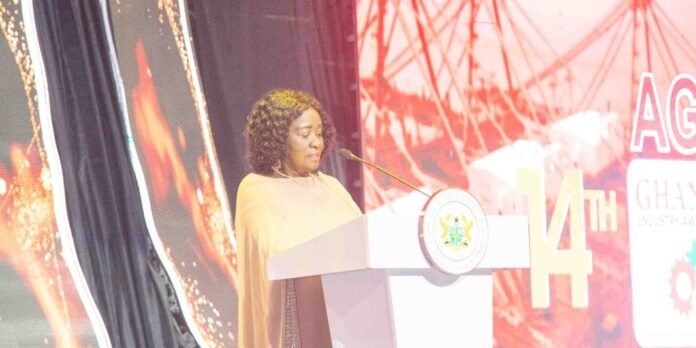
Vice President Prof. Jane Naana Opoku-Agyemang has reaffirmed government’s commitment to accelerating Ghana’s industrialisation agenda, describing it as a key pathway to economic independence, resilience, and long-term prosperity.
Speaking at the 14th AGI Ghana Industry and Quality Awards held on Saturday, 29th November 2025, in Accra, the Vice Presidentcommitted said industrial growth remains central to the government’s transformational policies, including the proposed 24-hour economy.
Prof. Opoku-Agyemang explained that the 24-hour economy policy is designed to incentivise businesses—particularly manufacturing and light industries—to operate in shifts around the clock. This, she noted, would boost productivity, maximise resource use, and create more jobs for Ghanaians.
On agriculture, she highlighted the government’s Feed Ghana Programme, describing it as a strategic initiative aimed at boosting food production while creating employment opportunities nationwide. The programme, she added, will ensure a stable supply of raw materials to support the expansion of agribusiness and position Ghana as a leading export-driven economy.
The Vice President emphasized that government alone cannot achieve industrialisation, stressing the crucial role of the private sector. She called for bold investments from industry players and assured them of government’s continuous support, especially under the Agribusiness Policy which seeks to guarantee reliable inputs for manufacturers.
Prof. Opoku-Agyemang further pledged government’s determination to address persistent challenges facing the industrial sector, including limited access to credit.
“We will work with you to address them; we know we have your cooperation,” she said, while congratulating award winners and industry champions for their dedication.
Minister for Trade, Agribusiness and Industry, Hon. Elizabeth Ofosu-Adjare, who also addressed the ceremony, highlighted government’s ongoing reforms to create a more supportive industrial environment. She noted that regulatory and digitalisation reforms from company registration to customs clearance—are simplifying processes, reducing delays, and providing predictability for businesses to expand and compete effectively.
She further underscored government’s commitment to strengthening local industry through its procurement power. Citing examples, she mentioned the procurement of locally manufactured sanitary pads for schoolgirls under the free sanitary pads initiative, as well as similar support to the automotive sector, as clear demonstrations of government’s resolve to boost domestic production.
Hon. Ofosu-Adjare also pointed to major infrastructure investments as critical enablers of industrial competitiveness. She referenced ongoing efforts to improve energy stability, expand industrial parks, and enhance transport and logistics networks, including Ghana’s support for the Abidjan–Lagos Corridor initiative which is expected to reduce trade costs and improve regional market access for local manufacturers.
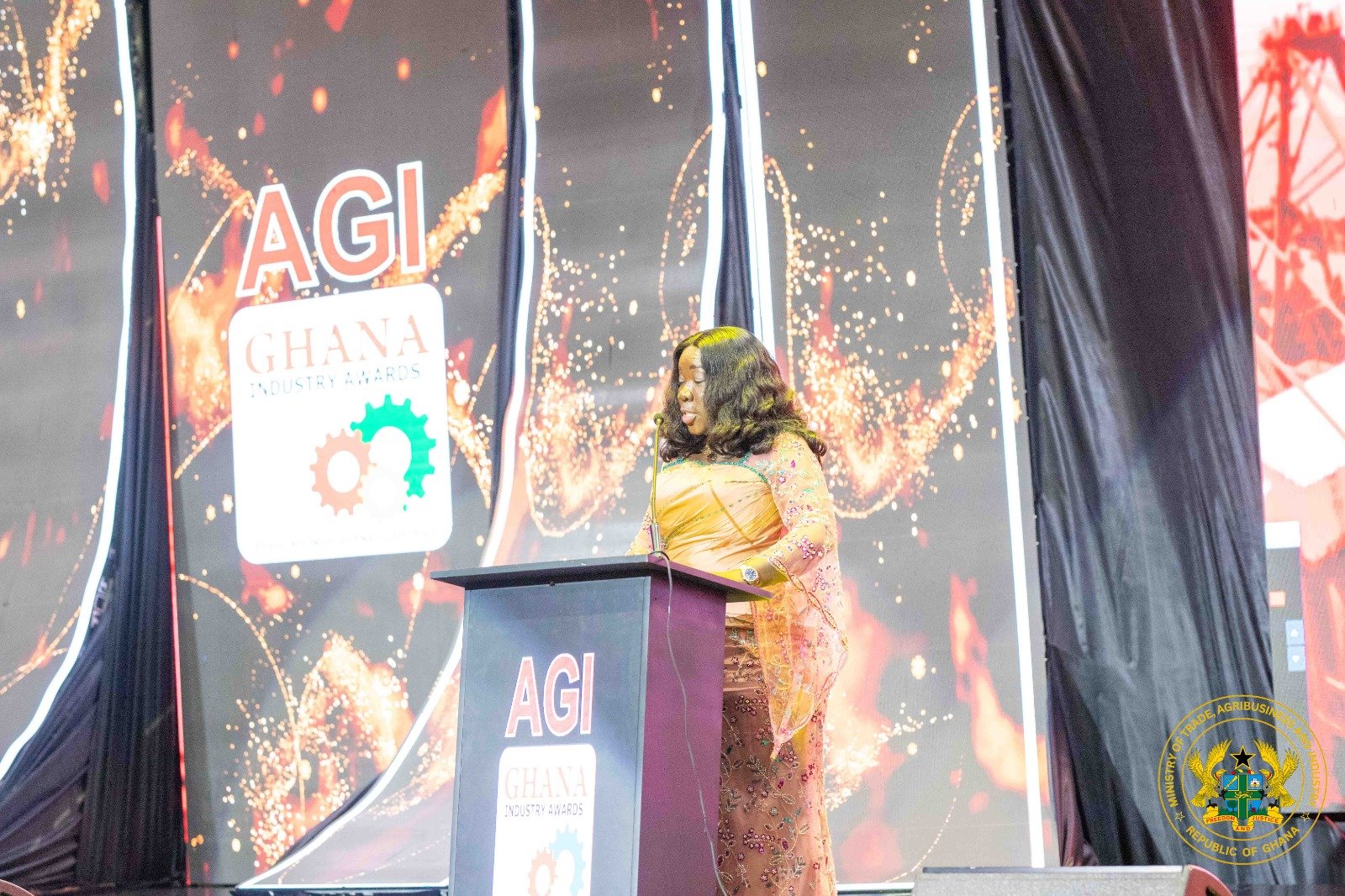
Outgoing AGI President, Dr. Humphrey Ayim-Darke, commended government for removing the COVID-19 levy and implementing other pro-business measures. He called for stronger border controls and the elimination of substandard goods to protect local industries and uphold quality standards.
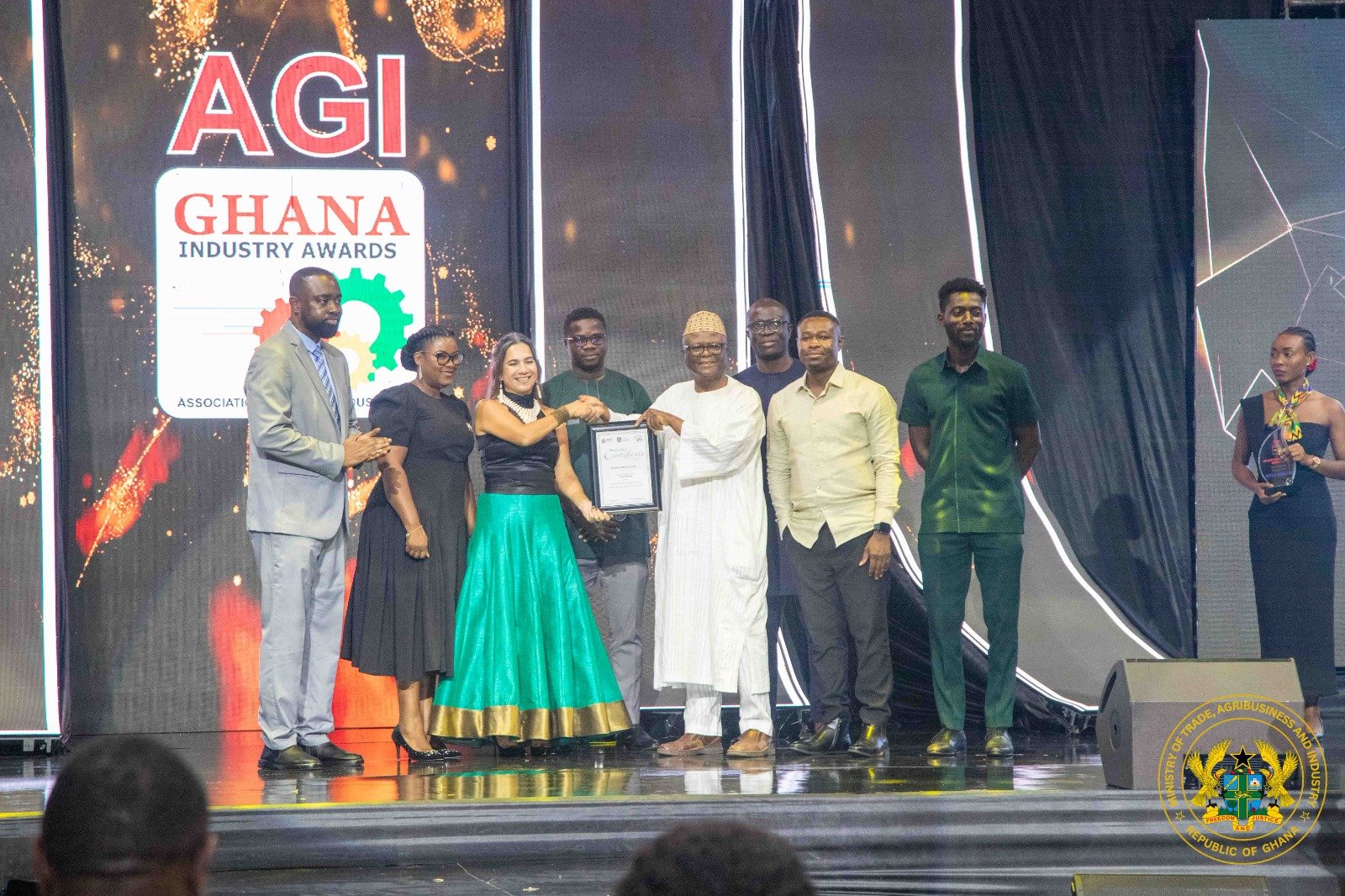
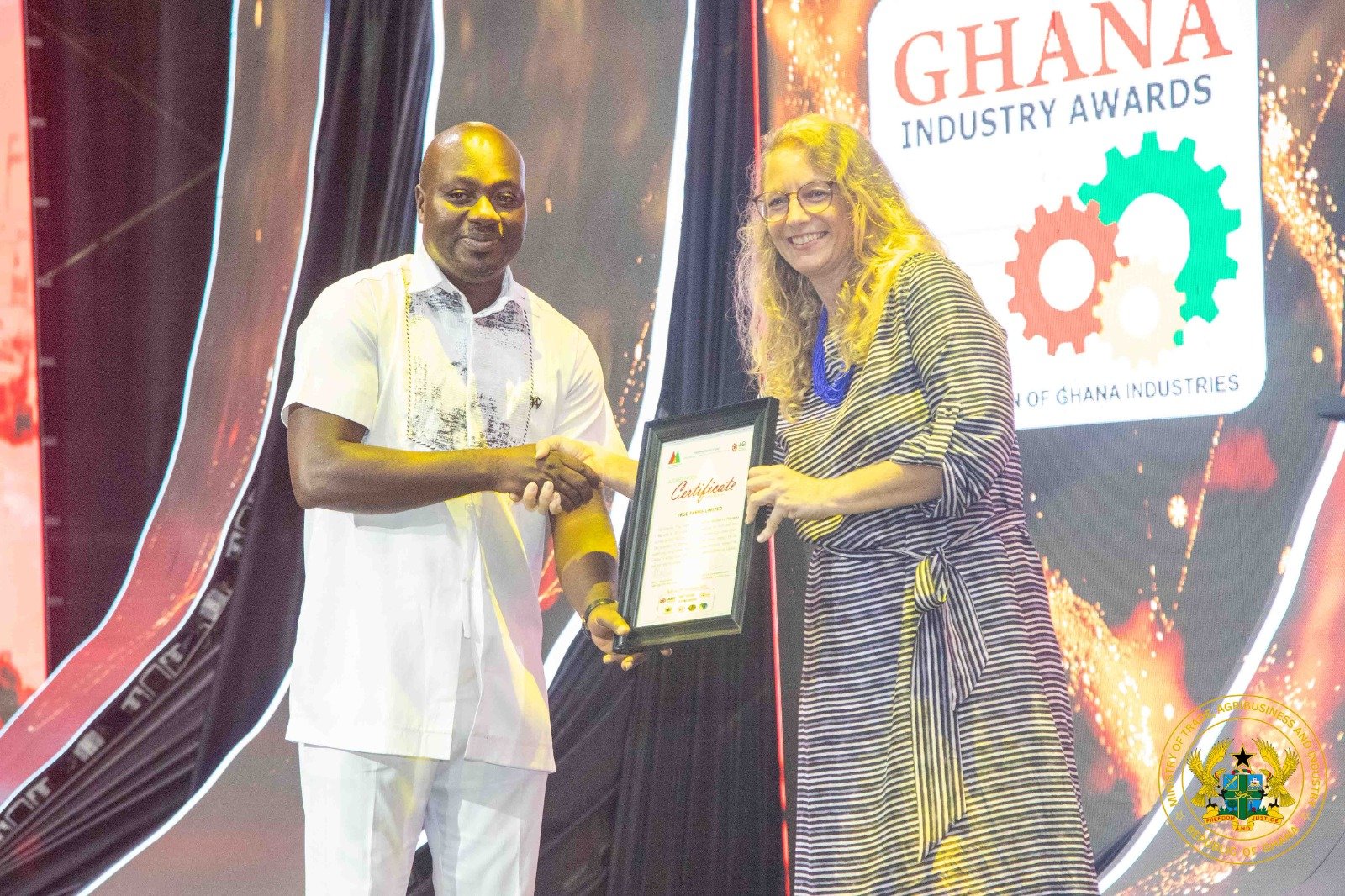
The ceremony celebrated outstanding Ghanaian companies and individuals who have demonstrated excellence and innovation across various sectors with softcare Ghana winning the overall best industrial company of the year Award.