
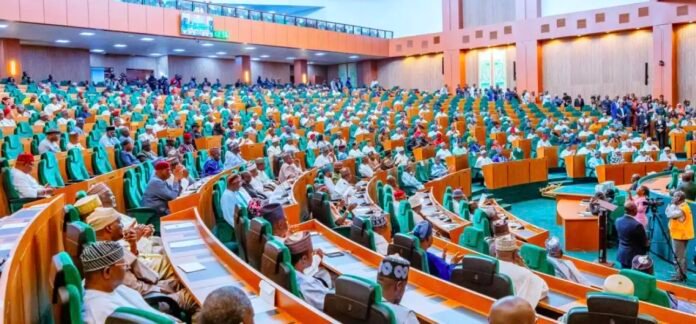
The House of Representatives of Nigeria has launched a formal investigation into alleged inconsistencies between the tax reform bills passed by the National Assembly and the versions recently gazetted and circulated by the Federal Government.
The decision, taken at plenary on Thursday, followed concerns raised by lawmakers over claims that provisions not approved by parliament may have been inserted into the final copies of the new tax laws. In response, the Peoples Democratic Party (PDP) has called on the Federal Government to postpone the planned January 1, 2026 commencement of the laws by an additional six months.
Ad Hoc Committee Inaugurated
Speaker of the House, Tajudeen Abbas, announced the constitution of a seven-member ad hoc committee to scrutinise the alleged discrepancies and report back to the House for further legislative action. The committee is chaired by Mukhtar Betara, with Idris Wase, James Faleke, Sada Soli, Igariwey Iduma, Fredrick Agbedi and Babajimi Benson as members.
According to Abbas, the allegations raised touch on constitutional and legislative integrity and must be addressed urgently to protect the credibility of the lawmaking process.
Lawmakers Raise Alarm
The controversy was triggered on Wednesday when PDP lawmaker Abdussamad Dasuki, representing a constituency in Sokoto State, drew attention to what he described as “material differences” between the tax bills approved by lawmakers and the versions officially gazetted.
Dasuki warned that any unapproved insertions could expose the laws to legal challenges, stressing that only provisions expressly passed by the National Assembly can carry the force of law. He urged the House to compare both versions clause by clause to identify and correct any irregularities.
PDP Demands Fresh Delay
Reacting on Thursday, the PDP praised Dasuki for raising the issue and called for the implementation date of the tax laws to be shifted forward by at least six months. The party argued that the delay would allow time for a thorough investigation and for broader public sensitisation on the reforms.
The PDP cautioned that failing to address the issue decisively could erode public trust in legislative processes, insisting that Nigerians deserve clarity and transparency on the laws they are required to obey.
Background on the Tax Reforms
President Bola Tinubu recently signed four landmark tax reform bills into law: the Nigeria Tax Act, Nigeria Tax Administration Act, Nigeria Revenue Service (Establishment) Act and the Joint Revenue Board (Establishment) Act. Together, the laws aim to overhaul Nigeria’s tax system by simplifying compliance, harmonising taxes across tiers of government, expanding the tax base and eliminating multiple and nuisance taxes.
The reforms are scheduled to take effect on January 1, 2026, after an initial six-month transition period for system adjustments and public education.
Growing Opposition and Public Concerns
Beyond the PDP, opposition groups have continued to express reservations. On Wednesday, the National Opposition Movement (NOM), a coalition drawn from various opposition parties, called for an immediate suspension of the reforms, warning that their implementation could worsen economic hardship.
Speaking at a press conference in Abuja, NOM spokesperson Chille Igbawua described the planned rollout as “punitive,” arguing that Nigerians were already grappling with inflation, unemployment and rising living costs.
Federal Government Pushback
The Federal Government, however, dismissed claims that the reforms are anti-poor. The President’s Special Adviser on Economic Affairs, Tope Fasua, said on Thursday that some critics were deliberately misrepresenting the reforms to undermine them.
Fasua insisted the policies are designed to protect low-income earners and small businesses while strengthening national revenue generation. He cited ongoing infrastructure projects as examples of the benefits of improved tax efficiency.
Similarly, the Chairman of the Presidential Committee on Fiscal Policy and Tax Reforms, Taiwo Oyedele, reiterated that the reforms include exemptions for small businesses, tax relief for workers and the middle class, lower corporate tax rates and streamlined compliance processes.
Public Enlightenment Drive
The National Orientation Agency (NOA) also pledged to intensify public awareness campaigns. Its Director-General, Lanre Issa-Onilu, said the agency would deploy its nationwide communication platforms to counter misinformation and ensure Nigerians understand the intent and content of the new tax laws.
As investigations begin, attention now turns to the House committee’s findings, which could determine whether amendments, delays or other legislative actions will follow before the reforms take effect in 2026.
Source:Africa Publicity