

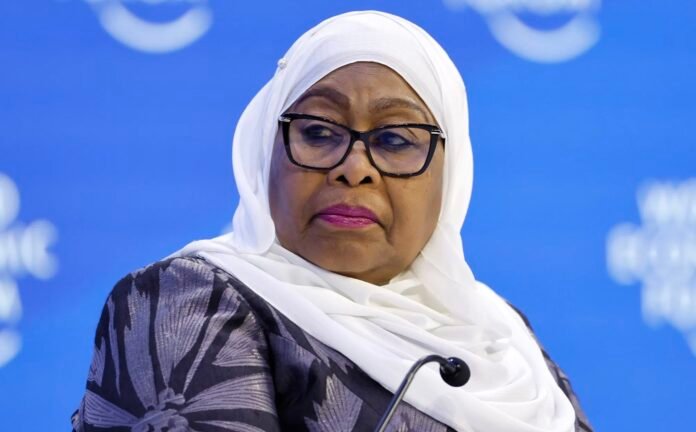
Tanzania’s global image as one of Africa’s most stable democracies is under severe strain after its most violent post-election unrest in decades, analysts and rights groups say — a dramatic reversal for a country once considered a model of calm politics in the region.
The country is still reeling from the chaos that followed President Samia Suluhu Hassan’s landslide victory, officially declared at 98% of the vote. Families are still searching for missing relatives and burying the dead, even though no official death toll has been released. Opposition groups claim hundreds may have been killed in the subsequent protests and crackdown.
For the first time in years, Tanzania has now faced rare and direct criticism from the African Union and the Southern African Development Community (SADC). Both regional blocs said the election failed to meet “basic democratic standards,” citing intimidation, ballot stuffing and a heavily restricted political environment.
In her inauguration speech on Monday, President Samia defended the election as “fair and transparent” — but admitted people had died. She blamed “foreign actors” for inciting the unrest, without offering evidence.
Youth anger and political suppression
The protests — largely led by young Tanzanians — came after years of rising frustration over economic hardship, blocked reforms and shrinking political freedoms. The ruling Chama Cha Mapinduzi (CCM) party had disqualified major challengers ahead of the vote, including opposition figure Tundu Lissu, currently detained on treason allegations he denies.
Long-time observers say the state may have mistaken public silence for political contentment.
“Tanzania’s so-called exceptionalism has collapsed,” said Charles Onyango-Obbo, a veteran political commentator. “The quiet was fatigue, not peace.”
Samia — initially praised at home and abroad when she took office in 2021 following the death of John Magufuli — is now accused of pursuing the same authoritarian playbook. Her rival Bobi Wine in Uganda, civil society groups in Kenya and Tanzanian analysts have compared the current environment to recent waves of repression seen in other East African nations.
What this means going forward
Samia recently secured the CCM nomination to run for a second term, after reshuffling military, intelligence and cabinet ranks — moves analysts say strengthened her control over the state. But the violent fallout of the election is now threatening her international reputation at the very moment she needs legitimacy most.
“It is not the victory in numbers that matters,” said Prof Peter Kagwanja, a Kenyan policy scholar. “Her challenge was to prove her mandate was earned, not installed. She chose coronation.”
With the opposition refusing to recognise the results — and regional bodies formally questioning their credibility — the coming months are expected to be a major test for Tanzania’s leadership, its institutions and its claim to democratic stability.
Source:Africa Publicity