
By: Isaac Christopher Lubogo
Introduction
In early January 2026, the United States carried out a military operation in Venezuela that resulted in the capture and extradition of President Nicolás Maduro and his wife to U.S. custody to face federal charges, including narco-terrorism and drug trafficking. Maduro pleaded not guilty in Manhattan federal court, claiming he had been “kidnapped” by a foreign power. (AP News, 2026).
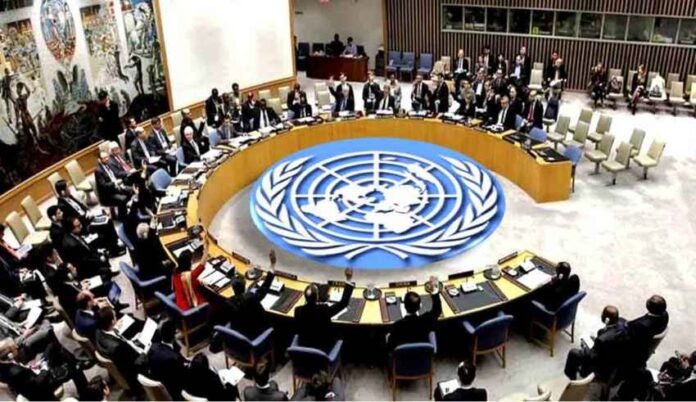
The incident prompted the United Nations Security Council (UNSC) to convene an emergency session on 5 January 2026, called by Colombia with support from Russia, China, and Venezuela, to address the legality and implications of the U.S. action (Security Council Report, 2026). During the session, Secretary-General António Guterres expressed concern that the operation could destabilize the region and set a dangerous precedent for international norms (Reuters, 2026).
Despite broad international condemnation, the Council remains structurally limited in its ability to take binding action against the United States — not for lack of consensus but because of the very architecture of the United Nations system.
1. The Security Council’s Veto: Shield and Structural Limit
The UNSC includes fifteen members, of which five are permanent (the United States, Russia, China, the United Kingdom, and France). These permanent members hold veto power, meaning any one of them can block a substantive resolution regardless of the number of affirmative votes from other members (UN Geneva, 2025).
Article 27 of the UN Charter specifies that a resolution requires nine affirmative votes, including all five P5 concurring, for adoption. Consequently, if a resolution were proposed to condemn or sanction the United States for its actions in Venezuela, the U.S. could exercise its veto to block any binding measure (Wikipedia, 2026).
This mechanism, originally designed to ensure great-power engagement in the post-World War II order, now functions as a shield for permanent members, allowing them to act with impunity when accused of violating international norms (UN Geneva, 2025).
2. International Law and the Prohibition on Use of Force
Article 2(4) of the UN Charter prohibits the use of force against the territorial integrity or political independence of any state, except under self-defense or with Security Council authorization. The U.S. military operation in Venezuela did not have Council authorization and lacks a credible claim to self-defense under Article 51 (UN Charter, 1945, Art. 2(4)).
During the Council session, many member states, including Brazil, China, Russia, and Mexico, condemned the U.S. action as a breach of Venezuelan sovereignty and international law (The Guardian, 2026). The U.S., however, defended its operation as a law enforcement action aimed at combating organized narco-terrorism (AA, 2026).
3. Veto Use by Permanent Members and Power Dynamics
Historically, all permanent members have used their veto to protect strategic interests:
The U.S. has blocked Council resolutions multiple times, notably those related to Gaza ceasefire proposals, despite overwhelming support from other members (UN, 2025).
Russia and China similarly deploy vetoes to shield themselves or allies in Syria, Ukraine, and other conflicts (UN Geneva, 2025).
Thus, the apparent selective enforcement against certain states is a function of veto dynamics, not moral preference. When a permanent member is the subject of criticism, its veto ensures impunity.
4. Why Some Issues See Action and Others Do Not
The Council adopts substantive resolutions when no permanent member is directly implicated or when alliances align. However, when a P5 member’s own conduct is under scrutiny, deadlock is inevitable, as seen with the Venezuela case (Security Council Report, 2026).
This explains why the UNSC can act decisively against conflicts like North Korea’s nuclear program or impose sanctions on non-permanent member states, while it is unable to constrain a powerful member itself.
5. Role of the General Assembly: “Uniting for Peace”
When the Council is deadlocked, the General Assembly can act under “Uniting for Peace” (Resolution 377(V)), convening an emergency special session to recommend collective measures. While politically significant, these measures are not legally binding (Wikipedia, 2025).
Thus, while the General Assembly can amplify international condemnation and coordinate non-binding responses, it cannot compel a veto-wielding permanent member to comply.
6. Accountability and Structural Limits
The U.S. operation in Venezuela underscores a fundamental structural problem: the enforcement of international law depends on political power rather than legal authority. The veto ensures that permanent members can avoid Security Council sanction or legal scrutiny, highlighting the tension between sovereignty equality under law and power asymmetries in practice.
Rhetorical questions arise:
If international law exists to protect all states, why are powerful states effectively immune to Council action?
If the UNSC is meant to safeguard peace, why does its most powerful tool — the veto — sometimes prevent accountability?
How can global norms be enforced when enforcement mechanisms rely on the consent of those most likely to violate them?
These questions reveal the contradiction at the heart of the UN system: an institution designed to maintain peace that is constrained by the very powers it seeks to regulate.
Conclusion
The United Nations Security Council cannot realistically stop the United States from unilateral military actions, as evidenced by the January 2026 Venezuela operation. The veto power of permanent members ensures that the Council cannot take binding action against a P5 member. While the General Assembly can provide political pressure and symbolic resolutions, enforcement ultimately reflects geopolitical realities rather than universal legal norms. The Venezuela case demonstrates that international law, while theoretically egalitarian, is structurally limited by power.
References
1. AP News, ‘US allies and adversaries alike use UN meeting to critique Venezuela intervention’ (5 Jan 2026) https://apnews.com/article/1433e10bbb800fb41b21a70c7501ad88?utm_source=chatgpt.com
2. Reuters, ‘UN Chief Guterres Raises Concerns About Instability in Venezuela, Legality of US Operation’ (5 Jan 2026) https://www.reuters.com/world/americas/un-chief-guterres-raises-concerns-about-instability-venezuela-legality-us-2026-01-05/?utm_source=chatgpt.com
3. Security Council Report, ‘Venezuela Emergency Meeting’ (2026) https://www.securitycouncilreport.org/whatsinblue/2026/01/venezuela-emergency-meeting.php?utm_source=chatgpt.com
4. The Guardian, ‘UN Security Council meets over US attack in Venezuela’ (5 Jan 2026) https://www.theguardian.com/world/2026/jan/05/un-security-council-trump-attack-venezuela?utm_source=chatgpt.com
5. AA, ‘US at UN says not occupying Venezuela after capturing Maduro in military operation’ (5 Jan 2026) https://www.aa.com.tr/en/americas/us-at-un-says-not-occupying-venezuela-after-capturing-maduro-in-military-operation/3790646?utm_source=chatgpt.com
6. UN Charter, Art. 2(4) (1945) https://www.un.org/en/about-us/un-charter/chapter-i
7. UN Geneva, ‘US votes against Gaza ceasefire’ (2025) https://www.ungeneva.org/en/news-media/news/2025/09/110739/security-council-us-votes-against-resolution-gaza-ceasefire?utm_source=chatgpt.com
8. UN, ‘UN Security Council fails to adopt Gaza ceasefire resolution due to US veto’ (2025) https://www.un.org/unispal/document/un-security-council-fails-to-adopt-resolution-calling-for-permanent-ceasefire-in-gaza-owing-to-veto-by-united-states/?utm_source=chatgpt.com
9. Wikipedia, ‘United Nations Security Council veto power’ (2026) https://en.wikipedia.org/wiki/United_Nations_Security_Council_veto_power?utm_source=chatgpt.com
10. Wikipedia, ‘Uniting for Peace’ (2025) https://en.wikipedia.org/wiki/United_Nations_General_Assembly_Resolution_377_%28V%29?utm_source=chatgpt.com