

By: Amb Sidikie Elvis Fornah.
Across the African continent, there are moments when the silence of dawn is broken not by hope, but by headlines of sorrow. Recent waves of violence in Nigeria have once again forced many of us to confront a painful reality one that unsettles not only the affected communities, but the conscience of Africa as a whole.
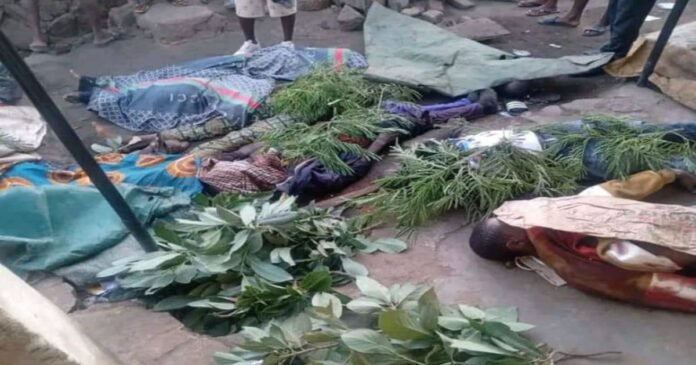
Reports of mass killings, displacement, and destruction continue to emerge from different regions. Families are torn apart, villages emptied, and futures abruptly cut short. Whether driven by insurgent activity, armed banditry, or deep-rooted communal tensions, the outcome remains the same: human lives reduced to statistics, and grief multiplied across generations.
Groups such as Boko Haram have long contributed to instability, particularly in the northeast. At the same time, clashes between farmers and herders, as well as criminal networks exploiting weak security structures, have intensified violence in other parts of the country. These overlapping crises create a complex web of insecurity that challenges even the most determined efforts at reform.
For many observers, the scale and persistence of the killings raise troubling questions. Are we witnessing isolated conflicts, or something more systematic? The word “genocide” is often invoked in moments of deep anguish. Yet, according to standards set by the United Nations, genocide refers to the intentional and coordinated destruction of a specific group. While the violence in Nigeria is undeniably severe and heartbreaking, applying such a label requires careful legal and factual grounding.
Still, the debate over terminology must not distract from the urgent moral issue: lives are being lost at an alarming rate, and the response has not matched the scale of the crisis.
This is not just Nigeria’s burden. It is an African concern.
The instability in one nation has ripple effects across borders fueling displacement, economic strain, and regional insecurity. It challenges the vision of a united and prosperous Africa, and tests the strength of institutions meant to protect citizens. It also calls into question the effectiveness of leadership, governance, and collective responsibility.
Yet even in the shadow of tragedy, there remains a quiet resilience. Communities continue to rebuild. Civil society organizations advocate for peace and justice. Regional bodies and international partners seek solutions, however imperfect. These efforts, though often overlooked, are reminders that Africa is not defined solely by its suffering, but also by its capacity to endure and rise.
What is needed now is more than sympathy. It requires:
* Stronger and more accountable governance
* Improved security coordination and intelligence
* Addressing root causes such as poverty, inequality, and resource competition
* A unified regional approach to conflict prevention and resolution
Above all, it demands that African lives be valued not just in words, but in action.
As the continent watches Nigeria, the question remains: how many more lives must be lost before urgency turns into decisive change?
The grief is heavy. The silence is loud. But the hope though fragile must not be abandoned.