

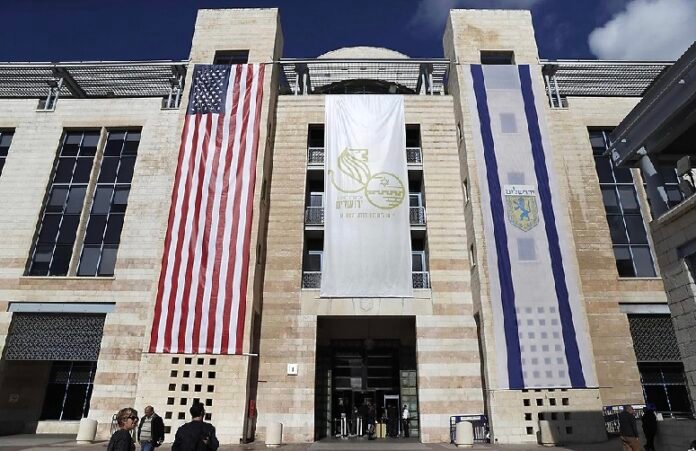
The United States has advised its embassy personnel in Israel to consider departing the country “today” as tensions with Iran intensify and concerns grow over the possibility of military confrontation.
US Ambassador to Israel Mike Huckabee informed staff that those wishing to leave should do so without delay, according to a source familiar with the message. While emphasizing there was “no reason to panic,” Huckabee described the guidance as a precautionary measure taken out of an abundance of caution.
He reportedly warned that outbound flights could fill up quickly and encouraged staff to book seats to any available destination with onward travel connections to Washington.
Non-Essential Staff and Families Cleared to Depart
Earlier Friday, the United States Embassy in Israel announced it had authorized the departure of non-essential personnel and family members due to heightened security concerns. A notice posted on the embassy’s website urged individuals to consider leaving while commercial flight options remain open.
Such advisories are typically issued when the US government assesses that regional security conditions may deteriorate rapidly.
US Military Presence Expands
The diplomatic warning comes as Washington strengthens its military posture in the region.
The aircraft carrier USS Gerald R. Ford strike group is expected to move closer to northern Israel as part of broader contingency preparations. In addition, F-22 Raptor fighter jets have reportedly been deployed to southern Israel or are en route, accompanied by aerial refueling aircraft positioned near Ben Gurion International Airport.
US officials have not publicly detailed the scope or timeline of the deployments.
Nuclear Talks Continue Despite Rising Strain
The security moves coincide with renewed diplomatic efforts between Washington and Tehran over Iran’s nuclear program. Talks held in Geneva on Thursday were mediated by Omani Foreign Minister Badr Al Busaidi.
US representatives, including Steve Witkoff and Jared Kushner, are reported to have pressed for the full dismantling of Iran’s major nuclear facilities — Fordow Fuel Enrichment Plant, Natanz Nuclear Facility, and Isfahan Nuclear Technology Center — along with permanent restrictions on uranium enrichment.
Iran, according to diplomatic sources, has favored a temporary suspension arrangement lasting several years rather than permanent dismantlement.
Despite the ongoing negotiations, the head of United States Central Command, Adm. Brad Cooper, has reportedly briefed President Donald Trump on potential military options related to Iran.
The US State Department has not issued additional public comments beyond the embassy’s advisory.
The developments reflect a delicate moment in US–Iran relations, where diplomatic engagement continues even as military readiness increases — leaving embassy staff and regional observers watching events closely.
Source: Africa Publicity