

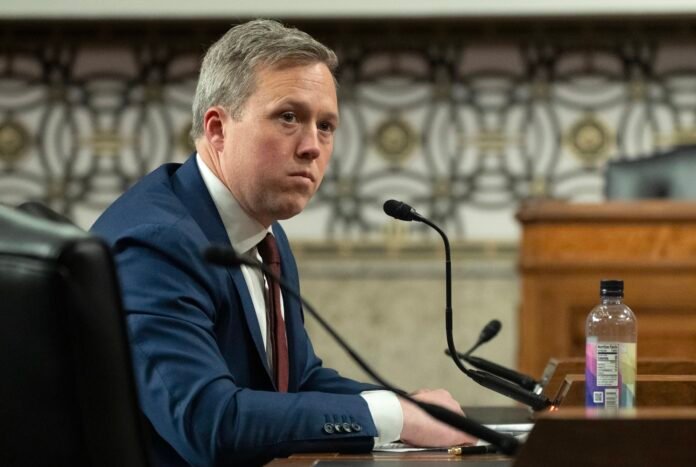
U.S. Army Secretary Dan Driscoll delivered a rare and sharply worded rebuke of major defense contractors on Friday, alleging that leading weapons manufacturers have long pushed the Pentagon into buying overpriced military systems despite the existence of far cheaper commercial alternatives. His comments add new urgency to ongoing debates in Washington about reforming military procurement practices.
Speaking to reporters, Driscoll said large prime contractors—companies that secure direct contracts with the Defense Department—have “misled” both the Army and the American public about the true cost of equipment. He argued that the current acquisition structure creates incentives for defense firms to charge excessive prices, and acknowledged that government policies helped enable the practice.
Blunt Criticism Amid Longstanding Concerns Over Military Overspending
Watchdog groups, members of Congress, and government auditors have for years warned that major defense companies inflate costs for basic components, but senior officials rarely speak as candidly as Driscoll did. His remarks come as scrutiny intensifies over the Pentagon’s dependence on a handful of industry giants, including Lockheed Martin, RTX, Northrop Grumman, and Boeing.
One widely cited example comes from a previous Army review, which found that a screen control knob used in the Lockheed-owned Sikorsky Black Hawk helicopter cost the military $47,000 when purchased as part of an assembly. Independent manufacturing estimates suggested the same component could be produced for roughly $15.
“The system has changed,” Driscoll said. “You will no longer be allowed to do that to the United States Army.”
New Push for Procurement Reform and Faster Tech Adoption
The Army is now rolling out a major initiative to modernize and simplify its acquisition process. The effort aligns with a broader Pentagon strategy to accelerate the adoption of emerging technologies as global threats evolve, particularly in areas such as drones, autonomous systems, and electronic warfare.
Reuters reported last week that the service intends to purchase at least one million drones within the next two to three years. Instead of turning to traditional defense primes, Army leaders want to partner with smaller companies that make dual-use commercial drones—part of an effort to diversify suppliers, reduce costs, and speed up innovation.
Growing Political Pressure on the Defense Industry
The criticism from Driscoll arrives amid renewed political attention on defense pricing practices. Earlier this month, Democratic Senator Elizabeth Warren intensified her push for military right-to-repair legislation, arguing that contractors routinely restrict the military’s ability to fix equipment independently, driving up maintenance costs.
Driscoll acknowledged that unwinding entrenched procurement habits will take time, but said the Army intends to reshape incentives that have allowed inflated costs to become normalized.
It’s on us to fix the system,” he said. “And we’re going to.
Source:Africa Publicity