

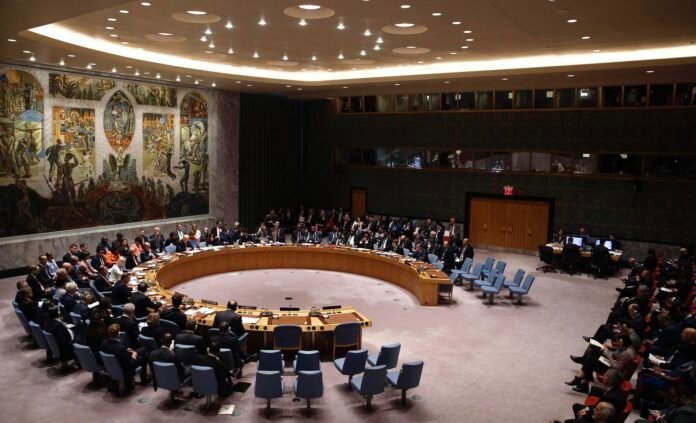
The United Nations Security Council on Thursday approved a one-year extension of sanctions on Yemen, prolonging financial and travel restrictions aimed primarily at pressuring Houthi forces to engage in political dialogue. The measure, drafted by the United Kingdom, passed with 13 votes in favor and abstentions from Russia and China.
Under the renewed sanctions regime, the UN will continue to monitor illicit financial flows, arms smuggling routes, and the transfer of dual-use materials that could be repurposed for weapon production. The Council also extended the mandate of its panel of experts, which has repeatedly warned of increasingly sophisticated smuggling networks supplying the Iran-aligned Houthis.
James Kariuki, Chargé d’Affaires at the UK Mission to the UN, welcomed the vote, saying the updated measures are essential as “the sanctions regime evolved to reflect the increasing complexity and scale of Houthi smuggling and financing.”
Objections Over Maritime Provisions
China explained its abstention by criticizing what it described as “arbitrary requirements” for member states to inspect vessels in the Red Sea and surrounding waters—an issue that has gained urgency as attacks on shipping have escalated. Russia also abstained, calling the text “politicized” and arguing it did not sufficiently address humanitarian needs or the concerns of all parties in the conflict.
Growing Tensions and Hostility on the Ground
The renewed sanctions come amid rising Houthi hostility toward humanitarian organizations. Over recent months, the group has detained dozens of staff from UN agencies and other aid organizations, accusing them—without evidence—of espionage. The United Nations and international relief groups have strongly rejected the claims.
Meanwhile, Houthi missile and drone threats toward Saudi Arabia and other neighboring states have intensified, even as diplomatic efforts to stabilize the conflict remain stalled.
A Decade-Long Conflict With Enormous Human Cost
Yemen’s civil war began in 2014 when Houthi forces seized the capital, Sanaa. A Saudi-led coalition entered the conflict the following year in support of the internationally recognized government. Although a UN-mediated truce in 2022 briefly reduced hostilities, it collapsed after six months, and intermittent fighting has continued.
The conflict has killed tens of thousands and displaced 4.5 million people, leaving Yemen one of the world’s most severe humanitarian crises.
Source:Africa Publicity