

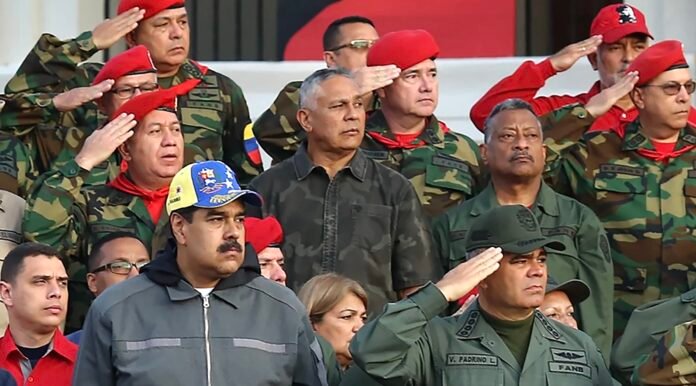
A new report by the United Nations Independent International Fact-Finding Mission on Venezuela has concluded that the country’s Bolivarian National Guard (GNB) engaged in a long-standing campaign of serious human rights abuses against political opponents and critics of President Nicolás Maduro’s government. The findings, released on Thursday, outline more than a decade of violations that the mission says may amount to crimes against humanity, raising renewed concern over the state of civil liberties and accountability in Venezuela.
A Decade of Abuses Documented
The Fact-Finding Mission, established by the UN Human Rights Council, examined allegations dating back to 2014, a period marked by large-scale protests, growing political tension, and deteriorating economic conditions. According to the report, the GNB—one of the branches of Venezuela’s security apparatus—played a central role in arbitrary arrests, politically motivated detentions, mistreatment of detainees, and coercive tactics intended to silence dissent.
Although the mission noted that abuses occurred across various state agencies, its latest findings focus on the GNB’s involvement, citing consistent patterns of misconduct, particularly during crackdowns on protests, raids targeting activists, and operations in low-income neighborhoods.
“The facts we have documented show the role of the GNB in a pattern of systematic and coordinated repression against opponents or those perceived as such, which has continued for more than a decade,” said Marta Valiñas, chairperson of the Fact-Finding Mission.
Targeting of Political Opponents
The report outlines how individuals were often selected for mistreatment based on their perceived opposition to the government rather than actual wrongdoing. This included activists, journalists, students, community organizers, and individuals who participated in demonstrations or were simply suspected of having ties to opposition groups.
One of the incidents highlighted is the 2024 post-election “knock knock” operation, a series of surprise raids in which security forces entered homes—primarily in poor neighborhoods—in search of alleged dissidents. According to the mission, these raids frequently swept up individuals who had no connection to political movements, resulting in fear, intimidation, and arbitrary detention.
The report asserts that there are “reasonable grounds to believe” the GNB’s actions formed part of a state policy aimed at suppressing political criticism. This assessment is critical, as the presence of a state-directed policy is a key element in defining certain acts as crimes against humanity under international law.
Abuse Inside Detention Facilities
While avoiding graphic detail, the mission reported that individuals held by the GNB faced mistreatment while in custody, including coercion, intimidation, and harsh conditions designed to break their resistance. The mission documented accounts of detainees experiencing physical violence, threats, and serious violations of personal dignity, all of which are strictly prohibited under international human rights standards.
Valiñas stressed that these were “not isolated incidents” but part of a repeated pattern. “The ill-treatment and violations we have verified were used to punish, intimidate or silence victims,” she said.
Government Response and International Repercussions
Venezuela’s government has strongly rejected the findings. Officials within Maduro’s administration have previously dismissed similar UN reports as biased, politically motivated, or “full of falsehoods.” They argue that the government is the target of an international campaign designed to undermine its sovereignty and destabilize the country.
The release of this new report comes at a time of escalating tension between Caracas and Washington. Over recent weeks, former U.S. President Donald Trump repeatedly referenced the possibility of U.S. involvement—framing Venezuela as a hub for drug trafficking and “narco-terrorism.” President Maduro has countered by accusing Washington of seeking regime change to gain access to Venezuela’s substantial oil reserves.
National Security Doctrine Under Scrutiny
The UN mission also examined the broader security structure in Venezuela. Under the country’s “national security” doctrine, the GNB expanded from its traditional border protection role into domestic policing, social control, and internal security enforcement. The report states that the Guard operates under a highly centralized chain of command with the president serving as Commander-in-Chief, increasing the likelihood that violations stem from high-level directives rather than rogue individual actors.
What Comes Next
The mission called for accountability mechanisms, urging Venezuela to cooperate with international human rights bodies and allow independent investigations into unresolved abuses. Although the Venezuelan government has historically resisted external oversight, human rights advocates argue that continued international pressure remains critical to protecting civilians and preventing further violations.
The findings are expected to fuel ongoing debates within the UN and the wider diplomatic community about the next steps concerning Venezuela, including potential sanctions, international prosecutions, and expanded monitoring efforts.
Source:Africa Publicity