

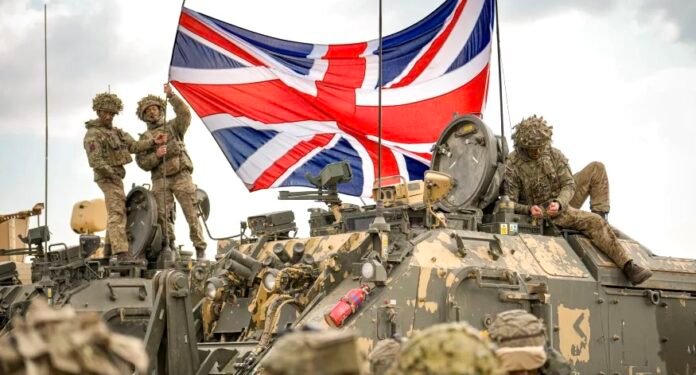
Britain could face severe consequences if it fails to prepare for the possibility of a wider European war involving Russia, a senior Ukrainian military officer and former government adviser has warned, amid growing concern across NATO about the threat posed by Moscow.
Viktor Andrusiv, a Ukrainian army major and former adviser to Ukraine’s presidential office, said the United Kingdom remains dangerously underprepared for large-scale conflict and risks paying a significant human and economic cost if it underestimates Russia’s intentions. Speaking in an interview, Andrusiv urged British leaders and the public to draw lessons from Ukraine’s experience following Russia’s full-scale invasion.
His warning comes as NATO Secretary General Mark Rutte this week called on Western nations to begin preparing for war “in the way our grandparents once did,” signalling a shift in alliance messaging as tensions with Russia continue to escalate.
Andrusiv said one of the most serious challenges facing Western countries is disbelief that a major conventional war in Europe is even possible. “The biggest problem is that people do not believe this can happen,” he said. “That mindset is extremely dangerous.”
Russian President Vladimir Putin has recently warned that Moscow is prepared to confront Europe militarily if diplomatic efforts to end the war in Ukraine fail. While Russia has not explicitly outlined plans to attack a NATO member, defence analysts have warned that any such action would trigger the alliance’s collective defence clause, potentially drawing the UK and other member states into direct conflict.
British defence officials have repeatedly raised concerns about the state of the country’s armed forces. Senior military figures have described the UK’s military capability as “hollowed out” after decades of spending cuts following the end of the Cold War, when successive governments reduced troop numbers and equipment on the assumption that large-scale European warfare was unlikely.
Andrusiv said those assumptions mirror the thinking that prevailed in Ukraine before 2022. “We also believed that in the 21st century, columns of tanks invading another country was something unthinkable,” he said. “It was very hard to imagine. And that disbelief was part of the problem.”
He warned that modern warfare now directly affects civilian populations, with missile strikes and drone attacks targeting homes, infrastructure and energy systems. “This is not something distant,” he said. “Drones attacking houses and missiles hitting cities — this can become reality very quickly.”
The Ukrainian officer argued that preparation is not solely a military issue but a societal one. According to Andrusiv, Western defence doctrines remain rooted in the idea of small, fully professional armies, while the war in Ukraine has demonstrated that large-scale conflicts require mass mobilisation and sustained civilian involvement.
“Both Russia and Ukraine have shown that wars of this kind involve millions of people, not just professional soldiers,” he said. “The idea that only the army fights is outdated.”
Andrusiv called on the UK to modernise its armed forces, invest heavily in defence capabilities and consider broader civil preparedness measures. He said training and resilience should extend beyond the military to the wider population, including infrastructure protection, emergency readiness and industrial capacity.
His comments align with recent assessments obtained by British media suggesting the UK would need to invest billions of pounds more in defence spending to meet the demands of any prolonged conflict. Analysts have highlighted shortages in personnel, naval vessels and combat aircraft, raising concerns about Britain’s ability to sustain operations alongside NATO allies.
Former defence secretary Penny Mordaunt has previously warned that inadequate defence funding could result in British lives being lost if the country is forced to respond to future threats without sufficient preparation.
Before Russia’s invasion of Ukraine nearly four years ago, Andrusiv worked as the director of a policy think tank and served as an adviser to Ukraine’s presidential administration. He said his own experience reflects how rapidly circumstances can change. “If someone had told me years ago that I would become a military major, I would have thought it was impossible,” he said.
“War is closer than we think,” he added. “Loss of life is closer than we think. That is why preparation matters.”
As NATO reassesses its long-term security posture, Andrusiv’s message to the UK is one of urgency rather than inevitability. “Being unprepared does not mean you will definitely lose,” he said. “But it does mean you will pay a much higher price.”
Source:Africa Publicity