
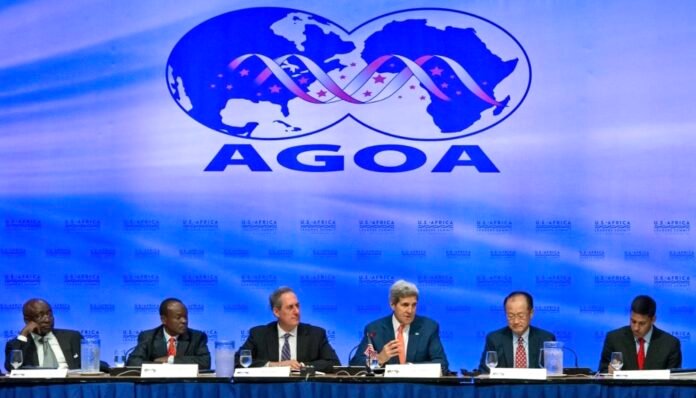
A key committee in the U.S. House of Representatives is set to debate a proposal that would renew the African Growth and Opportunity Act (AGOA) for an additional three years, marking the most substantial legislative movement on the issue since the program lapsed at the end of September. Yet, questions loom over whether South Africa — historically one of AGOA’s largest beneficiaries — will be permitted to remain in the program amid growing tensions between Pretoria and the Trump administration.
The House Committee on Ways and Means is scheduled to review the draft extension bill on Wednesday, with members also considering potential amendments that could reshape the future of U.S.-Africa trade relations.
A Longstanding Trade Partnership Under Strain
AGOA, first enacted in 2000 under President Bill Clinton, provides duty-free access to the U.S. market for a wide range of exports from eligible Sub-Saharan African nations. The program, renewed multiple times on a bipartisan basis, has supported hundreds of thousands of jobs across the continent in sectors such as textiles, agriculture, manufacturing, and automotive production.
While the law has enjoyed broad support in the past, its renewal is complicated this year by deteriorating diplomatic ties between Washington and Pretoria. Tensions intensified throughout 2024 and 2025 as both countries clashed over trade rules, tariff decisions, and political disagreements. Former U.S. President Donald Trump has repeatedly criticized South Africa, particularly on issues related to racial inequality legislation and trade policy.
South Africa Described as a “Unique Problem”
In comments to Reuters on Tuesday, U.S. Trade Representative Jamieson Greer said that although the administration is open to extending AGOA for one year, it is “actively considering” excluding South Africa. Greer argued that Pretoria has maintained high tariffs and non-tariff barriers on American goods, claiming this has created an imbalanced trade relationship.
He noted that for the U.S. to consider lowering its own 30% tariffs on South African exports, Pretoria must demonstrate greater openness to U.S. products. South African officials, however, have long insisted that Washington’s calculations and assumptions about trade barriers are based on outdated or inaccurate assessments.
The current draft of the AGOA Extension Act does not contain specific language targeting South Africa, but committee members are expected to debate possible amendments that could pave the way for its temporary suspension or removal.
Legislative Uncertainty as Deadlines Approach
Wednesday’s committee meeting represents the most significant congressional action on AGOA since its expiration at the end of September. Still, its passage is far from guaranteed. Lawmakers remain divided over whether to pass a short-term renewal, a longer multi-year extension, or to attach new conditions for eligibility.
In addition to the House bill, a separate measure introduced in the Senate in October calls for a two-year renewal of AGOA. The Senate proposal also includes a mandatory review of the U.S.–South Africa bilateral relationship — a clear signal that frustrations with Pretoria are not limited to the executive branch. That bill has not yet reached the committee stage, and its prospects remain unclear.
Because AGOA has already expired, any extension will likely involve retroactive benefits to ensure that African exporters do not suffer long-term disruptions. Trade economists warn that prolonged uncertainty could push African companies to seek alternative markets, weakening a trade partnership that U.S. officials have long described as economically and strategically significant.
South Africa Pushing to Remain in the Program
South Africa’s Ministry of Trade and Industry responded on Tuesday, reiterating Pretoria’s commitment to remaining part of AGOA. A ministry spokesperson told Reuters that South Africa is working closely with U.S. officials to address concerns and maintain eligibility, calling AGOA “critical to sustaining jobs and investment” in the country.
South Africa is currently one of the largest exporters under AGOA, shipping automobiles, fruit, wine, and industrial goods to the U.S. market duty-free. Its exclusion would carry major economic consequences for both sides, analysts say, particularly for American companies operating supply chains in the region.
Broader Implications for U.S.–Africa Relations
The debate over South Africa’s place in AGOA comes at a time when global powers are competing for influence across the African continent. Some policy analysts warn that removing South Africa could push Pretoria further toward economic partnerships with China, the European Union, or emerging blocs in the Global South.
African leaders across the region are watching the U.S. deliberations closely, concerned that the uncertainty may signal a shift in Washington’s long-term commitment to African economic growth.
Source:Africa Publicity