
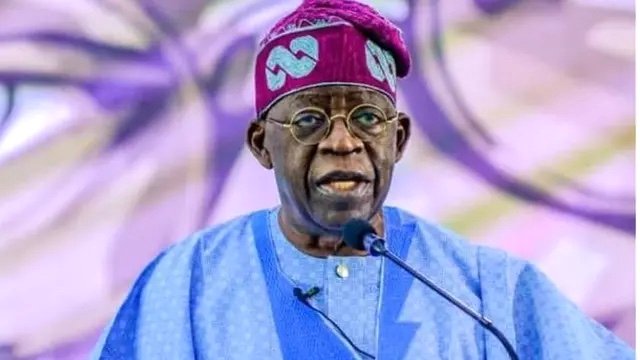
President Bola Tinubu has hailed the Nigerian Exchange Group (NGX) for crossing the historic ₦100 trillion market capitalisation mark, describing the achievement as a signal that Nigeria has transitioned from a previously overlooked frontier market into a compelling investment destination.
In a statement issued on Thursday, January 8, 2026, and signed by his Special Adviser on Information and Strategy, Bayo Onanuga, President Tinubu urged Nigerians to increase their investments in the domestic economy, expressing confidence that 2026 would deliver stronger returns as ongoing reforms continue to take root.
Highlighting the NGX’s performance, Tinubu noted that the exchange closed 2025 with a 51.19 per cent return, surpassing global indices including the S&P 500, the FTSE 100, and several BRICS+ emerging markets. This followed a 37.65 per cent return in 2024, demonstrating sustained growth and resilience in Nigerian capital markets.
“With the Nigerian Exchange crossing the historic ₦100 trillion market capitalisation mark, the country is witnessing the birth of a new economic reality and rejuvenation,” the President said. He attributed the performance to Nigerian companies’ ability to deliver strong returns across sectors, highlighting blue-chip industrials localising supply chains, banks driving technological innovation, and energy firms expanding operations.
Tinubu stressed that the trend reflects growing investor confidence and the increasing depth of the capital market. He further disclosed that several indigenous companies in energy, technology, telecommunications, and infrastructure are preparing to list on the NGX, a move expected to broaden market participation and further deepen market capitalisation.
The President also cited macroeconomic improvements, noting a sustained decline in inflation over the past eight months—from 34.8 per cent in December 2024 to 14.45 per cent in November 2025—with projections that it could fall below 10 per cent by the end of 2026. He credited this progress to monetary tightening, elimination of Ways and Means financing, and strategic agricultural investments, which have helped stabilise the naira and ease post-reform economic pressures.
Economic indicators, according to the President, show significant improvements in external accounts. Nigeria recorded a current account surplus of $16 billion in 2024, with projections for $18.81 billion in 2026. He highlighted a shift in trade patterns, emphasizing increased exports and reduced reliance on imports for locally produced goods.
Non-oil exports rose 48 per cent to ₦9.2 trillion by Q3 2025, while exports to other African countries nearly doubled to ₦4.9 trillion. Manufacturing exports also increased 67 per cent year-on-year in Q2 2025, reflecting diversification and industrial growth.
Foreign reserves have surpassed $45 billion and are projected to exceed $50 billion in the first quarter of 2026, providing the Central Bank of Nigeria (CBN) with the capacity to maintain currency stability and mitigate previous exchange rate volatility.
Infrastructure development also featured prominently in Tinubu’s remarks. He highlighted expansions in rail networks, arterial roads, ports, and superhighways such as Lagos–Calabar and Sokoto–Badagry, alongside investments in healthcare, education, and research. Improvements in healthcare facilities, he noted, are helping reduce medical tourism costs, while the Nigeria Education Loan Fund and increased university research grants are fostering skills and innovation.
Tinubu concluded by framing nation-building as a collective responsibility requiring hard work, discipline, and citizen engagement. He pledged to continue implementing historic tax and fiscal reforms introduced from January 1, aimed at catalyzing sustainable economic growth, transparency, and equitable opportunities for all Nigerians.
“Our economy is on a new path, and the crossing of the ₦100 trillion mark is both a milestone and a signal to investors that Nigeria is ready to compete globally,” he said, urging citizens to participate actively in the nation’s economic transformation through domestic investment.
The President’s message underscores the government’s broader agenda of market reform, economic diversification, and citizen empowerment, signaling confidence that Nigeria’s capital markets and broader economy are entering a new era of stability and growth.
Source: Africa Publicity