

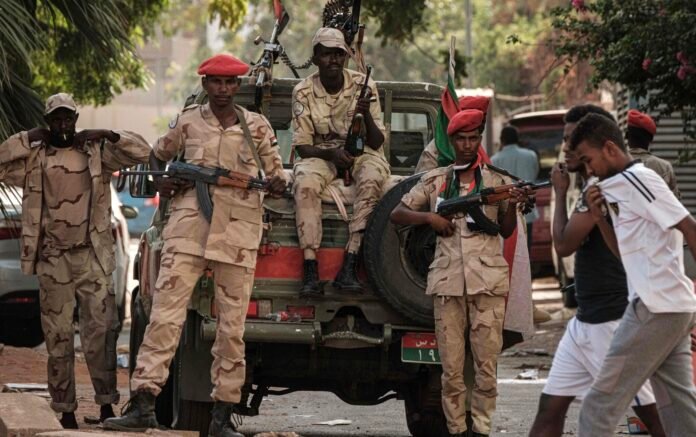
Sudan’s brutal civil war is entering a new and potentially more dangerous phase as the paramilitary Rapid Support Forces (RSF) expand their operations eastward, targeting strategic areas in Kordofan after seizing control of most of Darfur last month. The latest escalation has raised fears of worsening humanitarian conditions and the collapse of fragile ceasefire efforts.
The RSF’s latest push, marked by heavy drone strikes and troop movements, indicates an attempt to consolidate control across central Sudan and pressure the army-held territories in the east. The oil-producing southern regions and the buffer zone of Kordofan—comprising North, South, and West Kordofan states—have become the new frontline between the RSF and the Sudanese Armed Forces (SAF).
The United States recently mediated a ceasefire proposal following reports of atrocities committed by RSF fighters in al-Fashir, Darfur’s last major city under army control. While the RSF publicly agreed to the truce, the Sudanese army has yet to accept it, and fighting continues unabated. Humanitarian agencies warn that without a genuine cessation of hostilities, millions could remain cut off from food, medicine, and shelter after nearly three years of war.
Civilians Trapped Amid Revenge Attacks
Eyewitness accounts from displaced civilians describe a wave of revenge killings and looting as the RSF moved into the Kordofan region. Survivors from Bara, a strategic town in North Kordofan seized by the RSF late last month, told Reuters that men accused of supporting the army were executed in the streets or abducted.
“They said we sided with the army and must pay the price,” said Khalil, one of the survivors now recovering in Omdurman. He recalled sitting beside eight other men as RSF soldiers opened fire—two were killed instantly.
Another resident, Ismail, said he hid in a home as gunmen roamed the streets before paying a fighter to escort his family out. Mohamed, a third witness, described losing his father when RSF troops stormed their home and demanded money and gold.
According to Emergency Lawyers, a Sudanese civil rights group, hundreds were killed in Bara, although Reuters has not independently verified the figures.
Amy Pope, Director General of the International Organization for Migration, said that an estimated 50,000 people have been displaced from Kordofan in recent weeks. “The scale of human suffering is staggering,” she said, warning that many areas are inaccessible due to ongoing hostilities.
When asked to comment, an RSF spokesperson accused the army of “rejecting peace efforts” and said, “Any place where the army is present is a legitimate target.” The group denied targeting civilians but did not respond to specific allegations of mass killings in Bara.
Build-Up Suggests New Frontlines
Military analysts warn that the next major battle could unfold in El Obeid, North Kordofan’s capital and one of Sudan’s largest urban centers. Eyewitnesses reported large army reinforcements and military equipment arriving in the city earlier this week, while RSF units were seen positioning themselves on the outskirts.
Further south, residents of Babanusa in West Kordofan said RSF fighters now surround the town, which hosts a key army base. In South Kordofan, RSF-aligned fighters from the Sudan People’s Liberation Movement–North (SPLM-N) are reportedly tightening their siege around the cities of Kadugli and al-Dalanj.
A global food security assessment last week classified Kadugli as being in “famine conditions,” with al-Dalanj not far behind, reflecting a pattern seen in al-Fashir under siege earlier this year.
Reports also indicate a broader military buildup. Sources within the army and SPLM-N told Reuters that new weapons have entered the country via South Sudan. Meanwhile, witnesses in the Red Sea city of Port Sudan, the army’s wartime administrative center, reported increased military cargo flights—though these claims remain unverified.
A Nation on the Brink
The Sudanese conflict, which erupted in April 2023 from a power struggle between army chief Abdel Fattah al-Burhan and RSF commander Mohamed Hamdan Dagalo (known as Hemedti), has evolved into one of the world’s worst humanitarian crises. The fighting has displaced over 11 million people, triggered ethnic massacres, and devastated infrastructure across the country.
Both sides have increasingly turned to drone warfare, often with foreign-supplied equipment. On November 3, a drone strike in North Kordofan’s Sheikan locality killed at least 49 people, including women and children, according to Emergency Lawyers. Responsibility for the attack remains unclear.
U.N. human rights chief Volker Türk warned last week that “developments on the ground indicate clear preparations for intensified hostilities,” calling for an immediate end to the violence. “Every new offensive pushes Sudan closer to total collapse,” he said.
Gabon Former First Lady and Son Jailed 20 Years For Corruption
Source:Africa Publicity