
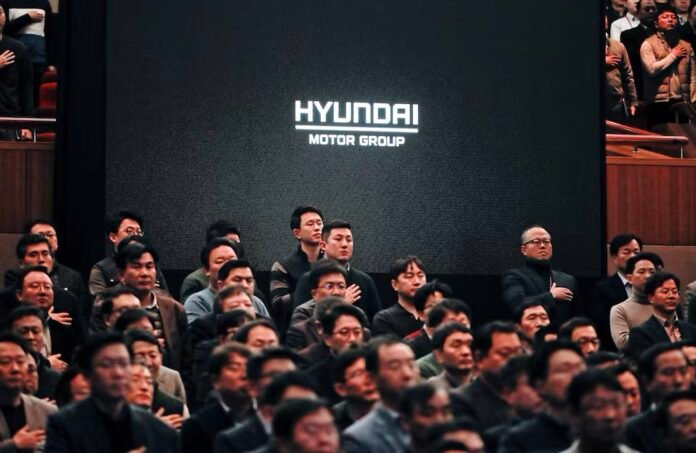
South Korea’s leading manufacturers, including Samsung Electronics and Hyundai Motor Group, unveiled major domestic investment plans on Sunday as policymakers and industry leaders sought to reassure the public that a new U.S.–South Korea trade agreement will not drain industrial capacity from home.
The announcements came shortly after Seoul confirmed a commitment to invest $350 billion in strategic sectors in the United States, a key component of the trade deal finalized on Friday. The agreement sparked public debate over whether South Korean companies might shift too much capital abroad at the expense of local industry.
During a meeting with top business executives, President Lee Jae Myung acknowledged these concerns, urging major firms to balance their U.S. expansion with robust investment at home. He encouraged companies to collaborate with the government to leverage the overseas investment package while strengthening domestic capabilities.
Samsung Electronics responded by revealing plans to expand its massive semiconductor complex in Pyeongtaek, adding a new memory chip production line known as the P5 plant. The expansion is part of the Samsung Group’s broader 450 trillion won ($310.79 billion) domestic investment roadmap for the next five years. According to the company, the new facility will support soaring demand for chips used in artificial intelligence systems, smartphones, computers, and high-performance servers.
A Samsung spokesperson said the P5 plant—previously delayed due to market slowdowns and oversupply concerns—will begin mass production in 2028. The company also confirmed recent price increases of up to 60% on certain memory chips, driven by tightening supply as global manufacturers rush to produce AI-related components.
Samsung Electronics Chairman Jay Y. Lee emphasized that the company intends not only to boost domestic production but also to generate high-quality jobs and deepen partnerships with small and medium-sized enterprises.
At the same meeting, Hyundai Motor Group announced plans to invest 125.2 trillion won in South Korea from 2026 to 2030, focusing on electric vehicles, autonomous driving technologies, and expanded production capacity. Major shipbuilders including Hanwha Ocean and HD Hyundai also disclosed new investment strategies aimed at strengthening competitiveness in global maritime and energy markets.
The coordinated announcements underscore an effort by South Korea’s industrial leaders to reassure the public that, despite growing U.S. commitments, the nation’s manufacturing base will continue to expand—particularly in sectors critical to future technologies such as semiconductors, electric vehicles, and advanced shipbuilding.
Source:Africa Publicity