
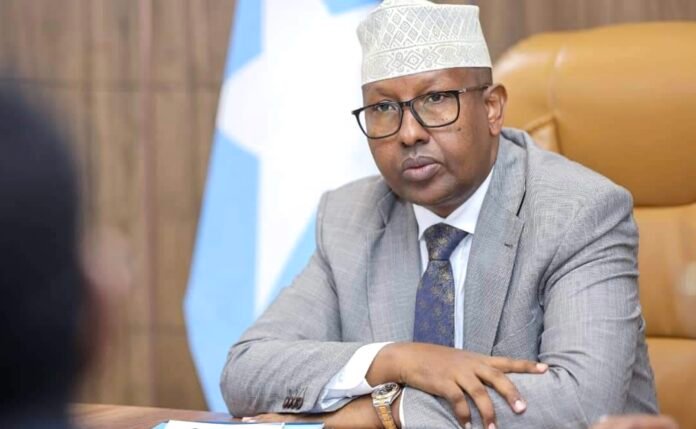
A diplomatic rift deepened this week after Somalia’s Defence Minister, Ahmed Moallim Fiqi, forcefully rejected remarks made by US President Donald Trump during a campaign rally in Pennsylvania. Trump, who was expected to highlight economic achievements ahead of the upcoming election cycle, instead launched into sharp criticism of migration from several developing nations, singling out Somalia in terms many observers described as demeaning and inflammatory.
During the rally, Trump questioned why the United States accepts immigrants from “Third World” nations and went on to describe Somalia as “a disaster,” before characterising Somali migrants with derogatory language. He also revived stereotypes about piracy off the Somali coast, saying the only thing Somalis were “good at” was “going after ships.” The comments echoed earlier insults he made at a cabinet meeting last week, where he allegedly called Somalis “garbage” and accused them of widespread violence.
The remarks immediately sparked criticism from Somali officials, diaspora communities, and human rights organisations, who argued that the language deepened harmful stereotypes and risked fueling hostility toward immigrants in the US.
Somali Minister Responds: “We Will Not Accept Being Degraded”
In a text message to Reuters, Defence Minister Fiqi responded directly to the comments, urging President Trump to focus on his obligations to American voters instead of attacking Somalia.
“Rather than busying himself with Somalia, President Trump should prioritise meeting the expectations of the American people,” Fiqi said.
While acknowledging the long-standing partnership between the US and Somalia—particularly in military cooperation against the al-Shabaab insurgency—he firmly rejected Trump’s depiction of Somali people.
“The Somali people are widely recognised for their hard work and resilience,” Fiqi stated. “We have endured decades of conflict, environmental disasters, and external interference. Despite all hardships, our communities continue to rebuild, innovate, and persevere.”
His remarks emphasized that Somalis have survived numerous challenges, including terrorism, political instability, and famine, and continue to work toward national reconstruction and security reform.
Backdrop: Rising US Political Rhetoric Targeting Immigrant Communities
Trump’s comments follow an uptick in anti-immigration rhetoric after last month’s shooting of two National Guard soldiers in Washington, D.C. Although the suspect charged in the case is an Afghan national who has pleaded not guilty, Trump has repeatedly made generalized statements linking migrants from poorer nations to crime, and has vowed to freeze immigration from several regions if reelected.
This shift has alarmed immigrant advocates who say the rhetoric could heighten discrimination and stigmatization. Somali communities in the US—particularly in Minnesota, Maine, and Ohio—reported feeling targeted after the remarks circulated on social media.
History of Feud with Somali-American Politician
Trump has a long record of tension with Somalis, especially Congresswoman Ilhan Omar, one of the first Somali-American members of Congress and a prominent critic of the former president.
Over the years, Trump has questioned Omar’s loyalty to the United States, urged her deportation despite her being a naturalized citizen for decades, and accused her of undermining American values. Omar has responded by calling Trump’s remarks racist and dangerous, especially in a climate where anti-Muslim and anti-immigrant hate crimes remain a concern.
Somalia-US Relations: Cooperation Despite Strain
Despite the renewed tensions, Somalia and the United States maintain significant military cooperation. Washington provides training, intelligence, and financial support to Somali security forces combating al-Shabaab, an al-Qaeda-affiliated militant group that has destabilized the country for more than 15 years.
US drone operations and counterterrorism missions have also played a major role in weakening extremist networks across southern and central Somalia.
Somali officials stressed that the partnership with the US government remains important, even as they condemn the president’s remarks. Analysts say that while Trump’s statements cause diplomatic friction, working-level cooperation between US and Somali defense institutions is unlikely to halt.
International Reaction and Broader Implications
Trump’s language prompted concerns among international observers, who warned that public attacks on migrants could strain US relations with African nations and embolden extremist narratives portraying the West as hostile toward Muslim-majority countries.
Human rights groups also cautioned that demeaning speech from political leaders can normalize prejudice, especially during polarized election periods.
As global reactions continue to unfold, Somali leaders are signaling they will not allow harmful rhetoric to define their nation or their people.
“Our identity and strength come from perseverance,” Fiqi said. “We have been underestimated before, and we have endured. We will continue to rise above these kinds of insults,
Source:Africa Publicity