
By Mahmud Tim Kargbo
Sierra Leone’s latest Millennium Challenge Corporation FY 2026 scorecard, once again classified as a “Half Scorecard Passed”, exposes systemic governance and institutional weaknesses that threaten the country’s development trajectory under President Julius Maada Bio. Anti-corruption efforts remain consistently strong, but the wider governance framework reveals deep structural deficits in economic management, regulatory quality, and public service delivery, undermining the ambitions of the New Direction and the Big Five programmes.
According to the MCC FY 2026 Selection Criteria and Methodology, “A country must pass at least 11 of the 22 indicators, must pass the Personal Freedom indicator, and must pass either the Control of Corruption or Government Accountability indicator to be considered a full pass” http//: www.mcc.gov/resources/doc/report-selection-criteria-methodology-fy26
In its FY 2025 Scorebook, the MCC notes: “Sierra Leone passes Control of Corruption but underperforms in Government Effectiveness and Inflation relative to median peer countries” http//: www.assets.mcc.gov/content/uploads/pub-2024001307004-fy25-scorebook.pdf
Government Effectiveness stands at 38 per cent and the Inflation indicator at minus 5.1, with Trade Policy and Regulatory Quality also below threshold levels http//: www.assets.mcc.gov/content/uploads/pub-2024001307004-fy25-scorebook.pdf
Although Sierra Leone consistently excels in Control of Corruption, “with a consistent score above 70 per cent” according to the MCC http//: www.assets.mcc.gov/content/uploads/pub-2024001307004-fy25-scorebook.pdf, the Commission itself warns that: “High performance in Control of Corruption alone does not compensate for deficits in Government Effectiveness, Economic Freedom, and Investing in People indicators” http//: www.mcc.gov/resources/doc/guide-to-the-indicators-fy-2026
The Anti-Corruption Commission reinforces this record, stating: “Sierra Leone has, for the sixth consecutive time, scored very high in the MCC’s Control of Corruption indicator” http//: www.anticorruption.gov.sl/blog/anti-corruption-commission-sl-news-room-1/post/sierra-leone-for-the-sixth-6th-time-consecutively-scores-very-high-in-the-mccs-scorecard-and-the-control-of-corruption-indicator-1171
Yet the broader governance environment remains fragile. The 1991 Constitution mandates transparent and efficient public administration. Article 78 declares: “The State shall ensure the effective and efficient administration of public finances and resources in accordance with the law” http//: www.sierraleoneparliament.org/constitution
The 2004 Truth and Reconciliation Commission was more explicit: “Endemic corruption and weak government institutions produced the dire conditions that made civil war inevitable” http//: www.hmcwordpress.humanities.mcmaster.ca/Truthcommissions/wp-content/uploads/2018/10/Sierra.Leone_.TRC-Report-FULL.pdf
Nearly two decades later, the MCC scorecard indicates that many of these foundational reforms remain incomplete.
Macroeconomic and Institutional Analysis
Sierra Leone’s macroeconomic fundamentals have weakened in recent years. Rising fiscal deficits, increased domestic borrowing, and high debt servicing burdens have constrained public investment. Inflation remains volatile, reflecting structural dependence on imports, chronic currency depreciation, and supply-side shocks. An inflation indicator score of minus 5.1 is not merely a statistical signal but an illustration of the fragility of the country’s price environment.
Regulatory quality remains low, deterred by unpredictable administrative shifts and inconsistent enforcement. These conditions have discouraged major investors in mining, agribusiness, and energy, reinforcing a cycle of low investment and slow growth. As the World Bank notes: “Sierra Leone continues to face challenges in Government Effectiveness and Regulatory Quality, which constrains private sector growth and service delivery” http//: www.worldbank.org/en/country/sierraleone/overview
This dynamic undermines the Big Five agenda, particularly Feed Salone, Youth Employment, and Technology and Infrastructure, which depend on regulatory clarity and predictable investment conditions.
Human development indicators remain among the weakest globally. According to UNDP: “Sierra Leone’s HDI value of 0.458 ranks it 184th out of 193 countries, indicating persistent human capital deficits” http//: www.undp.org/sites/g/files/zskgke326/files/2024-12/undp_sierra_leone_annual_report_2023.pdf
Trust and revenue mobilisation are further eroded by long-standing extractive sector concerns. Global Witness notes: “Weak transparency in extractive sector governance continues to undermine revenue mobilisation and public trust” http//: www.globalwitness.org/en/countries/africa/sierra-leone/
Christian Aid adds that deficiencies in public financial management “reduce the impact of donor-funded development projects” http//: www.christianaid.org.uk/where-we-work/africa/sierra-leone
Regional Comparative Context
Compared to regional peers, Sierra Leone’s governance trajectory appears uneven. Ghana, despite fiscal challenges, continues to outperform on Government Effectiveness and Regulatory Quality. Rwanda’s disciplined reforms have maintained consistently high MCC performance across multiple indicators. Malawi’s improvements in public financial management and inflation control recently earned it a new MCC compact.
Liberia and The Gambia, both post-conflict states, have shown incremental but steady progress in business regulation, civil liberties, and institutional reform, helping them improve investor confidence more rapidly than Sierra Leone.
The principal difference is consistency. Where Rwanda and Malawi paired reform agendas with long-term institutional discipline, Sierra Leone’s improvements have been intermittent, often disrupted by administrative turnover and political contestation. This undermines investor certainty and complicates donor planning.
Policy and Investment Implications
The MCC half-pass scorecard imposes direct constraints on Sierra Leone’s future eligibility for compact funding, which requires strong performance across governance, economic freedom, and social investment indicators. It also has reputational consequences: investors and development partners increasingly rely on objective governance metrics to assess risk.
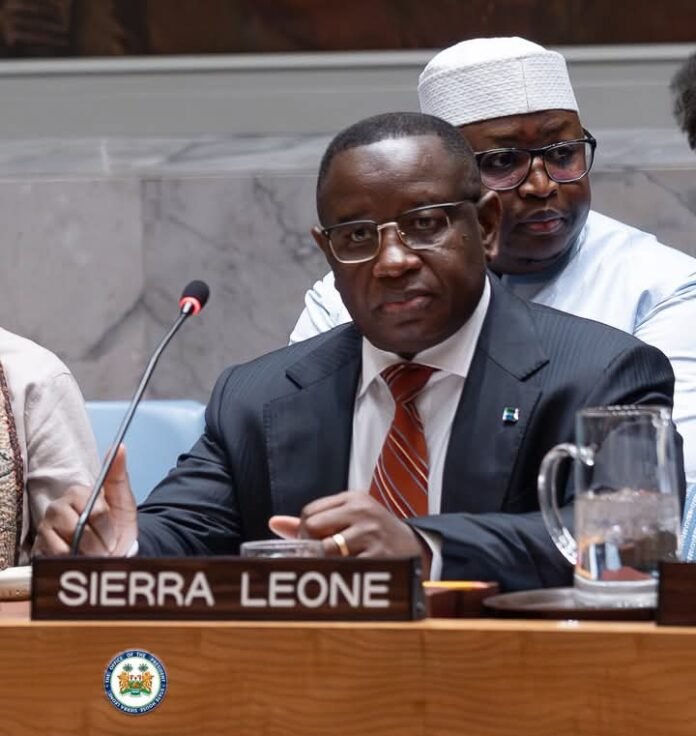
President Bio’s diplomatic outreach has sought to position Sierra Leone as a credible, reform-driven investment destination. However, independent assessments reveal a disconnect between international messaging and domestic performance. Anti-corruption gains are significant but insufficient in the absence of wider improvements in public sector efficiency, fiscal stability, and regulatory predictability.
Failure to address these structural weaknesses risks constraining foreign direct investment, diminishing donor confidence, and undermining the Big Five agenda’s long-term viability.
Ending Kicker
The MCC scorecard serves as a clear warning. It reveals the gap between Sierra Leone’s reform ambitions and the institutional capacity needed to realise them. With governance data now central to donor decisions and investor risk assessments, cosmetic assurances will no longer suffice. The coming year will determine whether the country can transition from a half-pass to a credible platform for growth, or whether persistent structural weaknesses will continue to limit its potential.
For Sierra Leone, this is not merely an administrative benchmark; it is a test of political resolve. Only decisive, measurable improvements in public administration, regulatory clarity, and macroeconomic stability will close the gap between aspiration and achievement, and finally anchor the country on a sustainable path to development.
Disclaimer:
The views expressed in this commentary are solely those of the author and do not in anyway reflect the opinions or editorial policy of Africa Publicity