

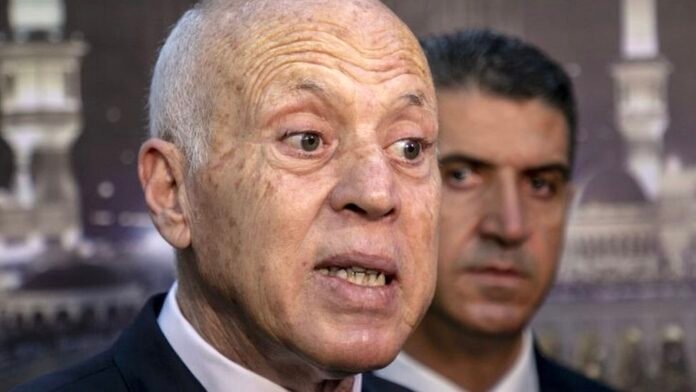
Tunisian President Kais Saied has criticized a recent resolution passed by the European Parliament, describing it as an unacceptable intrusion into Tunisia’s domestic affairs. The resolution, adopted on Thursday, November 27, urged Tunisian authorities to respect citizens’ rights and free individuals detained for exercising freedom of expression.
During a meeting with Tunisia’s Minister of Foreign Affairs, Mohamed Ali Nafti, President Saied directed that a formal protest be delivered to European officials. According to a statement released by the Tunisian Presidency, Saied insisted that Tunisia does not require external lessons on matters relating to rights and freedoms.
Earlier in the week, Saied had summoned the European Union’s ambassador to Tunisia, Giuseppe Perrone, accusing him of failing to adhere to proper diplomatic conduct. The move followed Perrone’s reported meeting with the head of the Tunisian General Labour Union (UGTT), an influential organisation and co-recipient of the 2015 Nobel Peace Prize for its role in Tunisia’s democratic transition after the 2011 uprising.
In its resolution, the European Parliament called for the release of what it described as political detainees and human rights defenders. European lawmakers also urged Tunisian authorities to protect freedom of expression and assembly, and to ensure that the judiciary remains independent.
The development came as a Tunisian appeals court handed down prison sentences of up to 45 years to about forty opposition figures, many of whom have been in detention since the spring of 2023. While some defendants had their sentences reduced on appeal, others received harsher penalties.
The European Parliament specifically highlighted the case of Sonia Dahmani, a prominent lawyer and media commentator, demanding her immediate and unconditional release. Dahmani was released from prison on Thursday afternoon after spending 18 months in detention. However, she remains under legal prosecution in a number of cases linked to a controversial law on the spread of false information, which human rights groups have strongly criticised.
In a separate development, Tunisia’s Ministry of Foreign Affairs confirmed that it had summoned the Dutch ambassador, Josephine Frantzen, over what it called a breach of diplomatic protocol. The ministry warned foreign representatives against interfering in Tunisia’s internal matters, though it did not give specific details about the alleged incident.
The situation has further strained relations between Tunisia and parts of the European Union, as international concern continues to grow over the country’s political direction and human rights record.
Source:Africa Publicity