

France has sharply criticised Mali’s ruling military authorities, saying the security crisis gripping the country proves that the junta’s decision to replace Western partners with Russia and Moscow-linked armed actors has failed to deliver stability.
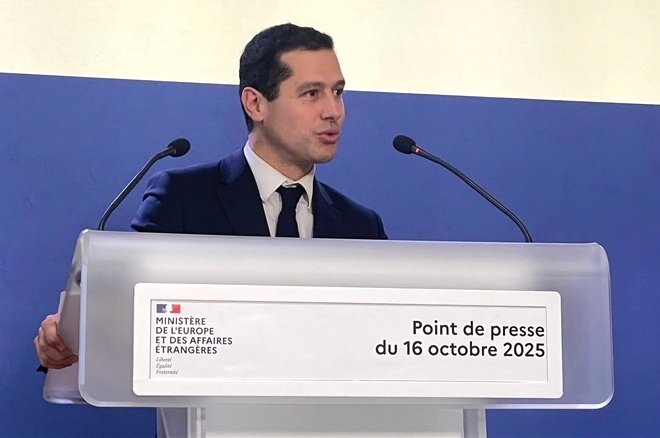
French foreign ministry spokesperson Pascal Confavreux told reporters in Paris on Thursday that the situation in Mali — where a two-month fuel blockade imposed by al Qaeda-affiliated militants has brought life in the capital Bamako close to standstill — demonstrates that Mali’s current alliances have not improved the protection of its citizens.
“What we are seeing is that the controversial presence of Russia and groups connected to it in Mali has not ensured the safety of the Malian people,” Confavreux said. He added that France is monitoring developments “with real concern”.
Mali’s communications ministry did not immediately respond to requests for comment.
Mali has been engulfed in conflict and political upheaval since Islamist fighters seized territory in the country’s desert north in 2012. France then launched a military intervention that year at Bamako’s request, eventually deploying thousands of troops across the Sahel to push back extremist groups linked to al Qaeda and Islamic State.
However, public opinion in Mali shifted against France, and after coups in 2020 and 2021 brought Colonel Assimi Goïta’s junta to power, the new authorities moved to end security cooperation with Paris and Washington. The government instead deepened ties with Russia, with Western governments accusing Mali of working with Wagner Group-style Kremlin-linked paramilitary units — an accusation Mali has previously rejected.
France withdrew its last troops from Mali in 2022, though its embassy remains operational in Bamako, mainly focused on assisting the roughly 4,000 French nationals still registered in the country.
Mali’s conflict continues to worsen. Experts warn that the fuel blockade shows jihadist groups now hold enough leverage not only to control vast rural areas but also to disrupt the functioning of major urban centres — a sign of the state’s declining reach and a troubling indicator for Mali’s future security trajectory.
Source:Africa Publicity