

Source: Africa Publicity
Babafemi Ojudu, former senator and ex-presidential adviser, has criticised comparisons between younger Nigerian musicians and Afrobeat pioneer Fela Anikulapo-Kuti, insisting that the late icon’s life, art and legacy remain unmatched.
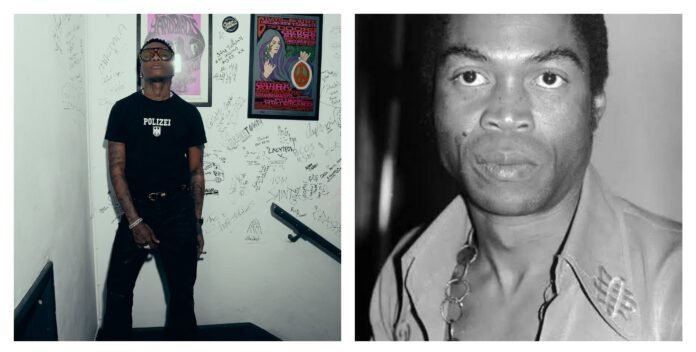
Ojudu shared his views in a Facebook post on Tuesday while reacting to an ongoing online dispute between Grammy-winning singer Wizkid and Seun Kuti, Fela’s son. The controversy followed reports that Wizkid had described himself as a greater artiste than Fela.
Reacting, Ojudu said he hoped the comment attributed to Wizkid was inaccurate. “Is it true that a Nigerian youngster said he is greater than Fela? I sincerely hope he was misquoted,” he wrote.
The 64-year-old writer and politician argued that no contemporary Nigerian musician could be compared to Fela in terms of artistic depth, courage and historical impact. “Even if he were to live ten lifetimes, his art and his life could not measure up to Fela Anikulapo-Kuti,” Ojudu said.
Questioning the basis for such comparisons, he added: “Is it in art? Is it in music? Is it in activism, courage, or originality?”
Ojudu described Fela as more than a musician, portraying him as a cultural force whose influence transcended entertainment.
“Fela was not just a musician; he was a movement, a conscience, a revolution in human form,” he wrote, noting that the Afrobeat genre founded by Fela is now studied in universities worldwide and embraced on major global stages.
He also highlighted Fela’s political activism and resistance to military rule, recalling the personal cost he paid for challenging oppression. “He used his music as a weapon against injustice, corruption, colonial mentality, and state violence,” Ojudu said, adding that Fela was “arrested over 200 times, brutalized, imprisoned, tortured, exiled, and silenced—yet never broken.”
Ojudu referenced the 1977 military raid on Fela’s Kalakuta Republic and the death of his mother, Funmilayo Ransome-Kuti, saying: “His mother was murdered by the state. His house, the Kalakuta Republic, was burned to the ground… Yet, after every assault, Fela returned with sharper lyrics, deeper rhythms, and more defiant truth.”
He argued that anyone seeking to compare themselves to Fela must first endure similar sacrifices. “For any young person—musician or not—to compare himself to Fela, he must first walk the corridors of Nigerian jailhouses… He must lose everything, go into exile, and still return with his creative spirit intact,” Ojudu wrote.
Describing Fela’s musical genius, Ojudu said the late icon was “a multi-instrumentalist, a composer, bandleader, philosopher, and cultural theorist,” whose long, complex compositions fused jazz, highlife, funk, Yoruba rhythms and political poetry into a timeless sound.
Ojudu concluded by dismissing the comparison and questioning the resolve of modern artistes in the face of state power. “So, whoever this fellow is—if he indeed made such a claim—should simply be ignored,” he said, adding that such a person “may be one of those who would flee the country the moment the police knock once on his car window in Ojuelegba.”
In a closing tribute, Ojudu wrote: “Fela did not run. Fela stood. Fela fought. And Fela remains immortal. Anikulapo—the man who carried death in his pouch.”