

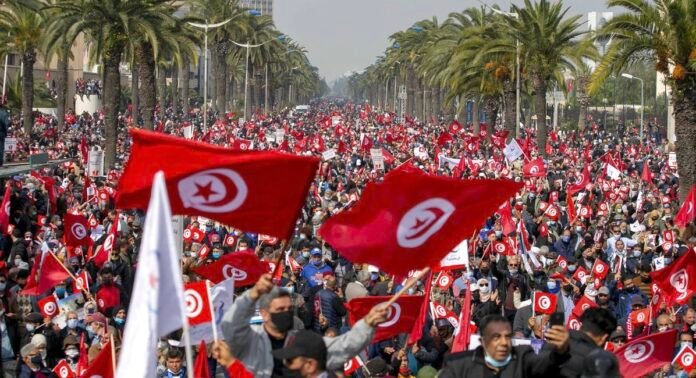
Large crowds filled the streets of Tunis on Saturday as Tunisians intensified their demonstrations against what they describe as growing authoritarianism under President Kais Saied. Protesters accused the president of tightening his grip on state institutions, particularly the judiciary and security forces, and demanded a return to democratic governance.
Saturday’s rally is part of a broader surge in nationwide unrest that has involved workers from multiple sectors — including journalists, medical professionals, banking staff, and public transport employees — all raising concerns about declining freedoms and deteriorating economic conditions. Environmental activists have also staged separate protests in recent weeks, calling for the shutdown of a chemical plant they say is harming local communities.
Wearing black as a symbol of mourning for Tunisia’s democratic backsliding, demonstrators marched through central Tunis carrying placards declaring “No to repression” and “The streets belong to the people.” Organizers said the display of unity was significant, given Tunisia’s fragmented political landscape; civil society groups, human-rights activists, and opposition parties that rarely coordinate shared the same platform on Saturday.
The protests come against the backdrop of Tunisia’s most severe political and economic crisis since the 2011 revolution. Critics say Saied’s 2021 power grab — in which he suspended parliament and began ruling by decree — has dismantled key democratic institutions. His dissolution of the Supreme Judicial Council in 2022 and removal of dozens of judges drew widespread condemnation from legal experts and rights organizations, who argue that judicial independence has been severely damaged.
“We are suffocating,” protesters chanted, along with calls for an end to what they described as tyranny. Ezzedine Hazgui, whose son — opposition figure Jawhar Ben Mbark — is imprisoned, told reporters that Tunisians “will not stop” until freedoms are restored.
Human-rights monitors say the situation has worsened in recent months. Amnesty International reported that at least 14 NGOs have faced suspensions, asset freezes, and other restrictions, describing the crackdown as one of the most aggressive since Tunisia’s democratic transition began more than a decade ago. Last month, three major civil society organizations announced that authorities had halted their activities over allegations of improper foreign funding — charges they deny.
More than a dozen opposition leaders, along with influencers, journalists, and government critics, are currently behind bars.
President Saied rejects accusations of authoritarianism, insisting that his actions aim to combat corruption and “protect the state from traitors.” He maintains that Tunisia remains on a path toward reform, despite increasing domestic and international concern.
Source:Africa Publicity