

Author: ©️ Art Koroma
Chapter One
A new day brings new light, and some days shine brighter than others. For me, that day was February 1st, 1969 – a Saturday that etched itself into my family’s history like a treasured memory. It began with an air of excitement, though nobody knew why. The announcement, when it came, was simple yet profound: I had arrived… As the Muslim world stirred from slime, the call to prayer echoed through Pepel, a small town with a big heartbeat. It was 5:45 am, and people were waking up to perform the Fajr prayer – a moment of spiritual connection, forgiveness, and guidance. In the quiet darkness, shadows rose from their beds, united by faith and tradition…
As I grew up, the stories of that morning lingered vividly in my mind. My father’s tales transported me back to the moment he was preparing to introduce me to our community at my naming ceremony, mere hours after I took my first breath. The dawn call to prayer drifted through the streets of Pepel, a serene melody that masked the significance of the moment. While the early risers headed to Fajr prayer, unaware of the joy that had unfolded, my family’s hearts overflowed with gratitude and excitement. Their joy was palpable, and it’s a memory that has stayed with me, a poignant reminder of the power of new beginnings and the beauty of a community bound together by faith and love.
In this devout Muslim family, Saturdays were a special day to come together, strengthen family bonds, and seek guidance from the Quran and the teachings of the Prophet Muhammad (peace be upon him). The Fajr prayer was a beloved tradition that brought the family together in the quiet morning hours, to ask for Allah’s blessings and guidance for the day ahead. It was a moment of peace and connection with their faith, each other, and the world around them.
As the muezzin’s voice faded into the distance, the morning of February 1st unfurled with an air of mystique, as if the heavens themselves had conspired to mark the advent of a singular soul. A strange storm brewed, its dark clouds gathering like sentinels, and thunder rumbled with a low, primal growl, as though the earth itself was stirring from its slumber. At a distance, the gathering could hear the storm coming from the sacred forest of Gbonkor-loko, where ancient trees creaked and swayed, their branches whispering secrets to the wind.
The air was thick with tension as my father, Alhaji Tejan Sorie Koroma, turned to my mother, Fatu Kanu, his eyes filled with a mix of concern and wonder. “This storm is unlike any I’ve seen,” he said, his voice low and contemplative. “Do you think it’s a sign?”
My mother, her face serene, replied, “Inshallah, it is a blessing from Allah. A sign of the special child we are about to welcome.”
The gathering murmured in agreement, their voices hushed as they gazed out at the turbulent skies. One of the elders, a wise and aged woman, spoke up, “The spirits of the forest are stirring. Gbentha-K’napee, the revered god of the forest, is awakening. This child will be touched by the divine…”
As the storm raged on, the whispers of the gathering grew louder, their words weaving a spell of anticipation and wonder. The air was electric with expectation, as if the very fate of the world hung in the balance.
Lightning flashed, a brilliant burst of light that illuminated the dark sky, casting an otherworldly glow over the sleepy town of Pepel. It was an unusual storm, for in this season, the skies were supposed to be clear and blue, not shrouded in mystery and power… And yet, amidst the turmoil of the skies, I was born, a tiny being who would leave an indelible mark on the world.
The storm raged on, as if in celebration, its fury a testament to the life that was entering the world. The winds howled, the thunder boomed, and the rain pounded against the earth, but in the midst of the tempest, a tiny cry pierced the air, a cry that would echo through the years, a cry that would be remembered for generations to come…
As the storm subsided, the vibrant atmosphere outside our family home in Pepel pulsed with excitement, as family and friends gathered to partake in the festivities, their faces aglow with smiles and their spirits lifted by the promise of new life. The rhythmic beat of traditional drums echoed through the air, weaving a tapestry of sound that harmonized with the rustling of palm fronds and the soft ululations of the women. Neighbors from nearby homes had come to join in the celebration, bringing with them gifts and warm wishes for the newborn child. The air was alive with anticipation, thick with the scent of freshly baked bread wafting from the nearby kitchens, and the soft murmur of prayers and whispers of well-wishers…
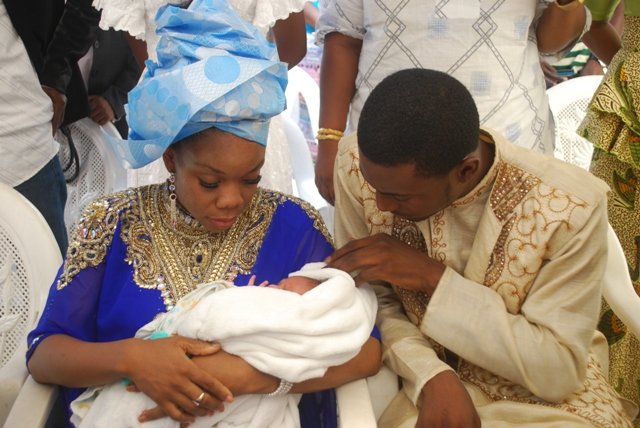
Under a beautifully decorated canopy, adorned with colourful fabrics and palm fronds, the community gathered to confer upon me the gift of identity. My father, with a warm smile, invited the neighbors to gather around, and with a gentle voice, he said: “A child belongs not only to their parents, but to the community, and the ancestors watch over them with pride.”
Grandmother, Ya-Warrah, nodded in agreement, “As we say, ‘A child is the reward of the community,’ and today, we celebrate the reward of our community.” My mother held me close, her eyes shining with tears of joy, as my father pronounced my name: Abdul-Rahman Tejani Koroma. The gathering erupted in applause…
As the crowd’s applause faded, my father stepped forward, a beaming smile on his face. “This morning, we’ve received word that the Apollo 11 spacecraft is ready to make history with the first manned mission to the Moon!” He turned to me with pride, his eyes shining with hope. “Just like those brave astronauts venturing into the unknown, our young Abdul-Rahman is embarking on his own journey. May the wisdom of our ancestors and the promise of a bright future guide him.”
Pausing, his expression turned somber. “Today, we also remember and honour the life of my grandfather, Alhaji Bai-Sama Lamina-Sam, the Paramount Chief of our chiefdom. It’s been one year since he left us, and his legacy continues to inspire us. May his memory live on, guiding us forward…”
The community nodded in respectful silence, and Ya-Warrah added, “May Alhaji Bai-Sama’s blessings be upon Abdul-Rahman.” The gathering murmured in agreement, and the celebration resumed with renewed joy and hope for my future…
Uncle Sheku Daloya, nodded, “A tree is known by its roots, and Abdul-Rahman’s roots run deep in our community. May he grow strong and tall, just like our sacred cotton tree of Gbonkor-loko.” The family and neighbors erupted in cheers and ululations as my father poured a libation to the ancestors, seeking their blessings and protection for me… Mama Kaday smiled, “A child is a guest in the home, and we must cherish and guide them, for they are the future of our community.” As the ceremony came to a close, the family and neighbors came together to celebrate, sharing stories, laughter, and wisdom.
The ceremony was a beautiful blend of tradition, culture, and joy, a celebration of my arrival and a reminder of the values and principles that would guide me throughout my life. My name, Abdul-Rahman Tejani Koroma, is more than just a label; it’s a reflection of my identity, my values, and my connection to my family and community. Abdul means servant, and Rahman means the merciful in Arabic, reflecting the values my parents hoped I would live by. Tejani, my father’s name, connects our family to the Tijaniyyah Sufi order, with roots stretching deep into West Africa, particularly in Mali. Koroma, our family name, signifies strength and endurance. Among my friends, however, I was simply Art Koroma, a nickname that has become an integral part of who I am today – creative, expressive, and curious about the world.
As I grew older, I began to appreciate the significance of that day, the love and support of my community, and the rich cultural heritage that had been passed down to me. The memories of that day have stayed with me, shaping my perspective and informing my actions, and I am grateful for the wisdom and traditions that have been woven into the fabric of my being… I was the fourth of several siblings, and our family home was always alive with energy and noise. We had our ups and downs, but love and resilience bound us together through everything.
Before I was born, my father had been married to Mama-Tigda from Komrabai, a town near our ancestral home of Lokomasama. They had two sons—Mohamed Tejan Koroma and Alhaji Bai-Sama Koroma—before going their separate ways. Later, my father married my mother, a woman from Lunsar, who gave birth to my elder sister Isatu and me. He also maintained ties with his hometown, where he married another woman, N’Thuma, who blessed him with two daughters, Fatu and Aminata. My sister Fatu was named in honour of my mother, who also bore the name Fatu, a beautiful tradition that has allowed our family’s legacy to live on through the generations…
Growing up in a polygamous household offered a unique blend of love, unity, and diversity. Our family was a vibrant tapestry woven from many threads—each mother, sibling, and relative contributing their own color and pattern. Despite the complexities, our home was filled with warmth and laughter. The chorus of voices, each with its own story to tell, created a symphony of affection and life… Love in our home was never divided; it was multiplied. Every member mattered, and every bond counted… My eldest brother, Mohamed Tejan Koroma, was the shining star of our family. As we siblings often discussed, Mo’s intelligence, kindness, and humility were traits we all admired and aspired to. “He’s like a role model, isn’t he?” Isatu once said, and Alhaji nodded in agreement, “Yeah, I wish I could be as calm and wise as him.”
But Alhaji, on the other hand, was entirely different. Beneath his serious demeanor was a mischievous streak that came alive when he was with us. “Remember that time we snuck into Mother’s garden and ate all the corn?” Isatu giggled, and Alhaji grinned, “Oh, Mother was so mad!” We often found ourselves in trouble, but those moments are among my fondest memories.
As we talked about our siblings, Isatu smiled, “Alhaji may seem tough, but he’s got a soft spot for nature.” Alhaji chuckled, “Yeah, I love teaching you guys about the forest and its secrets.” Fatu added, “And he’s really good at making us laugh!”
Isatu was indeed the center of Father’s world, and it was easy to see why. “She’s so gentle and kind,” Ya-Warrah said, and we all nodded in agreement. “But she’s also got a competitive streak,” Alhaji teased, and Isatu playfully rolled her eyes… I shared a special bond with Isatu. “She’s more than just a sister; she’s my best friend,” I said, and Isatu smiled, “Same here.” We spent countless hours together playing games and storytelling by lantern light.
Ya-Warrah, or Auntie-Kay, was a whirlwind of energy. “She’s always on the go!” Fatu laughed, and we all chuckled, remembering her antics. And Pa-Sorie, or Bor-bor Kay, was the youngest and perhaps the most mischievous of all. “He’s always getting into trouble, but we love him anyway,” Alhaji said with a grin.
As siblings, we often discussed our relationships and dynamics. “We’re all so different, but that’s what makes us special,” Isatu said, and we all nodded in agreement. Together, we were a close-knit bunch, bound by shared laughter and countless adventures…
During our free time, my friends and I gathered to play traditional games like Ludo and Baylay. Ludo sharpened our strategy and patience; Baylay, a coin-toss game played against a wall, tested our focus and accuracy. We learned teamwork, fairness, and how to handle both victory and defeat with grace. Those simple games shaped our characters and strengthened our friendships… Life in our household was a colorful tapestry of music, storytelling, and celebration. The smell of traditional cooking filled the air, and every gathering was marked by laughter and song… We were also surrounded by relatives who added to our lives in unforgettable ways. Sheku Daloya, the younger brother of our grandmother Ya-Warrah, lived with us. “He’s more like an older brother than an uncle,” Alhaji once said, and we all agreed. His youthful energy was infectious, and we’d often find ourselves getting into mischief together.
Alimamy Sogbeh, a family friend from Mambolo, became like a guardian to us—quiet, steady, and kind-hearted. “He’s the one who taught me how to be patient,” Isatu said, smiling. We all looked up to him, and his calm demeanor had a soothing effect on our lively household… And Uncle Adam, a master of acrobatics, entertained us with his flips and stunts, filling our evenings with awe… “He’s the most agile uncle ever!” Ya-Warrah exclaimed, and we all giggled, remembering his impressive moves.
Together, we formed a close-knit community that taught us the value of family and friendship… As I looked back on those days, I remembered being a tiny, skinny, and fair-complexioned five-year-old, a bundle of energy and curiosity, with a mop of curly, unruly hair that seemed to have a life of its own, a smiley face with rosy cheeks, and big, round eyes that sparkled with wonder, framed by long, curly lashes that made them seem even bigger. My brother Alhaji Bai-Sama was my hero, and I followed him everywhere, from the dusty streets of our village to the lush fields where we chased after butterflies and played hide-and-seek among the tall grasses. “He’s the best brother ever,” I would tell my friends, my voice filled with conviction, and Alhaji would chuckle and ruffle my hair, his eyes cr crling at the corners as he smiled…
I recalled the way Alhaji’s face would light up whenever he had a new adventure planned, and I would instantly be by his side. And on that particular day, as Alhaji returned home from school, his eyes shining with excitement, I knew something was up. “Abdul-Rahman!” he shouted. “There’s a new cooking program at school—and we get to eat a lot!” I remember thinking, ‘Food? Count me in!’ The promise of food was irresistible, so I joined him, my little legs moving quickly to keep up with his long strides.
As we walked to school, Alhaji told me all about the cooking program – the dishes they’d make, the ingredients they’d use, and the fun they’d have. I listened with wide eyes, my curiosity growing by the minute. And when we stepped into the school kitchen, the aroma of simmering food and the sizzling of pans enchanted me, transporting me to a world of flavors and textures I had never experienced before.
The experience awakened something inside me, a spark of curiosity that would ignite a lifelong passion for cooking… Alhaji glanced at me with a grin, “You love food, don’t you, Abdul-Rahman?” he said, and I nodded vigorously, already planning our next culinary adventure together… The meals—simple cornmeal, or corndor, and wheat-bulgur—became a symbol of comfort and joy, a reminder of the happiness and contentment that filled my heart whenever I was surrounded by the sights, sounds, and smells of the kitchen… That program changed everything. It made me eager to attend school, not only for the food but for the lessons that came with it. From that day on, I went to school faithfully, discovering a new passion for learning.
As I look back now, I see that it was a small but pivotal moment in my journey. The school kitchen, a warm and lively space filled with the aroma of simmering food and the sizzling of pans, became a place of inspiration. The worn wooden tables, the chopping boards scarred from years of use, and the gleaming pots that seemed to hold a thousand secrets – all contributed to an atmosphere that sparked my curiosity about the world beyond Pepel… Our childhood adventures often took us to the sun-kissed neighboring villages – Hamlet Number One, with its lush green fields; Hamlet Number Two, where the river flowed gently; Rosengbeh, with its towering trees; and Madina, where the elders shared tales of old. Each village held its own magic. We’d climb the groping branches of mango trees, the sweet juice dripping from the ripe fruit, and picnic by the babbling streams, the sound of water a soothing serenade. In the evenings, we’d gather beneath the ancient baobabs, their twisted trunks like giants’ fingers, and listen to elders recount tales of bravery and honor, their voices weaving a spell of wonder.
The most exciting time of year was Eid al-Fitr, which we called Pray-Day. The air would buzz with anticipation as the town split into two rival groups – Kankay Town and Fouray-bay Town – each preparing songs, dances, and lanterns for the celebration. On the festival night, the whole town would glow with light and laughter, the lanterns casting a warm, golden light on the smiling faces. The Section Chief, Bai-Adam, a man of dignity and kindness, would award prizes to the best performances, but the true reward was the unity and joy that filled our hearts, a sense of belonging that was hard to put into words.
Those experiences taught us community, creativity, and pride in our culture. Each village, each tradition, was a classroom without walls, where the lessons were learned through laughter, song, and the sharing of stories
Moonlight Stories Of Lokomasama
C2026