

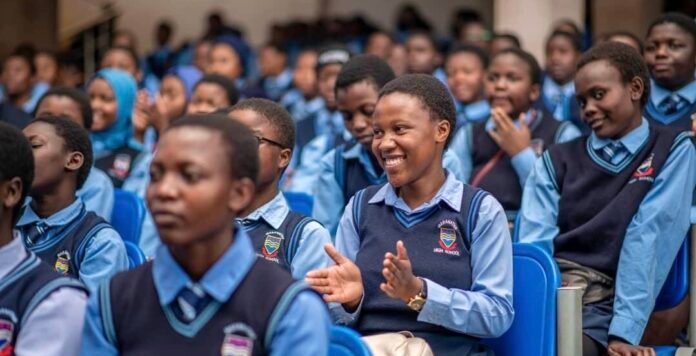
The Government of Malawi has announced the removal of tuition-related charges in public secondary schools, a major education reform that takes effect January 1, 2026, and is expected to significantly widen access to secondary education across the country.
In a statement issued by the Ministry of Education, authorities confirmed that students in public day secondary schools will no longer be required to pay any fees. The policy abolishes examination and identification fees charged by the Malawi National Examination Board (MANEB), as well as the School Development Fund (SDF) and other user-related levies.
Scope of the policy
Under the new arrangement:
• All public day secondary schools will be completely free
• Boarding secondary schools will continue charging boarding-related fees
• Private secondary schools will retain their existing fee structures
• Grant-aided schools under the Association of Christian Educators in Malawi (ACEM) will only collect boarding fees, with the government covering tuition and operational costs through grants
Government justification
Secretary for Education Ken Ndala said the initiative is aligned with the country’s long-term development agenda, Malawi 2063, which prioritises investment in education as a driver of economic growth.
“Free Secondary Education will significantly advance Malawi’s human capital development and ensure that no learner is denied education due to financial barriers,” he stated.
Funding and implementation
The Ministry disclosed that initial funding has already been disbursed to schools ahead of the opening of the second term on January 5, with further financial support expected later in the month to stabilise implementation.
To accommodate anticipated increases in enrolment, the government also plans to recruit additional teachers during the 2026/27 financial year, alongside broader measures to strengthen the secondary education system.
Long-standing challenges
Malawi has historically faced low secondary school enrolment, high dropout rates, and limited educational infrastructure. Although primary education was made free in 1994, many learners have been unable to transition to secondary school due to cost-related barriers.
The new policy is widely seen as a major step toward education equity and inclusion, particularly for learners from low-income households and rural communities.
Caution from experts
Despite broad support, education analysts have urged caution, warning that the success of the reform will depend on sustained investment.
They note that overcrowded classrooms, teacher shortages, and insufficient facilities could undermine learning outcomes if not addressed alongside the fee abolition.
The Ministry of Education has acknowledged these concerns and says further reforms are being planned to ensure that increased access does not come at the expense of educational quality.
Source: Africa Publicity