


A teenager who spent years covertly constructing improvised weapons in his London bedroom was finally exposed after a routine police response to a family dispute uncovered a dangerous collection of home-made explosive devices and unlicensed firearms.
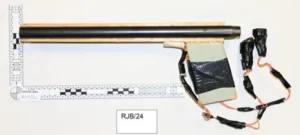
The Metropolitan Police confirmed that officers were called to the family home on 27 October after receiving reports of a disturbance involving the teen, identified as Ntsele, and a relative. According to police, the altercation began when the teenager allegedly sprayed anti-bacterial cleaner at the family member before attempting to strike him with a makeshift sword created from a metal bar. No life-threatening injuries were reported, but the behaviour prompted officers to search the property for safety reasons.
During a search of the boy’s bedroom, carried out with the assistance of a firearms recovery dog, police discovered what detectives later described as a “deeply concerning” cache of improvised weapons. Officers found seven improvised explosive devices alongside five unlicensed firearms and ammunition. The items were seized immediately, and the teen was arrested on suspicion of making threats to kill and threatening a person with an offensive weapon. Additional arrests were later made in connection with firearm possession as specialists assessed whether the devices and weapons were functional.
A History Long Overlooked
As detectives began piecing together how a teenager managed to assemble a secret armoury within his home, they uncovered that this was not his first encounter with police. In 2021, when he was just 14, Ntsele had been found with more than 50 rounds of ammunition, some of which had been dangerously modified. That case was discontinued in 2023, but the rediscovery of weapons at his home compelled officers to reopen the earlier file.
With the new investigation underway, detectives obtained access to the teen’s mobile phone, revealing a digital trail that illustrated the scale of his interest in weapons manufacturing. Investigators reported “extensive” online searches—spanning several years—where he studied the construction of ammunition, home-made firearms, and explosive materials. The searches suggested an ongoing effort to teach himself these skills without adult oversight.
Police further learned that the teenager had used a relative’s bank card, often under false names, to purchase materials commonly associated with weapon-making, including steel balls and potassium nitrate. These purchases raised concerns about how discreetly young people can access potentially harmful materials online when unsupervised.
In May 2024, the teen shared videos with a friend showcasing a crude gun he had built using basic household materials, such as wooden panels and metal piping. Forensic examination later confirmed that the device was capable of firing and causing serious injury.
Dozens of Charges and a Complex Trial
As evidence accumulated, prosecutors authorised an additional 26 charges, including eight counts of possessing explosive substances with intent to endanger life and eight counts of manufacturing explosives for unlawful purposes. The remaining charges related to possession of unlicensed firearms and ammunition.
On 24 November, Ntsele pleaded guilty to several firearm-related offences, including possessing ammunition without a certificate and five counts of possessing a firearm without a certificate. An 11-day trial followed for the remaining allegations. The jury ultimately found the teenager guilty of eight counts of making explosive substances for unlawful purposes but acquitted him of the other outstanding charges.
Police Warning Over Online Access to Dangerous Content
Detective Inspector Raymond Sekalongo, who led the investigation, described the case as unusually complex due to the teenager’s ability to conceal his activities from those around him. He emphasised that the boy’s self-taught approach—fuelled by online content—played a significant role in enabling him to construct working weapons.
“This was a young person who developed an unhealthy and dangerous obsession,” Sekalongo said. “Our investigation showed he spent large amounts of time watching videos about weapons, often daily, without the knowledge of his family.”
Sekalongo urged parents and guardians to take an active interest in the online environments their children access, warning that easily available content can influence young people toward unlawful or unsafe behaviour if left unchecked.
The teen is scheduled for sentencing in February 2026, with a specific date still to be confirmed.
Source:Africa Publicity