

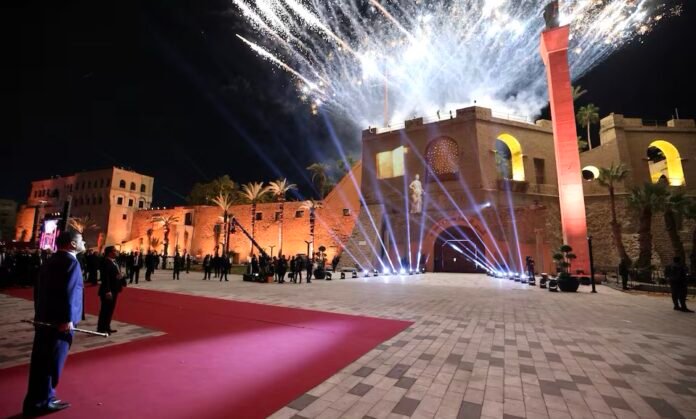
Libya has reopened its largest and most important museum in Tripoli for the first time since the 2011 uprising that ended the four-decade rule of Muammar Gaddafi, a symbolic milestone in the country’s slow recovery from years of conflict and institutional collapse.
The National Museum of Libya, housed inside the historic Red Castle complex—formerly known as As-Saraya Al-Hamra—welcomed visitors again on Friday following extensive renovations led by the internationally recognised Government of National Unity (GNU). The reopening restores public access to thousands of artefacts charting Libya’s history from prehistoric settlements to the Islamic era.
The museum was shuttered during the NATO-backed revolt against Gaddafi in 2011, when Tripoli became a battleground and cultural institutions were left vulnerable to damage and looting. The Red Castle itself holds strong political symbolism: Gaddafi once used its ramparts to deliver speeches during the final days of his rule.
A Symbolic Reopening
Speaking at the reopening ceremony, Prime Minister Abdulhamid al-Dbeibah framed the museum’s return as a sign of national reconstruction rather than a purely cultural event.
“The reopening of the National Museum is not just a cultural moment,” Dbeibah said. “It is a living testimony that Libya is rebuilding its institutions and reclaiming its identity.”
Renovation work began in March 2023 under the GNU, which took office in 2021 through a United Nations–backed political process aimed at ending years of rival administrations and armed division. While Libya remains politically fragmented, the government has prioritised restoring public institutions and safeguarding cultural heritage.
Inside the Red Castle
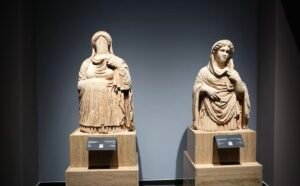
Built in the 1980s, the museum spans approximately 10,000 square metres of exhibition space and is considered the most comprehensive repository of Libyan heritage. Its galleries contain mosaics, wall murals, sculptures, coins and everyday objects reflecting the succession of civilisations that have passed through North Africa.
Artefacts on display cover Libya’s prehistoric past and extend through Phoenician, Greek, Roman and Islamic periods, highlighting the country’s role as a crossroads of Mediterranean and African history.
Among the most significant exhibits are ancient mummies from the desert settlements of Uan Muhuggiag in Libya’s deep south and Jaghbub, near the eastern border with Egypt. These remains, dating back thousands of years, provide rare insights into early human habitation in the Sahara before desertification reshaped the region.
Phased Public Access
While the reopening marks a major step forward, public access will initially be limited. Museum director Fatima Abdullah Ahmed said the current phase prioritises educational visits.
“The current program focuses on enabling schools to visit the museum during this period,” Ahmed told Reuters. “It will be officially opened to the general public at the beginning of the year.”
Education officials say the initiative is designed to reconnect young Libyans with their national history after more than a decade in which conflict disrupted schooling and cultural engagement.
Recovering Lost Heritage
Libya’s cultural authorities have also been working to recover artefacts smuggled out of the country during the chaos that followed Gaddafi’s fall. According to Mohamed Farj Shakshoki, chairman of the board of directors of Libya’s Department of Antiquities, at least 21 stolen artefacts have been returned in recent years.
These items were recovered from countries including France, Switzerland and the United States following diplomatic efforts and cooperation with international institutions. In 2022 alone, the United States returned nine artefacts, including funerary stone heads, urns and pottery.
Shakshoki said negotiations are ongoing to retrieve more than two dozen artefacts from Spain, as well as additional items believed to be held in Austria.
“The recovery of our heritage is part of restoring Libya’s dignity and historical memory,” he said ahead of the reopening.
UNESCO Sites and Ongoing Risks
Libya is home to five UNESCO World Heritage sites, including the ancient Roman cities of Leptis Magna and Sabratha, and the old town of Ghadames. In 2016, UNESCO warned that all five sites were endangered due to armed conflict, looting and lack of maintenance.
Recent improvements in security have begun to change that assessment. In July, Libya’s delegation to UNESCO announced that Ghadames had been removed from the endangered list, citing better local security and preservation efforts.
However, experts caution that many archaeological sites remain vulnerable, particularly in remote areas where state authority is limited and illegal excavations continue.
Cultural Revival Amid Political Uncertainty
The reopening of the Red Castle museum comes at a time when Libya remains divided politically, with elections repeatedly delayed and rival armed groups retaining influence in parts of the country. Despite these challenges, cultural officials say restoring national institutions can help foster unity and civic identity.
While security concerns and political uncertainty persist, the return of the National Museum stands as a rare point of consensus—and a visible sign that Libya is attempting to move from years of conflict toward preservation, education and national renewal.
Source:Africa Publicity