
By Emmanuel Mihiingo Kaija
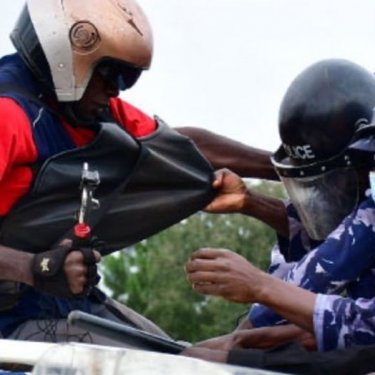
Covering elections in Uganda can be an exercise in tension, endurance, and, increasingly, risk — and the Kawempe North by‑election on 13 March 2025 was a stark illustration. At least 18 journalists were violently attacked by members of security forces, sustaining severe beatings, arbitrary detentions, and damage or confiscation of essential equipment while trying to report on the legislative contest in Kampala’s northern suburb. Among those targeted were seasoned professionals from major outlets — Hasifah Nanvuma of Nation Media Group, Hassan Wasswa of NBS Television, and Francis Ijjo of NTV Uganda — all of whom required urgent medical attention after being beaten during the assignment. Journalists Hakim Wampamba and Francis Isano were also beaten and in some cases arrested, with observers noting that the assaults often appeared deliberate rather than accidental, even occurring when press credentials were clearly visible. Human rights and press freedom organizations including the International Federation of Journalists (IFJ) and the Press Council of South Africa (PCSA) condemned the brutality as part of a worrying pattern of repression that not only endangers individual media workers but also suppresses access to timely and critical public information.
This assault was not an isolated blip in Uganda’s media landscape — it sits within a broader trend of hostility documented in official press freedom reports. The Human Rights Network for Journalists‑Uganda (HRNJ‑U) reported 110 violations against journalists in 2024, a figure only slightly lower than the 122 violations documented in 2023 but still dramatic, underscoring that dangers remain pervasive and intense. These violations included physical assault, threats, economic pressure, censorship, denial of access to information, and institutional obstruction. Of the 110 recorded cases, the Uganda Police Force was responsible for 38 incidents, followed by other security organs including the Uganda People’s Defence Forces (UPDF) and task force units. Gendered threats were also significant: female journalists faced disproportionate harassment and intimidation, particularly online, creating an environment where digital abuse intersects with physical risks and undermines women’s full participation in public reporting. HRNJ‑U’s leadership has emphasized that this environment grows more fraught with every election cycle and is now compounded by emerging threats such as cybersecurity breaches and disinformation campaigns that further complicate the safety of journalists and the ethical practice of journalism in Uganda.
The crisis extends beyond violence into institutional and bureaucratic exclusion. Independent media outlets such as Nation Media Group (NMG‑Uganda) — which runs NTV Uganda, Daily Monitor and other platforms — have faced systematic removal from key public information spaces. In October 2025, NMG journalists were denied accreditation and blocked from covering parliamentary sessions and the State of the Nation Address, a move strongly criticised by the Uganda Editors’ Guild as an unlawful restriction on constitutional rights to freedom of expression and access to information. The Uganda Journalists Association (UJA) separately condemned the stripping of accreditation cards from NTV crews when they attempted to enter Parliament on 28 October 2025, calling it a “blatant attempt to muzzle media freedom and silence independent journalism”. Further escalation occurred when Parliament later excluded all NMG journalists from the 2026 accreditation list, which featured more than 140 reporters from other organizations but omitted NMG entirely, an unexplained and significant exclusion that impacts one of Uganda’s largest independent media houses and limits public oversight of legislative processes. The Uganda Law Society also weighed in, condemning these actions as unconstitutional violations of both free speech and the public’s right to information, and warning that they may pursue legal action if the blockade continues.
This tightening of access comes against a backdrop of chronic press freedom challenges stretching back years. According to Afrobarometer Round 9 survey data, Uganda ranked 128th out of 180 countries on the 2024 World Press Freedom Index, a slight improvement from 133rd in 2023 yet still reflecting persistent problems including intimidation, violence, and interference with journalistic work. The same research shows that while a strong majority of Ugandans support a press that can investigate government mistakes and corruption, and believe the public should have access to government information, in practice press freedom is often curtailed during critical moments when impartial coverage is most needed — particularly during election seasons, protests, or high‑level government activities. Radio remains the most trusted news source for many Ugandans, yet even local language reporters have faced pressures that chill independent coverage and reduce willingness to tackle sensitive political subjects.
Legal frameworks intended to govern speech and media conduct have also been harnessed in ways that chill journalistic practice, contributing to a broader environment of self‑censorship and regulatory pressure. Laws on “offensive communication,” misinformation, and national security have been invoked against journalists and talk show hosts, though critics argue these statutes are often so vague that they can be applied arbitrarily, exposing media practitioners to risks of arrest, prosecution, or sanctions. Meanwhile, regulatory bodies like the Uganda Communications Commission possess powers to suspend licenses or demand the reassignment of journalists, and tax enforcement mechanisms have been reported as being applied in ways that disproportionately burden independent outlets. These legal and regulatory pressures, combined with physical threats and institutional exclusion, create a multifaceted risk environment for journalists trying to perform their duty of informing the public under constitutional guarantees.
Human rights organizations and civil society groups have repeatedly raised the alarm about these converging threats to press freedom. UNESCO, the Committee to Protect Journalists (CPJ), and Reporters Without Borders (RSF) have all called on Ugandan authorities to uphold constitutional protections for media workers, restore access to public institutions for independent outlets, and thoroughly investigate attacks on journalists and censorship practices. CPJ, for example, specifically urged the lifting of restrictions on NMG‑Uganda’s access to Parliament and presidential events ahead of the scheduled January 2026 general elections, arguing that such bans undermine public interest reporting and democratic transparency. Meanwhile, editors’ guilds and journalists’ associations have emphasized that safeguarding press freedom is essential not only for media practitioners themselves but for the functioning of democracy, public trust in institutions, and informed civic engagement at a time of heightened political contestation.
These escalating pressures have led to coordinated pushback from Uganda’s media fraternity. Following repeated attacks by security forces, media owners, editors, and journalist associations announced a media coverage boycott of security agencies in March 2025, underlining that journalists could not continue to report on key state actors when their safety was not guaranteed. This collective action — organized by bodies including the UJA, Uganda Sports Press Association (USPA), HRNJ‑Uganda, the Uganda Media Women’s Association, and the National Association of Broadcasters — emphasized that press freedom cannot be preserved without accountability for those who commit rights violations and that impunity for attacks on journalists reinforces a climate of fear and obfuscation of public affairs.
In the face of these challenges, the promise of Afrocentric solutions remains vital. Grounding reforms in community values such as “Omuntu ngumuntu ngabantu” — a person is a person through other people — offers a pathway for collective responsibility in protecting journalists and ensuring transparency. Local councils, civil society networks, traditional leaders, and citizen groups can support frameworks that hold institutions accountable while reinforcing legal guarantees for media access. Capacity-building initiatives tailored to Uganda’s context — including digital security for journalists, community reporting networks, and conflict‑sensitive safety training — can help practitioners navigate both physical and regulatory risks. Furthermore, embedding press freedom within broader civic movements addressing corruption, land rights, and environmental oversight can strengthen the role of the media as a central pillar of democratic accountability and civic empowerment.
Bibliography
1. International Federation of Journalists (IFJ). “Uganda: Journalists Reporting on Elections Brutalised by Security Forces.” IFJ Media Centre, March 2025. https://www.ifj.org/media-centre/news/detail/article/uganda-journalists-reporting-on-elections-brutalised-by-security-forces
2. Press Council of South Africa (PCSA). “Uganda’s Media Fraternity Pushes Back Against Rising Impunity.” March 2025. https://presscouncil.org.za/2025/03/19/ugandas-media-fraternity-pushes-back-against-rising-impunity
3. Human Rights Network for Journalists‑Uganda (HRNJ‑U). Press Freedom Violation Reports 2024–2025. https://www.informer.co.ug/police-lead-in-violating-journalists-rights-report
4. Monitor – Uganda. “Journalists Under Attack as Media Space Narrows.” December 2024. https://www.monitor.co.ug/uganda/special-reports/journalists-under-attack-as-media-space-narrows-5032750
5. Committee to Protect Journalists (CPJ). “Ugandan Authorities Ban Nation Media Group from Parliamentary Coverage.” October 2025. https://cpj.org/2025/10/ugandan-authorities-ban-nation-media-group-from-parliamentary-presidential-coverage
6. Uganda Editors’ Guild & Uganda Law Society. “Statement on Denial of Accreditation to NMG Journalists.” October 2025. https://dailyexpress.co.ug/2025/10/30/uls-slams-ban-on-nmg-journalists-threatens-legal-action-against-parliament
7. DefendDefenders. Bi-Annual Report: October 2024 – May 2025. https://defenddefenders.org/wp-content/uploads/2025/05/Bi-annual-October-2024-May-2025-Final.pdf
8. Afrobarometer. “Ugandans Support Free Media That Holds Government Accountable.” Round 9 Survey, 2025. https://www.afrobarometer.org/publication/ad1056-ugandans-support-free-media-that-holds-government-accountable
9. Association of Civil Society Organizations for Uganda (ACCU). Final Draft CSO UNCAC Parallel Report for Uganda, 2024. https://accu.or.ug/wp-content/uploads/2024/05/Final-Draft-CSO-UNCAC-Parallel-Report-for-Uganda_mf_dn-2.pdf
10. Reuters. “Uganda Opposition Candidate Says He Was Beaten by Security Forces.” December 2025. https://www.reuters.com/world/africa/uganda-opposition-candidate-says-he-was-beaten-by-security-forces-2025-12-07