
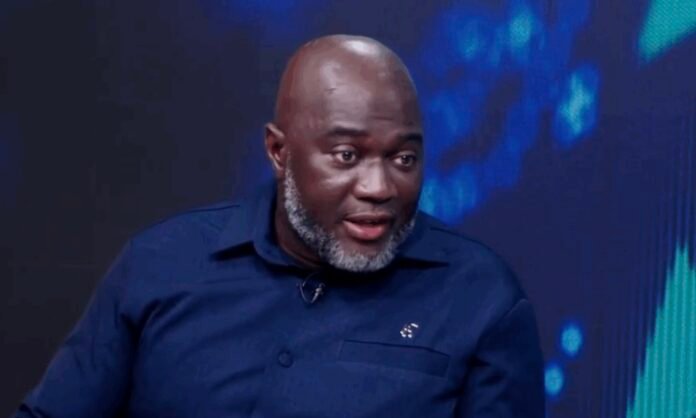
Ghana’s economy has recorded notable improvements over the past year, but caution remains essential, the Executive Secretary of the Chamber of Petroleum Consumers (COPEC), Duncan Amoah, has warned. While commending the government’s prudent economic management, Amoah stressed that the country is not yet fully insulated from risks that could derail the recovery.
Speaking on The Big Issue, a weekend news and analysis programme on Channel One TV, on Saturday, January 10, 2026, Amoah provided a nuanced assessment of Ghana’s macroeconomic performance over the last 12 months. He described the year as a “mixed bag,” noting progress compared to the challenges the country faced in recent years but underscoring the importance of continued vigilance.
“I think that the past 12 months have been a mixed bag, though generally, fairly speaking, there has been a lot of improvement over the things that we witnessed some five, four, three years back,” Amoah said.
Signs of Improvement
Amoah pointed to several indicators suggesting stabilization, including a moderation in inflation rates, more predictable energy and fuel prices, and modest growth in key sectors such as agriculture, manufacturing, and services. He noted that households and businesses are gradually adjusting to more stable economic conditions, and consumer confidence shows early signs of improvement.
“The indicators we have seen recently, from inflation control to energy pricing, have helped give some degree of certainty to businesses and households. People are beginning to see some light at the end of the tunnel,” he said.
Despite these positive signs, Amoah warned against interpreting them as a signal that the economy is entirely safe from shocks. He cautioned that premature celebrations or policy complacency could undermine gains achieved through careful fiscal management and reform efforts.
Calls for Prudence
“I would not say we are out of the woods yet,” he noted. “So for the handlers of the economy, that everybody seems to say we are doing well, is not the time to go having Kenkey parties as we saw previously. Because once you do that, you clearly are already jubilating even before the ball enters the net.”
He argued that sustained improvement in Ghana’s economy would require continued discipline in fiscal management, targeted support for critical sectors, and a long-term vision for stabilizing both public finances and private investment. Amoah stressed that policymakers must remain focused on maintaining macroeconomic stability while addressing structural challenges that have historically constrained growth.
Risk Areas Remain
Highlighting ongoing risks, Amoah mentioned vulnerabilities such as fluctuations in global commodity prices, energy supply constraints, and inflationary pressures that could affect household purchasing power. He also noted the need for continued attention to agriculture, which remains a critical sector for Ghana’s food security and employment, and manufacturing, which has potential to drive export growth and diversification of the economy.
“Economic stability is not just about numbers going up or down; it is about ensuring that households can manage costs, businesses can plan and invest, and the government can sustain a pathway that allows steady growth,” Amoah said.
Moving Forward
COPEC’s call for prudence comes at a time when Ghana is emerging from several challenging years marked by high inflation, energy price volatility, and fiscal deficits. Amoah urged economic managers to consolidate gains, implement reforms carefully, and remain focused on long-term stability.
“Those handling the economy may have found a certain rhythm, a certain pathway that seems to let things work, but it requires consistency, restraint, and deliberate planning,” he said.
Analysts say that Amoah’s perspective reflects a broader consensus among Ghanaian economic experts: while macroeconomic indicators suggest recovery, the country must remain vigilant to sustain gains and shield the population from sudden shocks.
Source: Africa Publicity