
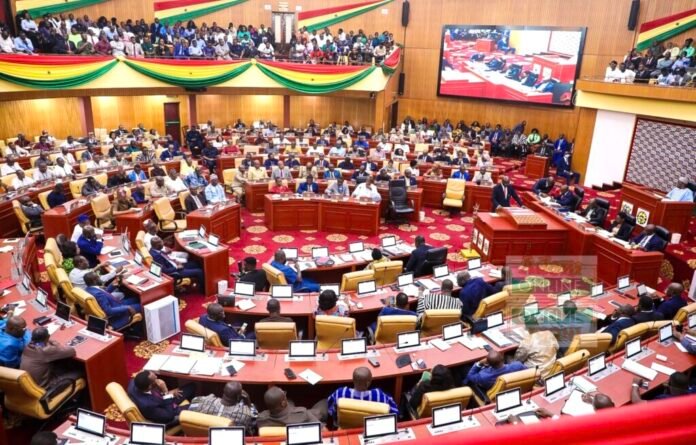
The Ghanaian Parliament has passed the 24-Hour Economy Authority Bill, 2025, clearing a major legislative hurdle for one of the flagship economic policies of the John Dramani Mahama administration. The approval follows weeks of intense debate and scrutiny by both the Majority and Minority caucuses, reflecting the far-reaching implications of the proposed economic model.
The bill, which was first laid before the House in late 2025, provides the legal framework for the creation of a 24-Hour Economy Authority, a statutory body mandated to oversee the planning, coordination and nationwide implementation of Ghana’s proposed 24-hour economic system. The policy aims to encourage continuous production, service delivery and commercial activity beyond traditional working hours.
Under the new law, the Authority will serve as the central coordinating institution, working with ministries, departments and agencies, metropolitan, municipal and district assemblies, as well as private sector actors. Its responsibilities will include harmonising public and private initiatives, mobilising domestic and foreign investment, and ensuring that regulatory, energy, transport and security systems can support sustained economic activity day and night.
Government officials argue that the 24-hour economy initiative has the potential to significantly boost employment, productivity and national output, particularly in key sectors such as manufacturing, agro-processing, logistics, healthcare, hospitality and digital services. By extending operating hours, businesses are expected to make better use of existing infrastructure while creating new shifts and job opportunities, especially for the youth.
The policy was a central pillar of the National Democratic Congress (NDC) campaign during the 2024 general elections and has since been framed by the government as a long-term strategy to reposition Ghana’s economy for competitiveness within the African Continental Free Trade Area (AfCFTA).
During parliamentary debates, the Minority caucus raised several concerns about the practical implications of the policy. Some lawmakers cautioned that without adequate preparation, a 24-hour operational system could expose gaps in public safety, increase pressure on security agencies and disrupt the daily routines of citizens. Others questioned the readiness of critical infrastructure, including electricity supply, public transport and healthcare services, to support continuous operations.
Minority members also called for clear funding mechanisms and strong accountability structures to prevent the Authority from becoming an additional bureaucratic layer with limited impact.
In response, the Majority caucus defended the bill, insisting that the legislation provides sufficient safeguards to address security, labour and regulatory concerns. They argued that the Authority will work closely with the Ghana Police Service, local authorities and labour unions to ensure that night-time economic activity is safe, orderly and compliant with labour laws.
Majority lawmakers further stressed that participation in the 24-hour economy would not be compulsory for all businesses, but rather incentivised through policy support, infrastructure development and targeted investment.
With the passage of the bill, the next step is for the President to assent to the legislation, after which the process of establishing the 24-Hour Economy Authority will formally begin. This will include the appointment of a governing board, recruitment of management staff and the development of an implementation roadmap.
Economic analysts note that while the policy holds promise, its success will depend heavily on effective coordination, reliable power supply, strong security arrangements and sustained political commitment. They also emphasise the need for public education to ensure that workers, employers and communities clearly understand how the new system will operate.
As Ghana prepares to operationalise the law, attention will now shift from parliamentary debate to implementation, with stakeholders closely watching how the government translates the ambitious vision of a 24-hour economy into practical outcomes for businesses and citizens alike.
Source: Africa Publicity