

The Ministry of Lands has completed a nationwide review of 8,160 public land lease applications following a presidential directive to halt all public land transactions, as government moves to clean up Ghana’s land administration system.
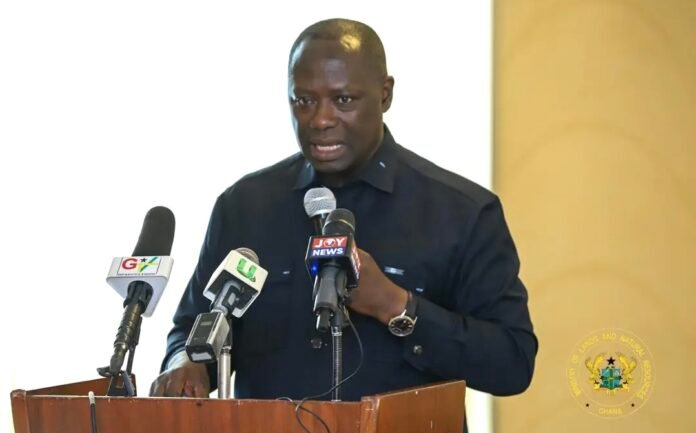
Announcing the outcome at a press briefing on Monday, February 16, the Minister for Lands, Emmanuel Armah-Kofi Buah, said the applications were either executed or initiated across all 16 regions of Ghana.
The review was conducted by a special committee chaired by Deputy Lands Minister Alhaji Yusif Suleimana, after John Dramani Mahama ordered the Lands Commission on January 10, 2025, to suspend all activities related to the leasing and processing of public lands.
According to Mr. Armah-Kofi Buah, the applications examined included:
•4,176 direct public land allocations
•2,799 regularisation cases involving individuals who later discovered they were occupying public land
•19 allocations tied to state bungalows
•108 land swap and public-private partnership arrangements
•795 subsequent land transactions
•265 fresh allocations
He noted that a significant number of the land swap and PPP arrangements—88 in total—were concentrated in the Ashanti Region.
“The President’s directive was meant to protect public lands from abuse, restore discipline in land administration, and ensure that every transaction delivers real value to the state,” the Minister explained.
The review, he said, forms part of the government’s broader “reset agenda” aimed at rebuilding public trust in how state lands are managed. While the exercise covered all regions, it revealed troubling lapses in procedure.
“The committee found that several applications and allocations did not fully comply with the Lands Commission’s internal processes,” Mr. Armah-Kofi Buah disclosed. “These weaknesses undermine transparency and create room for abuse.”
The committee has since submitted its findings and recommendations to Cabinet. According to the Minister, Cabinet has approved the recommendations and issued further directives for their immediate implementation.
He said the next phase will focus on tightening oversight, enforcing compliance, and ensuring that public lands are managed responsibly and in a way that supports national development rather than private gain.
Government officials say the reforms are intended to send a clear signal that public land is a national asset that must be protected, properly accounted for, and used in the best interest of Ghanaians.
Source: Africa Publicity