

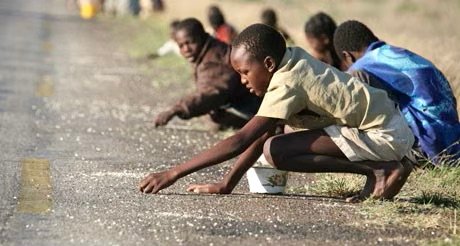
Zimbabwe is facing a worsening food security situation, with vulnerable households expected to experience heightened hunger during the peak lean season between December and March, according to the latest assessment by the Famine Early Warning Systems Network (FEWS NET).
In its Food Security Outlook Update, FEWS NET warned that poor households in food-deficit regions—including Matabeleland North and South, Masvingo, Manicaland, Midlands, and parts of northern Mashonaland—will struggle to meet basic food needs until the next main harvest expected around April 2026.
The report projects an expansion of crisis-level food insecurity early in 2026, as household food stocks dwindle and reliance on market purchases increases. FEWS NET noted that grain availability remains limited in some markets, while low incomes and rising costs are reducing households’ ability to buy staple foods, particularly maize meal.
“Crisis (IPC Phase 3) outcomes are expected to expand in early 2026 as more households face increasing difficulty accessing food,” the report stated, pointing to weak purchasing power and constrained market supplies as key drivers of the situation.
Zimbabwe’s annual lean season—typically characterized by depleted household reserves before the harvest—is expected to be harsher than usual this year. The outlook reflects the combined effects of below-average agricultural production in previous seasons, persistent economic pressures, and climate-related shocks that continue to undermine livelihoods.
FEWS NET estimates that millions of people across the country remain food-insecure, with conditions likely to deteriorate further in the months ahead unless mitigation measures are scaled up. While the April 2026 harvest could provide temporary relief, the agency cautioned that underlying challenges—such as climate vulnerability, limited agricultural inputs, and structural weaknesses in food systems—continue to threaten long-term food security.
The report underscores the need for sustained humanitarian assistance and stronger investments in agricultural resilience to prevent recurrent food crises in Zimbabwe.
Source: Africa Publicity