
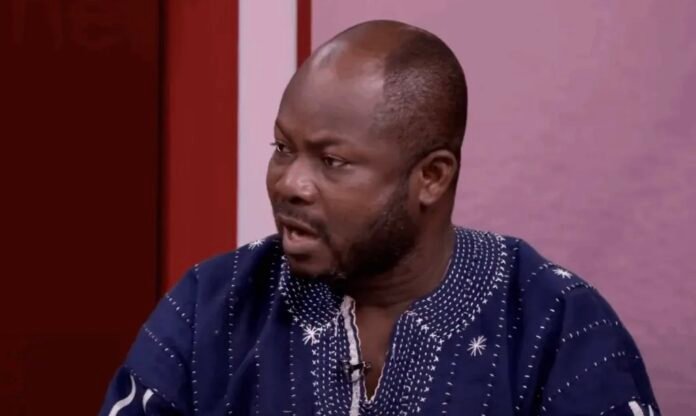
The Deputy General Secretary of the New Patriotic Party (NPP), Haruna Mohammed, has challenged the government’s claims of economic improvement, arguing that recent declines in inflation figures have failed to ease the daily financial burden faced by ordinary Ghanaians.
Speaking on The Big Issue, a weekend current affairs programme aired on Channel One TV, Mohammed accused the government of poor economic stewardship and weak policy direction, insisting that headline macroeconomic indicators do not reflect realities on the ground. According to him, while official data point to a slowdown in inflation, households continue to struggle with high living costs, stagnant incomes, and rising pressure on essential needs.
“Statistics Don’t Feed Families”
Mohammed questioned the practical meaning of the reported inflation decline, stressing that statistical improvements are only meaningful if they translate into lower prices and improved purchasing power.
“Yes, inflation has come down,” he acknowledged. “But does it replicate itself in the pockets of the people of Ghana? Has rent reduced? Has the cost of food gone down significantly? Are farming inputs cheaper?”
He argued that for most citizens, expenses related to housing, food, transportation, and utilities remain stubbornly high. As a result, he said, the inflation figures being celebrated by government officials feel disconnected from lived experiences across the country.
According to Mohammed, the true test of economic recovery should be whether families can afford basic necessities without constant financial stress, not whether macroeconomic indicators look better on paper.
Farmers Still Under Pressure
A major focus of Mohammed’s criticism was the agricultural sector, which he described as being under severe strain despite government assurances of progress. Identifying himself as a farmer, he said producers across the country are struggling to remain viable due to high input costs, inadequate support, and inconsistent policy execution.
“Check the farmer—no farmer is laughing today. I am a farmer myself,” he said. “No farmer will tell you that after selling their produce, they can easily go back and farm the same acreage.”
He explained that rising costs of seeds, fertiliser, labour, and transportation have made farming increasingly unprofitable. Even when produce is sold, the returns are often insufficient to sustain or expand operations in the next planting season.
Mohammed blamed this situation on what he called ineffective economic governance, arguing that policies meant to support agriculture are either poorly designed or poorly implemented.
Budget Promises Versus Reality
Beyond inflation and agriculture, the NPP official also raised concerns about fiscal management, particularly the government’s ability to release funds allocated in the national budget. He claimed that delays and shortfalls in budgetary disbursements have undermined development programmes and weakened confidence in economic planning.
“Budget allocation cannot be met because the Finance Minister will not release the resources,” Mohammed alleged. “There is no direction, no consistency, and no improvement.”
He suggested that without timely release of funds, even well-intentioned policies cannot deliver results. This, he said, contributes to a cycle where announced programmes raise public expectations but fail to bring about tangible change.
Defending the NPP’s Economic Record
In contrasting the current situation with the NPP’s time in government, Mohammed outlined what he described as his party’s record on inflation management. According to him, the NPP inherited an inflation rate of about 15 percent before a global economic crisis, reduced it to 7.1 percent, and later brought it down again after it surged during the crisis.
“The crisis pushed inflation to about 53 percent, but we brought it down to 23 percent before handing over to the NDC,” he said. “Even during the crisis, measures were put in place to curb inflation, and IMF reports at the time showed it was expected to continue declining.”
While acknowledging that global factors played a role in Ghana’s economic challenges, Mohammed argued that effective domestic policy choices were critical in stabilising prices during the NPP’s tenure.
Call for People-Centred Economic Policy
Mohammed concluded by calling for a shift in economic thinking, urging the government to prioritise policies that directly lower the cost of living and strengthen productive sectors such as agriculture and small-scale manufacturing.
According to him, economic growth and inflation control should not be judged solely by international benchmarks or reports, but by whether ordinary citizens feel genuine relief.
“Without deliberate efforts to reduce the cost of living and support those who produce for the economy, these figures will remain meaningless to the average Ghanaian,” he said.
His comments reflect broader public debates in Ghana over the gap between macroeconomic recovery indicators and everyday economic realities, as citizens continue to grapple with rising expenses and limited income growth despite reported improvements in national economic data.
Source: Africa Publicity