
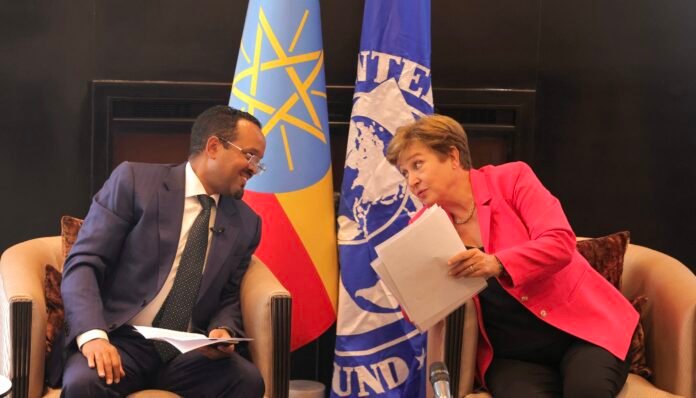
The International Monetary Fund (IMF) has reached a staff-level agreement with Ethiopia on the fourth review of the country’s ongoing $3.4 billion financing program. The agreement, announced Wednesday, moves Ethiopia closer to receiving a $261 million disbursement, pending approval by the IMF Executive Board. The IMF says continued reform efforts are essential as the country works to restore long-term economic stability and address its heavy debt burden.
IMF Confirms Progress on Ethiopia’s Economic Reform Programme
The IMF stated that the latest review confirms Ethiopia has made sufficient progress on key policy commitments tied to its Extended Credit Facility (ECF) and Extended Fund Facility (EFF) arrangements. Once the IMF board gives formal approval, total disbursements to Ethiopia under the program will reach approximately $2.13 billion.
Ethiopia originally secured the financing package in July 2024, a period marked by intense pressure on the economy, ongoing domestic challenges, and a growing need to stabilize its macroeconomic environment. The government’s agreement to pursue wide-ranging structural and fiscal reforms helped unlock the initial tranche of funds.
Reforms Highlighted as Crucial for Economic Stability
In its assessment, the IMF underscored the importance of maintaining the momentum of reforms aimed at addressing inflation, stabilizing the exchange rate, and supporting broader economic recovery. The Fund emphasized that:
• A disciplined monetary policy is necessary to curb high inflation levels and anchor expectations.
• Improved fiscal management will be critical as Ethiopia seeks to generate revenue, manage expenditures, and reduce dependency on external borrowing.
• Private sector participation must be strengthened to drive economic growth and create employment opportunities.
The IMF noted that sustained reforms will play a crucial role in poverty reduction efforts, particularly as Ethiopia navigates a challenging environment shaped by post-conflict reconstruction needs, climate-related shocks, and external financing constraints.
Debt Challenges Remain a Central Concern
Ethiopia’s debt distress has been one of the most significant barriers to economic recovery. The country opted to restructure its external obligations under the G20 Common Framework, an initiative designed to help low-income nations secure coordinated relief from bilateral creditors.
As part of the process:
• Ethiopia defaulted on its only Eurobond—a $1 billion issuance—in late 2023, citing an inability to meet repayment obligations.
• The government has since reached a preliminary agreement with bilateral creditors, including major partners such as China and members of the Paris Club, to restructure official loans.
• However, negotiations with private bondholders have stalled, largely due to disagreements over the extent of losses (haircuts) investors should absorb.
The IMF acknowledged these challenges but said that “efforts to secure debt treatment and restore debt sustainability are advancing.” A successful restructuring remains a prerequisite for restoring confidence in Ethiopia’s financial position and unlocking additional external support.
Next Steps: IMF Board Approval and Continued Monitoring
The staff-level agreement does not immediately release funds. Instead, the IMF’s Executive Board will evaluate the review in an upcoming session. Approval is widely expected but not guaranteed, as the Board typically examines whether the country has met performance criteria and policy targets laid out in earlier agreements.
If approved, the new disbursement will help strengthen Ethiopia’s foreign exchange reserves, support budgetary needs, and provide financing for ongoing economic reforms.
The IMF will continue to monitor Ethiopia’s progress closely. The next review will assess the country’s debt negotiations, inflation trajectory, fiscal adjustments, and implementation of structural reforms.
Outlook for Ethiopia’s Economy
Ethiopia’s economic prospects hinge on a combination of domestic policy actions and international support. Key challenges include:
• Persistent inflation affecting household purchasing power
• Limited access to foreign currency and import pressures
• The need for reconstruction in conflict-affected areas
• Slow progress in securing private-sector confidence
Still, the successful completion of multiple IMF reviews signals some stabilization and increased credibility in Ethiopia’s reform commitments. The new funding, once approved, is expected to provide short-term relief and help keep critical reforms on track.
Source:Africa Publicity