
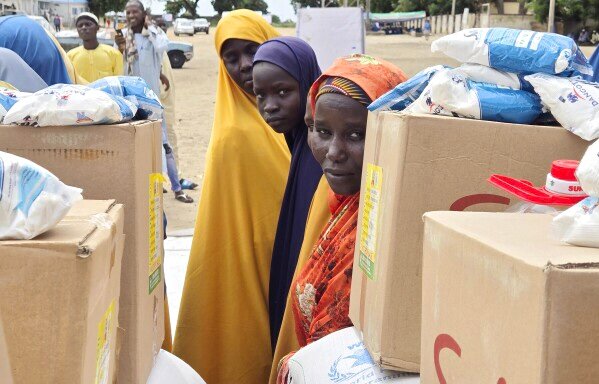
Nigeria is heading toward one of its worst hunger emergencies on record as conflict intensifies across its northern regions and international aid funding continues to decline, the U.N. World Food Programme (WFP) said on Tuesday. New estimates suggest that by 2026, nearly 35 million people could struggle to meet basic food needs—a figure higher than any previously documented in the country.
The warning is based on the latest Cadre Harmonisé assessment, the key regional tool used to monitor food and nutrition insecurity across West Africa and the Sahel. According to WFP, this year’s findings reflect a combination of worsening insecurity, economic pressure, and the erosion of humanitarian support.
Rising Attacks Intensify Instability
Armed groups have escalated their operations in 2025, broadening the geographic spread of violence. The al-Qaeda-linked Jama’at Nusrat al-Islam wal-Muslimin (JNIM) carried out its first attack on Nigerian soil last month, marking a concerning expansion of cross-border militant activity. Meanwhile, Islamic State West Africa Province (ISWAP) has intensified assaults in the northeast, including an attack that resulted in the death of a senior military officer.
Communities continue to face insecurity from non-state armed groups and criminal gangs. Recent mass abductions from schools, including the kidnapping of more than 300 Catholic students, have heightened fears among civilians and disrupted education and livelihoods across northern states.
Rural Households Among the Worst Affected
Agricultural production has sharply declined in several northern states, where farmers have been forced off their land due to repeated attacks. WFP reports that nearly 6 million people in Borno, Adamawa, and Yobe states cannot meet their minimum food requirements. In Borno alone, about 15,000 individuals could experience famine-like conditions if assistance cannot reach them.
Malnutrition is rising fastest among children in Borno, Sokoto, Yobe, and Zamfara. Health facilities in several communities have been overwhelmed, and some clinics have shut down due to insecurity or lack of resources, leaving families with few options for treatment.
Aid Cuts Deepen the Crisis
Almost one million people in northeastern Nigeria depend on WFP aid for survival. However, the agency has already reduced nutrition support due to funding shortages, limiting services for more than 300,000 children since July. This reduction has contributed to a shift from “serious” to “critical” malnutrition levels in several districts, according to WFP’s monitoring.
Global financial pressures and shifting donor priorities have led to steep cuts in humanitarian budgets. The United States—WFP’s largest donor—has significantly scaled back its contributions under the current administration, and other major donors have followed suit with reductions of their own.
Time Running Out
WFP says it may exhaust all available resources for emergency food and nutrition aid by December. Without renewed funding, millions of Nigerians who rely on humanitarian assistance could be left without support through 2026.
“The expansion of insurgent activity is putting unprecedented strain on vulnerable communities and undermining stability across the region,” said David Stevenson, WFP’s country director in Nigeria. “If we cannot scale up our response, the consequences will be felt far beyond Nigeria’s borders.”
Humanitarian agencies are urging international donors to increase support and calling on Nigerian authorities to strengthen security coordination so that aid organizations can safely access communities in need.
Source:Africa Publicity