


A disturbing series of events surrounding the death of 54-year-old Olive Martin has come to light during a coroner’s inquest in Crook, County Durham, raising serious questions about emergency response procedures, medical oversight, and decision-making by first responders. Ms Martin, who collapsed in her home in October 2023, was mistakenly pronounced dead by paramedics and later discovered to be alive after being transferred to a hospital mortuary.
According to information presented in court, Ms Martin had been at home preparing breakfast on the morning she collapsed. Evidence suggests she had placed bread into a toaster and was expected to leave for work that day, indicating that the medical emergency occurred during a routine moment in her daily life. Police, emergency medical staff, and family members all attended the scene after reports that she had suffered a seizure.
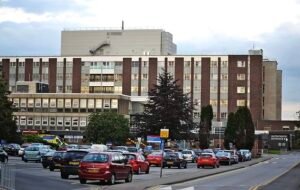
Despite the presence of emergency personnel, Ms Martin was not transported to the emergency department for treatment. Instead, she was taken directly to the mortuary at Darlington Hospital under the assumption that she had died. However, some time after arriving there, staff discovered signs that she was still alive. The incident shocked medical professionals and family members alike and has since become the subject of an official inquest.
Coroner Jeremy Chipperfield told the court that Ms Martin ultimately died due to brain damage, but stressed that her death occurred “some time later,” after she had been incorrectly declared deceased. The coroner acknowledged that it remains unclear how long she had been without oxygen before help arrived and stressed that the exact timeline is still being examined.
Legal representative for Ms Martin’s family, Tom Barclay Semple, questioned the critical period between her collapse and when she finally received medical attention. He emphasized that for approximately two hours, Ms Martin received no medical treatment. This, he suggested, could have been a decisive factor in the eventual outcome.
He raised several important questions during the hearing, including whether immediate hospital care might have changed the result. He asked the court to consider what kind of emergency treatment should have been provided and whether timely intervention could have prevented her death or at least prolonged her life in a meaningful way.
“We know Olive was found in her kitchen, and she had placed toast in her toaster. This was clearly the time her medical emergency happened,” Mr Barclay Semple told the court. “Using this information, investigators can begin to establish a timeline by looking at the time of day and changes in body temperature.”
James Donnelly, speaking on behalf of the North East Ambulance Service, confirmed that when Ms Martin arrived at the mortuary, staff detected what were described as “some signs of life.” This stunning revelation has forced the court to examine what procedures were followed and whether adequate checks for vital signs were carried out before she was declared dead.
Adding to the confusion, John Gray, representing Durham Constabulary, informed the court that there had been evidence of continuing brain function and some response to external stimuli, including verbal reactions and physical movements such as gripping. These signs, presented during the inquest, suggest that Ms Martin may not have been clinically dead at the time she was transferred from her home.
The case has now been formally adjourned until 2:00 pm on January 30, when further expert testimony is expected. The coroner has indicated that independent specialists in emergency and intensive care medicine may be asked to evaluate whether the failure to provide immediate treatment contributed directly to Ms Martin’s death.
Durham Constabulary has confirmed that officers carried out an initial investigation into the circumstances surrounding her death. However, following a review of the available evidence, police have stated that no criminal charges will be brought in connection with the incident.
In a previous public statement, Andrew Hodge, Director of Paramedicine at the North East Ambulance Service, expressed deep regret over the incident and its impact on the family. He confirmed that an internal investigation was opened immediately after the service became aware of the situation.
“We are deeply sorry for the distress that this has caused,” Mr Hodge said. “A full review of the incident is currently underway. The colleagues involved are being supported, and we are unable to provide further comment while the investigation continues.”
The case has sparked public concern about the procedures used by emergency services when declaring a person deceased. Medical experts and legal observers have pointed out that such errors, while rare, underline the importance of strict adherence to medical guidelines, especially in situations involving seizures, unconsciousness, or reduced breathing.
Patient safety advocates are now calling for reviews of emergency training protocols to ensure that similar mistakes are prevented in the future. They argue that the incident highlights broader weaknesses in crisis response systems and the urgent need for improved standards of care, clearer decision-making processes, and stronger accountability mechanisms in emergency medicine.
As the inquest continues, Ms Martin’s family remains focused on seeking answers. They hope that by understanding what went wrong, changes can be implemented to prevent another family from experiencing the same tragedy. The upcoming hearing in January is expected to provide crucial insight into how such a devastating error could have occurred and whether different actions might have saved her life.
Source:Africa Publicity